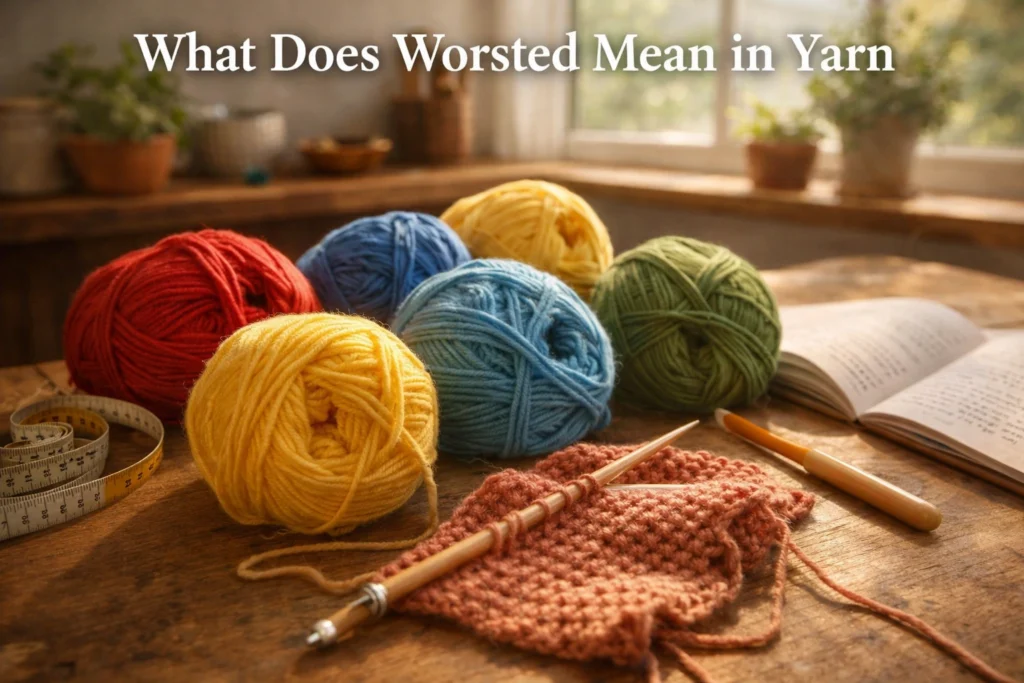
Worsted in yarn refers to a medium weight yarn commonly used for knitting and crochet. It is thicker than lightweight yarns like DK or sport weight, but thinner than bulky yarn. Worsted yarn is often labeled as Category 4 Medium Weight Yarn and is popular because it works well for many projects including sweaters, scarves, hats, blankets, and accessories.
Example:
A knitting pattern might say “Use worsted weight yarn with 5 mm needles.”
If you are new to knitting or crochet, yarn labels can sometimes feel confusing. You might see terms like “DK,” “bulky,” or “worsted weight” and wonder what they actually mean. Among these terms, worsted yarn is one of the most common and widely used types of yarn in the crafting world.
Many beginner knitting and crochet patterns recommend worsted yarn because it is versatile, easy to work with, and suitable for a wide range of projects. From cozy sweaters and blankets to scarves and hats, worsted yarn appears everywhere.
In this guide, we will explore what worsted means in yarn, where the term comes from, how it compares to other yarn weights, and how crafters use it in real projects. By the end of this article, you will clearly understand why worsted yarn is often considered the most practical and beginner friendly yarn weight.
What Does Worsted Mean in Yarn
In simple terms, worsted yarn is a medium thickness yarn that sits in the middle of the yarn weight scale. It is thick enough to create warm, durable fabric but not so thick that it becomes difficult to work with.
Most yarn manufacturers classify yarn weights using a standard system. In this system, worsted yarn usually falls under weight category 4, which is considered medium weight.
This thickness makes worsted yarn extremely versatile. It is not too fine for beginners and not too bulky for detailed stitches. Because of this balance, many knitting and crochet patterns are designed specifically for worsted yarn.
Typical characteristics of worsted yarn include:
• Medium thickness
• Smooth and easy to work with
• Suitable for many types of projects
• Compatible with medium sized knitting needles and crochet hooks
For beginners, worsted yarn is often recommended because it allows stitches to be clearly visible and manageable.
Origin of the Term Worsted
The word worsted has an interesting historical background that goes back several centuries. The term comes from Worstead, a village in Norfolk, England that became famous during the Middle Ages for producing high quality wool textiles.
Originally, the term did not refer to yarn thickness at all. Instead, it described a specific way of processing wool fibers. In traditional worsted spinning, the wool fibers are combed so they lie parallel before spinning. This process creates a smoother and stronger yarn compared to woolen spun yarn.
Over time, the name “worsted” became associated with a particular style of yarn and eventually evolved into a general label for medium weight yarn used in knitting and crochet.
Today, the term is often used to describe yarn thickness rather than the original spinning method.
Why Worsted Yarn Is So Popular
Worsted yarn is widely considered the most versatile yarn weight. It is popular among both beginners and experienced crafters because it works for many different types of projects.
Here are some reasons worsted yarn is so widely used.
Easy for Beginners
Medium thickness yarn makes it easier to see stitches clearly. This helps beginners learn knitting or crochet without struggling with very thin yarn.
Fast Project Progress
Because worsted yarn is thicker than lightweight yarns, projects grow faster. A scarf or hat made with worsted yarn works up quicker than one made with fingering weight yarn.
Balanced Fabric
Worsted yarn produces fabric that is not too heavy and not too delicate. This balance makes it ideal for everyday clothing and accessories.
Wide Availability
Most yarn brands produce worsted weight yarn, so it is easy to find in craft stores and online shops.
Common Projects Made With Worsted Yarn
Because of its versatility, worsted yarn is used in a wide variety of knitting and crochet projects.
Popular examples include:
• Sweaters
• Blankets
• Hats
• Scarves
• Mittens
• Cardigans
• Baby clothing
• Dishcloths
• Home decor items
Worsted yarn is especially popular for garments because it provides warmth while still remaining comfortable to wear.
Example Table of Worsted Yarn Projects
| Project Type | Why Worsted Yarn Works Well |
|---|---|
| Sweaters | Creates warm but breathable fabric |
| Hats | Thick enough for warmth without being bulky |
| Scarves | Shows stitch patterns clearly |
| Blankets | Durable and cozy |
| Dishcloths | Strong and easy to wash |
This range of uses shows why worsted yarn is often considered the most practical yarn weight.
How Worsted Yarn Compares to Other Yarn Weights
Yarn weights range from extremely thin lace yarn to very thick jumbo yarn. Worsted yarn sits roughly in the middle of this spectrum.
Understanding this comparison can help you choose the right yarn for your project.
Yarn Weight Comparison Table
| Yarn Weight | Thickness Level | Common Uses |
|---|---|---|
| Lace | Very thin | Delicate shawls |
| Fingering | Thin | Socks and lightweight garments |
| Sport | Light | Baby clothing |
| DK | Light medium | Sweaters and accessories |
| Worsted | Medium | Sweaters, blankets, hats |
| Bulky | Thick | Winter scarves and chunky sweaters |
| Jumbo | Very thick | Arm knitting blankets |
As shown in the table, worsted yarn provides a balanced thickness that works well for many types of projects.
Recommended Needle and Hook Sizes for Worsted Yarn
Another reason worsted yarn is beginner friendly is that it works with medium sized knitting needles and crochet hooks.
Typical Needle and Hook Sizes
| Tool Type | Recommended Size |
|---|---|
| Knitting Needles | 4.5 mm to 5.5 mm |
| Crochet Hooks | 5 mm to 6.5 mm |
These sizes are comfortable for most crafters and allow stitches to form clearly without becoming too tight or too loose.
Real World Examples of Worsted Yarn in Patterns
Many popular knitting and crochet patterns specify worsted weight yarn because it produces balanced fabric and works quickly.
Example pattern instruction:
“Using worsted weight yarn and 5 mm needles, cast on 80 stitches.”
Another example in crochet:
“Use worsted weight yarn and a 5.5 mm hook to begin the blanket.”
In both cases, the designer chose worsted yarn because it offers good stitch definition and manageable thickness.
Types of Fibers Used in Worsted Yarn
Worsted yarn can be made from many different materials. The weight describes the thickness, not the fiber type.
Common fibers used in worsted yarn include:
• Wool
• Acrylic
• Cotton
• Alpaca
• Bamboo blends
• Wool acrylic blends
Each fiber type changes the texture, warmth, and durability of the yarn.
For example:
Wool worsted yarn is warm and elastic.
Cotton worsted yarn is breathable and durable.
Acrylic worsted yarn is affordable and easy to care for.
Table of Worsted Yarn Fiber Types
| Fiber Type | Characteristics | Best Uses |
|---|---|---|
| Wool | Warm and stretchy | Sweaters and winter accessories |
| Acrylic | Affordable and durable | Blankets and beginner projects |
| Cotton | Breathable and strong | Dishcloths and summer garments |
| Alpaca | Soft and warm | Scarves and luxury garments |
| Blends | Balanced qualities | Everyday clothing |
Choosing the right fiber depends on the type of project you are making.
When to Choose Worsted Yarn
Worsted yarn is an excellent choice when you want:
• A versatile yarn for many types of projects
• A yarn that is easy to handle
• Visible stitches for learning patterns
• A balance between warmth and flexibility
Because of these qualities, worsted yarn is often recommended for beginners learning knitting or crochet.
When Worsted Yarn May Not Be Ideal
Although worsted yarn is versatile, it is not always the best option.
You may want a different yarn weight when:
• Making extremely delicate lace projects
• Creating very lightweight summer garments
• Designing ultra chunky blankets or scarves
In those cases, lace weight or bulky yarn might be more suitable.
Practical Tips for Working With Worsted Yarn
If you are planning to use worsted yarn for your next project, these tips can help you achieve the best results.
First, always check the yarn label for recommended needle or hook sizes. This ensures your stitches will have the correct tension.
Second, make a small gauge swatch before starting large projects like sweaters. This helps ensure the finished size will match the pattern.
Third, choose fiber types carefully based on the purpose of the project. For example, wool works well for winter clothing, while cotton is better for dishcloths or warm weather garments.
FAQs
What does worsted mean in yarn weight
Worsted refers to a medium weight yarn that is thicker than DK yarn but thinner than bulky yarn. It is commonly used for sweaters, blankets, hats, and many other knitting or crochet projects.
Is worsted yarn good for beginners
Yes, worsted yarn is often recommended for beginners because it is easy to see stitches and works well with medium sized needles and hooks.
What number yarn weight is worsted
Worsted yarn is usually classified as Category 4 medium weight yarn in the standard yarn weight system used by most manufacturers.
Is worsted yarn the same as medium weight yarn
Yes, worsted yarn is generally considered a medium weight yarn. Many yarn labels use the terms interchangeably.
What can you make with worsted yarn
You can make sweaters, hats, scarves, blankets, mittens, cardigans, dishcloths, and many other knitting or crochet projects.
What needles should I use for worsted yarn
Most patterns recommend knitting needles between 4.5 mm and 5.5 mm or crochet hooks between 5 mm and 6.5 mm.
Is worsted yarn thicker than DK yarn
Yes, worsted yarn is slightly thicker than DK yarn, which means projects made with worsted yarn typically work up faster.
Is worsted yarn the same as wool
No, worsted describes the yarn weight or spinning style, not the fiber. Worsted yarn can be made from wool, cotton, acrylic, alpaca, or blended fibers.
Conclusion
Worsted yarn is one of the most useful and widely used yarn types in knitting and crochet. It is classified as a medium weight yarn that sits comfortably between lighter yarns like DK and thicker yarns like bulky.
The term originally referred to a traditional wool spinning method from the English village of Worstead, but today it is primarily used to describe yarn thickness. Because of its balanced weight, worsted yarn is incredibly versatile and suitable for many projects including sweaters, blankets, scarves, and hats.
For beginners, worsted yarn is often the perfect starting point. It makes stitches easy to see, works quickly, and is widely available in many fibers and colors.
Whether you are learning to knit, starting your first crochet project, or designing your own handmade garments, understanding worsted yarn will help you choose the right materials and achieve better results in your crafting projects.
Read More Related Articles:
- GTS Mean in Text Message: Definition and Real Examples In 2026
- Trapping Mean in Slang: A Complete Beginner’s Guide In 2026
- NVM Mean in Texting: Everything You Need to Know In 2026
Rachel Monroe is a digital content writer at Meanzy.com who focuses on explaining modern words, phrases, and online expressions. Her writing style is simple, practical, and reader-focused, helping users quickly understand the meaning and usage of today’s evolving language.