
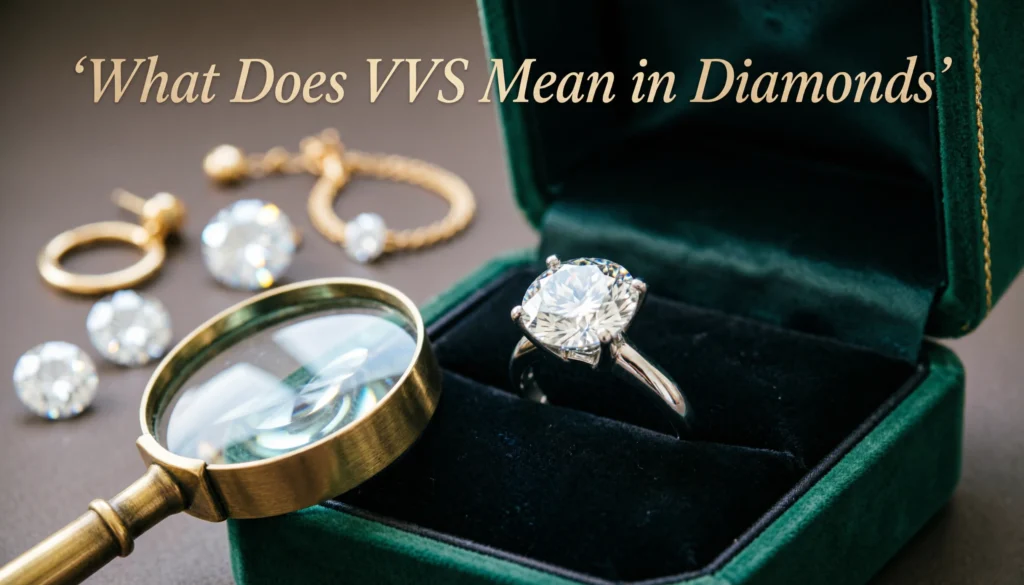
VVS in diamonds stands for “Very Very Slightly Included.” It is a clarity grade used in diamond grading that indicates the diamond contains extremely tiny internal imperfections called inclusions that are very difficult to see even under magnification.
Example:
A VVS diamond has inclusions so small that even professional gemologists struggle to see them with a 10x magnification microscope.
Diamonds have always been associated with beauty, luxury, and precision. When people start learning about diamonds, they often encounter unfamiliar terms that sound technical or confusing. One of the most common terms you might see in jewelry descriptions or hear from jewelers is VVS. It appears in diamond grading reports, luxury watch descriptions, rap lyrics, and high end jewelry advertisements.
If you have ever wondered what VVS actually means and why it matters when buying a diamond, you are not alone. Understanding this term can help you make better decisions when purchasing diamond jewelry and also help you recognize the difference between marketing language and real gem quality.
In this guide, we will explore the meaning of VVS in diamonds, its origin in the diamond grading system, how it affects value, how it compares with other clarity grades, and how it is used in both jewelry and popular culture.
What Does VVS Mean in Diamonds
The term VVS refers to the clarity level of a diamond. Clarity describes how many internal flaws or imperfections are present inside the stone.
Every natural diamond forms under extreme pressure and heat deep within the earth. Because of this natural formation process, most diamonds contain tiny imperfections known as inclusions. These may include small crystals, microscopic fractures, or internal marks.
When a diamond is graded as VVS, it means those imperfections are extremely small and extremely difficult to detect. In most cases, they cannot be seen with the naked eye.
The VVS category is actually divided into two subgrades:
• VVS1
• VVS2
Both represent very high clarity diamonds.
Understanding Diamond Clarity
To fully understand VVS diamonds, it helps to know how the diamond clarity system works. Jewelers use a grading scale created by the Gemological Institute of America (GIA) to classify diamonds based on the visibility of inclusions.
The clarity scale ranks diamonds from flawless to heavily included.
Diamond Clarity Scale
| Clarity Grade | Meaning | Visibility of Inclusions |
|---|---|---|
| FL | Flawless | No inclusions visible under magnification |
| IF | Internally flawless | No internal inclusions |
| VVS1 | Very very slightly included | Extremely difficult to see inclusions |
| VVS2 | Very very slightly included | Very tiny inclusions visible under magnification |
| VS1 | Very slightly included | Minor inclusions visible with magnification |
| VS2 | Very slightly included | Slightly more noticeable inclusions |
| SI1 | Slightly included | Inclusions visible with magnification and sometimes with naked eye |
| SI2 | Slightly included | Inclusions more noticeable |
| I1 I2 I3 | Included | Inclusions visible to naked eye |
VVS diamonds sit near the top of this scale, meaning they are considered high quality diamonds.
Difference Between VVS1 and VVS2
Although both VVS1 and VVS2 diamonds are very high clarity, there is a subtle difference between them.
| Grade | Description | Visibility |
|---|---|---|
| VVS1 | Inclusions are extremely tiny and very difficult to locate | Even experts struggle to find them |
| VVS2 | Inclusions are still tiny but slightly easier to detect under magnification | Still invisible to naked eye |
For most people, there is no visible difference between these two grades when looking at the diamond without magnification.
Origin of the VVS Diamond Grading Term
The term VVS became widely recognized after the development of standardized diamond grading systems in the twentieth century.
Before modern grading systems, jewelers described diamonds using inconsistent terminology such as “fine quality” or “perfect stone.” This made it difficult for buyers to compare diamonds objectively.
Organizations such as the Gemological Institute of America introduced a standardized clarity scale. The VVS category was created to represent diamonds with extremely tiny inclusions that were nearly impossible to see under magnification.
This system allowed jewelers, buyers, and collectors around the world to communicate diamond quality with accuracy and transparency.
Why VVS Diamonds Are Valuable
Diamonds with very high clarity are rare. The fewer imperfections a diamond has, the more valuable it tends to be.
VVS diamonds are considered premium stones because they combine beauty, rarity, and excellent clarity.
Reasons VVS Diamonds Are Valuable
- Rarity
Only a small percentage of natural diamonds qualify for VVS clarity. - Visual purity
These diamonds appear exceptionally clean and brilliant. - High demand
Luxury jewelry brands and collectors prefer high clarity diamonds. - Strong resale value
High clarity stones often maintain strong market value.
However, clarity is only one of the four main factors used to judge diamonds.
The Four Cs of Diamond Quality
When evaluating diamonds, experts use the Four Cs.
| Diamond Factor | Meaning |
|---|---|
| Cut | How well the diamond reflects light |
| Color | How colorless the diamond is |
| Clarity | Presence of internal imperfections |
| Carat | Weight and size of the diamond |
A VVS diamond may have excellent clarity, but its overall value still depends on its cut, color, and carat weight.
Real Life Examples of VVS Diamonds
Understanding diamond clarity becomes easier when you see how it appears in real situations.
Example 1
A jeweler shows two diamonds that look identical to the naked eye. One is VS1 and the other is VVS2. Under a magnification microscope, the VS1 diamond reveals a small inclusion while the VVS2 diamond appears almost perfectly clear.
Example 2
A luxury engagement ring features a 1 carat VVS1 diamond. Because the inclusions are extremely tiny, the diamond looks brilliant and pure even under close inspection.
Example 3
A collector purchases a rare VVS diamond because of its exceptional clarity and long term investment potential.
Example Table of VVS Diamonds in Jewelry
| Jewelry Type | Typical VVS Use | Reason |
|---|---|---|
| Engagement rings | Center diamonds | Premium clarity and sparkle |
| Luxury watches | Decorative diamonds | High visual purity |
| High end necklaces | Featured stones | Prestige and rarity |
| Custom jewelry | Collector pieces | Investment quality |
VVS Diamonds in Popular Culture
The term VVS has also become popular in music and fashion culture. Many hip hop artists mention VVS diamonds in their lyrics to represent luxury, wealth, and success.
In rap culture, phrases like “VVS diamonds” often describe extremely expensive jewelry that shines brightly with exceptional clarity.
For example, when a rapper mentions wearing a “VVS chain,” they are referring to diamonds that are high quality and nearly flawless in appearance.
Because of this cultural influence, the term VVS is now widely recognized even by people who are not familiar with diamond grading systems.
Comparison Between VVS and Other Diamond Clarity Grades
When shopping for diamonds, it helps to compare VVS with other clarity grades.
| Clarity Grade | Quality Level | Typical Price Range |
|---|---|---|
| VVS | Extremely high clarity | Premium price |
| VS | High clarity | Slightly lower cost |
| SI | Moderate clarity | More affordable |
| Included | Lower clarity | Budget diamonds |
For many buyers, VS diamonds offer the best balance between price and visual appearance, since inclusions are still difficult to see.
Are VVS Diamonds Worth the Price
Whether VVS diamonds are worth the price depends on personal priorities.
Some buyers choose VVS diamonds because they want the highest possible quality. Others prefer slightly lower clarity grades that still look perfect to the naked eye but cost less.
When VVS Diamonds Are Worth It
• Luxury jewelry purchases
• Investment diamonds
• Collector pieces
• High end engagement rings
When Other Grades May Be Better
• Budget friendly engagement rings
• Larger diamonds with lower cost
• Jewelry where inclusions are not visible anyway
For many people, VS diamonds provide nearly identical visual appearance at a lower price.
Tips for Buying VVS Diamonds
If you are considering buying a VVS diamond, here are a few helpful tips.
Choose certified diamonds from reputable grading organizations.
Focus on the diamond cut quality because cut affects sparkle more than clarity.
Compare VVS diamonds with VS diamonds to see if you can notice a difference.
Always view the diamond under magnification if possible.
Check the diamond certificate for clarity grading details.
These steps help ensure you are making an informed purchase.
FAQs
What does VVS mean in diamonds?
VVS stands for Very Very Slightly Included. It describes diamonds that contain extremely tiny inclusions that are very difficult to see even under magnification.
Is a VVS diamond better than VS?
Yes, VVS diamonds have fewer and smaller inclusions than VS diamonds. However, both usually appear flawless to the naked eye.
Are VVS diamonds rare?
Yes, diamonds with VVS clarity are relatively rare because very few natural diamonds form with such minimal inclusions.
Can you see flaws in a VVS diamond?
In most cases, flaws in a VVS diamond are impossible to see without professional magnification tools.
Is VVS the best diamond clarity?
No. Flawless and internally flawless diamonds rank slightly higher, but VVS is still considered extremely high clarity.
Why do rappers mention VVS diamonds?
In music culture, VVS diamonds symbolize luxury, wealth, and expensive jewelry with exceptional clarity.
Is VVS worth buying for engagement rings?
Yes, many people choose VVS diamonds for engagement rings because of their exceptional purity and brilliance.
Do VVS diamonds sparkle more?
Sparkle is mainly determined by the diamond cut, not clarity. However, high clarity diamonds like VVS still appear very clean and bright.
Conclusion
Understanding diamond terminology can feel overwhelming at first, but learning terms like VVS makes the process much easier.
VVS stands for Very Very Slightly Included, a diamond clarity grade that describes stones with extremely tiny inclusions that are nearly impossible to detect even under magnification. Because of their rarity and purity, VVS diamonds are considered high quality and are often used in luxury jewelry and collector pieces.
However, clarity is only one part of the overall diamond evaluation. Buyers should also consider cut, color, and carat weight when choosing the perfect diamond.
For those seeking exceptional quality and visual purity, VVS diamonds are an excellent option. They represent a combination of rarity, beauty, and prestige that has made them highly desirable in both the jewelry world and popular culture.
Read More Related Articles:
- IPDE Mean in Driving: Smart Driver’s Secret to Road Safety In 2026
- Par Stock Meaning: How It Works in Inventory Control In 2026
- Brushless Mean in Tools: Power and Longevity In 2026

John Miller is a professional meanings writer at Meanzy.com, specializing in word definitions, internet slang, acronyms, and text abbreviations. He focuses on delivering clear, accurate explanations with practical examples, helping readers easily understand modern digital terms and their real-life usage.