
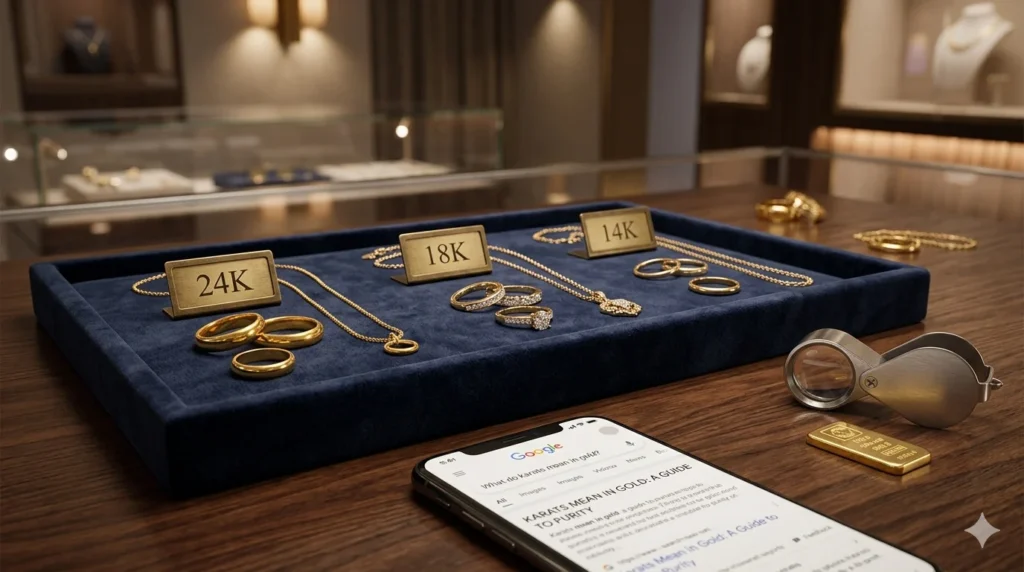
Karats in gold measure the purity of gold in a piece of jewelry or metal.
Pure gold is 24 karats, meaning it contains 100 percent gold. Lower karat numbers indicate that the gold is mixed with other metals such as silver, copper, or zinc to improve strength and durability.Example:
A 24K gold ring is pure gold, while a 14K ring contains 14 parts gold and 10 parts other metals.
If you have ever shopped for gold jewelry, you have probably seen labels such as 10K, 14K, 18K, or 24K. Many people know these numbers relate to gold quality, but not everyone understands exactly what they mean. The term karat is one of the most important concepts in the gold industry because it tells you how pure the gold is.
Understanding karats can help you make smarter choices when buying jewelry, investing in gold, or simply learning about precious metals. It explains why some gold looks brighter, why some pieces are more durable, and why prices vary so much between different items.
In this guide, you will learn what karats mean in gold, how the system works, how different karat levels compare, and how to choose the right gold purity for jewelry or investment. The article also includes examples, tables, comparisons, and answers to the most common questions people ask about gold karats.
Understanding What Karats Mean in Gold
The karat system is used worldwide to measure the purity of gold in jewelry and other gold products. Gold in its natural form is extremely soft, which means it bends and scratches easily. Because of this, jewelers usually mix gold with other metals to make it stronger and more durable.
Karats represent how much pure gold is present out of 24 total parts.
For example
- 24K gold contains 24 parts gold out of 24
- 18K gold contains 18 parts gold and 6 parts other metals
- 14K gold contains 14 parts gold and 10 parts other metals
This system helps buyers quickly understand how pure the gold is.
The Origin of the Karat System
The word karat has an interesting history that dates back hundreds of years. It comes from the carob seed, which was historically used by traders as a standard unit of weight because the seeds were believed to have consistent weight.
Over time, the term evolved into a measurement used in the gold trade. The system eventually standardized at 24 parts, making it easier to calculate the purity of gold items.
Today, the karat system is widely recognized in jewelry markets across the world and is used to label everything from engagement rings to gold coins.
Common Gold Karat Levels
Gold jewelry is rarely made with completely pure gold because of its softness. Instead, jewelers use different karat levels depending on the balance they want between purity and durability.
Here are the most common karat types you will see.
| Karat | Gold Purity | Percentage of Gold |
|---|---|---|
| 24K | Pure gold | 99.9 percent |
| 22K | Very high purity | 91.7 percent |
| 18K | High purity | 75 percent |
| 14K | Medium purity | 58.3 percent |
| 10K | Lower purity | 41.7 percent |
Each of these levels offers different advantages depending on how the jewelry will be used.
Why Gold Is Mixed With Other Metals
Pure gold is beautiful and valuable, but it is very soft and flexible. This means that jewelry made from pure gold could easily bend or scratch during everyday use.
To solve this problem, jewelers mix gold with other metals such as
- Silver
- Copper
- Nickel
- Zinc
- Palladium
These metals help make gold stronger, more durable, and sometimes change its color.
For example
- Copper can give gold a reddish tone
- Silver can create a lighter color
- Palladium can produce white gold
The final result depends on the combination of metals used in the gold alloy.
Examples of Gold Karats in Everyday Jewelry
Different types of jewelry often use different karat levels depending on durability needs.
| Jewelry Type | Common Karat Used | Reason |
|---|---|---|
| Engagement rings | 14K or 18K | Balance of beauty and durability |
| Wedding bands | 14K | Strong enough for daily wear |
| Luxury jewelry | 18K | Higher purity and richer color |
| Investment gold | 24K | Maximum purity |
For example, an engagement ring made from 14K gold is strong enough to wear every day without bending easily, while an investment gold bar is usually 24K gold because purity matters most.
Differences Between 24K, 18K, and 14K Gold
One of the most common questions people ask is how different karat levels compare in real life. The table below highlights the main differences.
| Karat | Purity | Color | Durability | Price |
|---|---|---|---|---|
| 24K | Highest | Bright yellow | Soft | Most expensive |
| 18K | High | Rich yellow | Moderate | Expensive |
| 14K | Medium | Slightly lighter | Very durable | More affordable |
Many jewelers recommend 14K or 18K gold for everyday jewelry because they provide a good balance between durability and beauty.
Why Higher Karat Gold Costs More
Gold prices increase with higher karat numbers because there is more pure gold in the item. Since gold itself is valuable, pieces with higher purity contain more precious metal.
For example
- A 24K gold necklace contains almost entirely pure gold
- A 14K necklace contains only about 58 percent gold
This difference in gold content directly affects the price and value of the item.
Gold Karats and Color Differences
The karat level can also influence how gold looks. Higher karat gold tends to have a deeper yellow color, while lower karat gold may appear lighter because of the metals mixed into it.
Gold also comes in different colors depending on the alloy used.
| Gold Type | Color | How It Is Made |
|---|---|---|
| Yellow gold | Classic yellow | Gold mixed with silver and copper |
| White gold | Silvery white | Gold mixed with nickel or palladium |
| Rose gold | Pink or reddish | Gold mixed with copper |
Even though the color may change, the karat number still determines how much pure gold is present.
Karats vs Carats: A Common Confusion
Many people confuse karats with carats, but they refer to completely different things.
| Term | What It Measures | Used For |
|---|---|---|
| Karat | Gold purity | Gold jewelry |
| Carat | Weight | Diamonds and gemstones |
For example
A 14K ring refers to the purity of gold, while a 1 carat diamond refers to the weight of the gemstone.
Although the words sound similar, they represent two different measurements in the jewelry industry.
How to Choose the Right Gold Karat
Choosing the right gold karat depends on your priorities. Some people care most about purity, while others want durability for everyday use.
Here are some general guidelines.
If you want maximum gold purity, 24K gold is the best choice. It is often used for gold bars, coins, and cultural jewelry.
If you want luxury jewelry with a rich gold color, 18K gold is a great option. It contains a high amount of gold but is still strong enough for jewelry.
If you want durable jewelry for everyday wear, 14K gold is often recommended. It is strong, affordable, and widely available.
If you are on a budget, 10K gold can be a more affordable option, though it contains less gold.
How to Identify Gold Karats
Most gold jewelry includes a small stamp or hallmark that indicates the karat level.
Common stamps include
- 24K
- 22K
- 18K
- 14K
- 10K
Sometimes you may also see numbers that represent gold purity.
| Stamp | Meaning |
|---|---|
| 999 | Nearly pure gold |
| 916 | 22K gold |
| 750 | 18K gold |
| 585 | 14K gold |
| 417 | 10K gold |
These stamps help buyers verify the authenticity and purity of gold items.
FAQs
What do karats mean in gold?
Karats measure the purity of gold. The system is based on 24 parts, with 24K representing pure gold and lower karat numbers indicating gold mixed with other metals.
Is 24K gold always the best?
24K gold is the purest form of gold, but it is very soft. For everyday jewelry, many people prefer 14K or 18K gold because it is more durable.
Why is 14K gold so popular?
14K gold offers a balance between durability, affordability, and gold content. It is strong enough for daily wear while still containing a significant amount of gold.
Does higher karat gold look different?
Yes. Higher karat gold usually has a deeper yellow color because it contains more pure gold.
Is 18K gold better than 14K gold?
18K gold contains more gold and has a richer color, but it is slightly softer than 14K gold. The best option depends on your needs and preferences.
Can gold karats affect jewelry durability?
Yes. Lower karat gold is typically stronger because it contains more alloy metals that add strength.
What karat gold is best for engagement rings?
Many jewelers recommend 14K or 18K gold for engagement rings because they balance durability and appearance.
Do gold coins use karats too?
Yes. Investment gold coins and bars are often made with 24K gold, which means they contain nearly pure gold.
Conclusion
Gold has been treasured for thousands of years because of its beauty, rarity, and value. The karat system plays a crucial role in helping people understand exactly how pure their gold jewelry is. Whether you are buying an engagement ring, a necklace, or an investment gold bar, knowing what karats mean allows you to make confident decisions.
Higher karat gold offers exceptional purity and a rich golden color, while lower karat gold provides greater durability for everyday wear. By understanding the balance between purity, strength, and price, you can choose the type of gold that best fits your needs.
In the end, learning about gold karats not only makes you a smarter buyer but also helps you appreciate the craftsmanship and science behind one of the world’s most valuable metals.
Read More Related Articles:
- Exposure Mean in Photography: Get Perfectly Balanced Photos In 2026
- XD Means in Theaters: Why Movie Lovers Choose This Format In 2026
- Piano Means in Music: From Classical to Modern In 2026

Megan Foster is a thoughtful and creative content creator at Meanzy.com with a strong curiosity for language and communication. Known for her clarity and attention to detail, she simplifies confusing slang, acronyms, and modern terms into easy, relatable meanings readers can trust.