
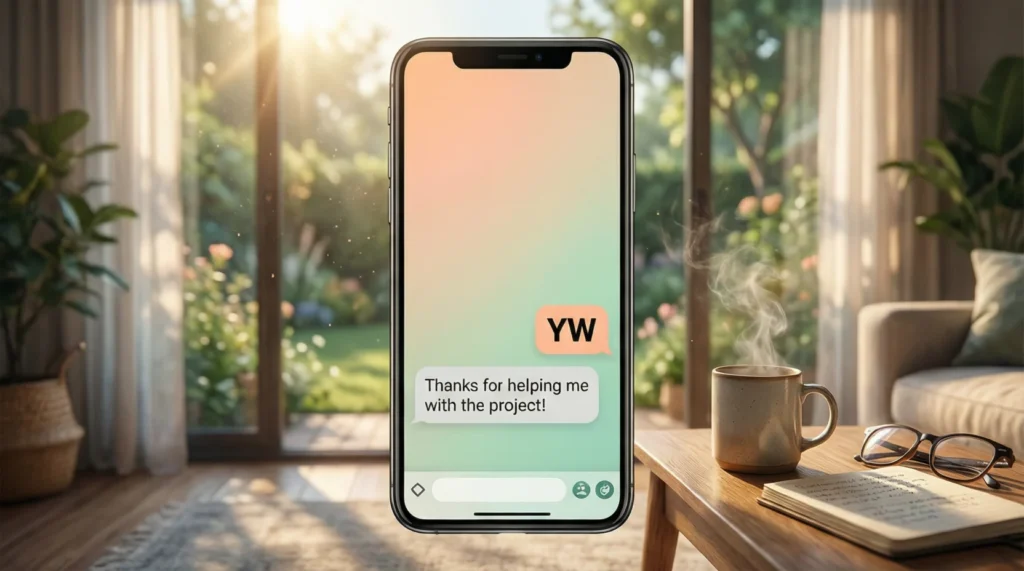
Definition:
YW in text messaging most commonly means “You’re Welcome.”
It’s a short, casual reply used to respond to “thank you” in chats, texts, social media, and online conversations.
You send a quick “thanks” after someone helps you out, and their reply is just two letters: YW.
Simple. Fast. Casual.
But what exactly does YW mean in text, and why has it become so popular in digital conversations?
In today’s fast-moving online world, people shorten phrases to save time, sound relaxed, or keep conversations flowing smoothly. YW is one of those everyday texting abbreviations that looks simple on the surface—but its tone, meaning, and impact can change depending on context.
Whether you’re decoding a message or deciding whether to use YW yourself, this article has you covered.
What Does YW Mean in Text?
YW = You’re Welcome
It’s a casual response used after someone says:
- “Thanks”
- “Thank you”
- “Thx”
- “Ty”
Basic Usage Example
Friend: Thanks for the notes!
You: YW 😊
In most situations, YW is friendly, informal, and perfectly normal in texting.
Origin of “YW” in Texting
Where Did YW Come From?
The abbreviation YW originated from early digital communication styles:
- SMS texting (character limits)
- Instant messaging platforms
- Online forums and chat rooms
People shortened common phrases to save time and typing effort. “You’re welcome” naturally became YW.
When Did It Become Popular?
- Early 2000s: SMS and instant messaging
- Mid-2000s onward: Social media platforms
- Today: Used casually across WhatsApp, Instagram, Snapchat, Discord, and text messages
YW has stayed relevant because it’s:
- Short
- Easy to understand
- Universally recognized
How YW Is Used in Real Conversations
1. Friendly and Polite Usage
This is the most common and positive use.
Examples:
- “Thanks for helping me out!” → YW! 😊
- “Thank you for the reminder.” → YW 👍
Tone: Friendly, casual, appreciative
Best used with: Friends, classmates, casual chats
2. Neutral or Straightforward Usage
Sometimes YW is used plainly without emotional emphasis.
Examples:
- “Thanks.” → YW
- “Thank you for sending it.” → *YW.
Tone: Neutral, efficient
Common in: Quick replies, busy conversations
3. Dismissive or Cold
In certain situations, YW can feel short or emotionally distant.
Examples:
- “Thanks for nothing.” → YW
- After sarcasm or conflict
Tone: Cold, passive-aggressive (depends on context)
Tip: If emotions are involved, spell it out instead.
YW Meaning in Text vs Real-Life Speech
| Context | Spoken Form | Text Form |
|---|---|---|
| Formal | “You’re welcome” | ❌ Avoid YW |
| Casual | “You’re welcome!” | YW |
| Friendly | Warm tone | YW 😊 |
| Professional | Polite response | “You’re welcome” |
Rule of thumb:
👉 The more formal the setting, the less suitable YW becomes.
Examples of YW in Different Tones
Friendly
Thanks for your help!
YW! Happy to help 😊
Neutral
Appreciate it.
YW
Playful
Thanks bestie 💕
YW 😄
Slightly Dismissive
Thanks, I guess.
YW
YW vs Similar Text Abbreviations
Let’s compare YW with other common replies to “thank you.”
Comparison Table: YW and Related Terms
| Abbreviation | Meaning | Tone | Best Use |
|---|---|---|---|
| YW | You’re Welcome | Casual | Friends, texting |
| NP | No Problem | Friendly | Informal chats |
| DW | Don’t Worry | Reassuring | Comforting replies |
| Anytime | Anytime | Warm | Helpful tone |
| Sure | Sure | Neutral | Task-related replies |
| Ofc | Of course | Friendly | Casual chats |
YW vs NP (No Problem): Which Is Better?
- YW focuses on politeness
- NP emphasizes ease and willingness
Example:
- Thanks for helping me move!
- YW → Polite
- NP → Friendly and relaxed
Both are acceptable, but NP can sound warmer in casual situations.
Alternate Meanings of YW
While YW almost always means “You’re Welcome,” it can occasionally have other meanings depending on context.
Less Common Meanings
- Yeah, Whatever (rare and context-heavy)
- Initials or shorthand in gaming or usernames
⚠️ These meanings are not common in everyday texting.
Is YW Polite or Rude?
Short Answer:
YW is usually polite—but context matters.
When It’s Polite
- Casual conversations
- Friendly tone or emoji
- Quick acknowledgments
When It May Feel Rude
- Serious or emotional conversations
- Professional emails
- Arguments or tense exchanges
Tip: If there’s any doubt, write “You’re welcome” instead.
Professional and Polite Alternatives to YW
If you’re texting at work or replying professionally, consider these instead:
Formal Alternatives
- You’re welcome
- Happy to help
- My pleasure
- Glad I could assist
Semi-Formal Options
- Anytime
- No worries
- Of course
Should You Use YW at Work?
Usually no, unless:
- You know the person well
- The workplace culture is casual
- It’s a quick internal message
In emails or client communication, always spell it out.
YW Meaning in Social Media & Online Platforms
Where You’ll See YW Commonly
- Instagram DMs
- Snapchat
- Facebook Messenger
- Discord chats
Less Common In
- Professional emails
- Academic communication
- Customer support replies
Texting Etiquette Tips for Using YW
- Add an emoji if you want warmth 😊
- Avoid using it during serious conversations
- Don’t overuse it—variety sounds more natural
- Match the tone of the conversation
Conclusion:
YW is one of the simplest yet most widely used texting abbreviations—and for good reason. It stands for “You’re Welcome” and is commonly used in casual, friendly conversations where quick replies feel natural. However, the tone of YW depends heavily on context—on its own, it can sound neutral or even a bit dry, which is why adding emojis often helps keep the message warm and friendly 😊.
While YW works perfectly in informal chats with friends or family, it’s best avoided in professional or emotionally sensitive situations, where a full “You’re welcome” sounds more thoughtful and polite.
When used thoughtfully, YW keeps conversations light, fast, and natural. Just remember—when tone matters, a few extra words can go a long way.
FAQs
1. What does YW mean in texting?
YW means “You’re Welcome”, a casual reply to “thank you.”
2. Is YW rude?
No, but it can feel cold if used in emotional or formal situations.
3. Can YW be used professionally?
It’s better to avoid it in professional or formal settings.
4. What does YW mean on Snapchat or Instagram?
The same meaning: You’re Welcome.
5. Is YW the same as NP?
They’re similar, but NP sounds slightly friendlier.
6. Can YW ever mean something else?
Rarely, but context almost always points to “You’re Welcome.”
7. Should I add emojis with YW?
Yes, emojis can soften the tone and make it friendlier.
8. Is YW outdated slang?
No, it’s still widely used and understood today.
Read More Related Articles:
- LMC Meaning in Text: What It Stands For and How to Use It (2026)
- Double Chance Meaning in Soccer: How It Works & Smart Betting Strategy 2025-26

Rachel Monroe is a digital content writer at Meanzy.com who focuses on explaining modern words, phrases, and online expressions. Her writing style is simple, practical, and reader-focused, helping users quickly understand the meaning and usage of today’s evolving language.