
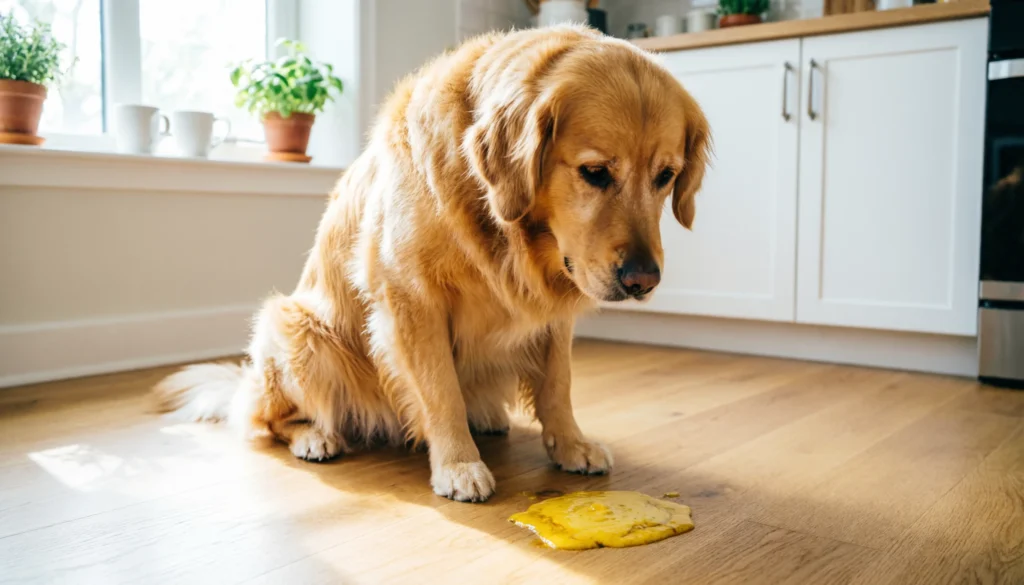
Yellow vomit in dogs typically indicates the presence of bile, a digestive fluid produced by the liver and stored in the gallbladder. It can appear when a dog’s stomach is empty for extended periods, during digestive upset, or due to underlying health issues. While occasional yellow vomiting may be normal, frequent or persistent episodes require veterinary attention.
Seeing your furry friend vomit can be stressful, and noticing a bright yellow color can be especially concerning. Understanding what yellow vomit means in dogs can help you respond appropriately, differentiate between minor issues and serious medical conditions, and ensure your pet stays healthy.
Understanding the Origin and Causes of Yellow Vomit in Dogs
Yellow vomit in dogs is primarily caused by bile reflux, where the stomach pushes bile back up into the esophagus. Bile itself is naturally yellow to greenish, which explains the color. Here’s a breakdown of the most common origins:
1. Empty Stomach or Hunger
- Dogs who go long periods without food may develop bile irritation, resulting in yellow vomiting, usually in the morning.
- Often called “morning sickness” in dogs, it’s generally mild if occasional.
2. Diet and Eating Habits
- Eating too quickly, consuming table scraps, or ingesting grass can trigger vomiting.
- Certain foods may irritate the stomach lining, causing bile to appear in vomit.
3. Digestive Issues
- Conditions like gastritis, acid reflux, or pancreatitis may result in yellow vomit.
- These are usually accompanied by other symptoms such as lethargy, diarrhea, or loss of appetite.
4. Medical Conditions
- Liver disease, kidney problems, or intestinal blockages can cause persistent bile vomiting.
- Yellow vomit in these cases often signals the need for urgent veterinary care.
| Cause | Symptoms | Typical Response |
|---|---|---|
| Empty stomach | Morning vomiting, otherwise playful | Feed smaller meals, monitor |
| Diet/food sensitivity | Occasional vomiting after meals | Adjust diet, avoid table scraps |
| Digestive issues | Vomiting with diarrhea, discomfort | Vet visit, possible medication |
| Serious illness | Persistent vomiting, lethargy | Immediate veterinary care |
Real-World Usage and Popularity
Dog owners frequently discuss yellow vomit on forums, social media groups, and vet advice sites. The term has gained popularity because it’s visually striking and indicates a clear sign that something may be wrong.
Pet bloggers and veterinary articles often use it to explain common digestive symptoms in dogs, making it a widely recognized term in pet care discussions. People searching for “dog vomiting yellow” are usually looking for answers and reassurance, which is why understanding the causes, frequency, and severity is crucial.
Examples of Yellow Vomit in Dogs
Here are some real-life context examples:
- Friendly context:
“My Golden Retriever threw up yellow bile this morning, but he’s acting playful. I gave him a small breakfast, and he seems fine now.” ✅ - Neutral context:
“My dog vomits yellow sometimes, especially if he skips a meal. I’m keeping a food schedule to prevent it.” - Negative/dismissive context:
“My neighbor panics every time her dog vomits yellow. Not every case is serious, but chronic vomiting is concerning!” ⚠️
Comparison With Other Types of Vomit
Understanding yellow vomit in context helps differentiate it from other types:
| Vomit Color | Likely Cause | Urgency |
|---|---|---|
| Yellow | Bile, empty stomach, mild irritation | Monitor if occasional |
| White/Foamy | Stomach acid, nausea | Usually mild |
| Green | Bile, sometimes plant matter | Check for persistent issues |
| Red/Bloody | Internal bleeding, injury | Immediate vet visit |
| Brown/Black | Digested blood, toxins | Urgent veterinary care |
Key takeaway: Yellow vomit is common and sometimes normal, but repeated vomiting, changes in appetite, or other symptoms require a vet check.
Alternate Meanings
While in dogs, yellow vomit almost always refers to bile, the term “yellow vomit” could occasionally appear in:
- Human medicine: Referred to in digestive issues.
- Slang or figurative use: Rarely used metaphorically in literature or media to describe sickness.
In pet care, however, it is almost always literal.
Polite and Professional Advice for Dog Owners
Instead of alarming terms, veterinarians often use professional advice like:
- “Your dog is experiencing bile reflux.”
- “Monitor your dog for vomiting patterns.”
- “Adjust feeding schedule to prevent empty stomach vomiting.”
This approach reassures owners and avoids unnecessary panic.
Tips for Preventing Yellow Vomit in Dogs
- Feed smaller, frequent meals to prevent bile buildup.
- Avoid feeding right before bedtime to reduce morning bile vomiting.
- Monitor diet changes carefully and avoid table scraps.
- Keep a vomiting diary noting frequency, color, and behavior.
- Seek veterinary guidance if vomiting persists more than a day or two.
Example Table: When to Be Concerned
| Symptom | Mild Concern | High Concern |
|---|---|---|
| Occasional yellow vomit | Morning or skipped meal | Persistent daily vomiting |
| Appetite | Eating normally | Loss of appetite |
| Energy levels | Playful and alert | Lethargic, hiding, weak |
| Other symptoms | None | Diarrhea, blood in vomit, abdominal pain |
FAQs
1. Why is my dog vomiting yellow in the morning?
Morning yellow vomit often happens when a dog’s stomach is empty overnight, leading to bile irritation. Feeding smaller meals in the evening can help.
2. Is yellow vomit in dogs serious?
Occasional yellow vomit is usually not serious. Persistent vomiting, lethargy, or other symptoms require veterinary attention.
3. Can food cause yellow vomit in dogs?
Yes. Certain foods, eating too fast, or dietary changes can trigger bile vomiting. Avoid table scraps and stick to a regular diet.
4. How can I prevent my dog from vomiting yellow?
Feed smaller, frequent meals, monitor diet, and maintain a consistent feeding schedule.
5. When should I take my dog to the vet for yellow vomit?
If vomiting occurs frequently, is accompanied by diarrhea, blood, lethargy, or refusal to eat, see a vet immediately.
6. Is yellow vomit in puppies different from adult dogs?
Puppies are more sensitive to stomach upset. Occasional yellow vomit may occur, but frequent vomiting can indicate dehydration or infection.
7. Can stress cause yellow vomit in dogs?
Yes, stress or anxiety may cause digestive upset and bile vomiting in some dogs.
8. Does yellow vomit always indicate bile?
In dogs, yellow vomit almost always contains bile, though it could sometimes be mixed with food or other stomach contents.
Conclusion
Yellow vomit in dogs is a common occurrence, often linked to bile and an empty stomach. While occasional vomiting is usually harmless, persistent yellow vomit can indicate digestive or medical issues that require veterinary attention.
- Observe the frequency and context of vomiting.
- Adjust feeding schedules and diet if needed.
- Monitor for additional symptoms like lethargy, diarrhea, or blood in vomit.
- Seek professional care for repeated or severe episodes.
Understanding yellow vomit can help pet owners respond appropriately, ensure proper care, and keep dogs healthy and happy.
Read More Related Articles:
- Dys Mean in Medical Terms: Definition and Complete Guide In 2026
- EPI Mean in Medical Terms: Meaning and Health Implications In 2026
- Meaning of Basta in Italian: How It’s Used and What It Conveys In 2026

Rachel Monroe is a digital content writer at Meanzy.com who focuses on explaining modern words, phrases, and online expressions. Her writing style is simple, practical, and reader-focused, helping users quickly understand the meaning and usage of today’s evolving language.