
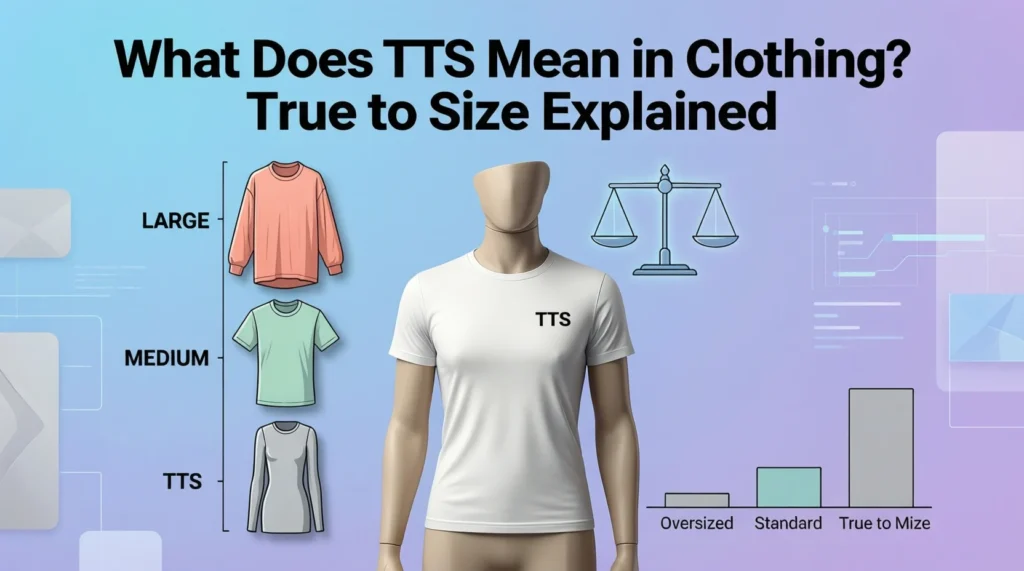
TTS in clothing means “True to Size,” indicating that an item fits exactly as expected according to standard sizing charts.
When a brand or seller says a garment is TTS, it means you can confidently order your usual size without needing to size up or down.
Shopping for clothes online can feel like a guessing game—but terms like TTS exist to make that experience easier. If you’ve ever paused before clicking “Add to Cart” and wondered whether a dress, shirt, or pair of shoes will actually fit, understanding what TTS means in clothing can save you time, money, and frustration.
In this in-depth guide, we’ll break down everything you need to know about TTS (True to Size)—from its origin and real-world usage to examples, comparisons, alternatives, FAQs, and practical shopping tips. By the end, you’ll know exactly how to use this term to shop smarter and avoid sizing surprises.
What Does TTS Mean in Clothing?
In fashion and apparel, TTS stands for “True to Size.”
It means that a garment or shoe matches the standard measurements for that labeled size.
For example:
- If you usually wear a Medium, and the product is marked TTS, a Medium should fit you as expected.
- If you normally buy US size 8 shoes, and reviewers say the shoes are TTS, size 8 should be a comfortable fit.
👉 In short: TTS = your regular size will fit normally.
Why TTS Matters in Online Clothing Shopping
With online shopping booming, customers can’t try clothes on before buying. That’s where fit descriptors like TTS become extremely important.
Why shoppers rely on TTS:
- 📦 Fewer returns due to sizing issues
- 🛍️ Faster purchasing decisions
- 📏 Clear expectations about fit
- ⭐ Helpful customer reviews reference TTS often
Many buyers scroll straight to reviews to check one thing:
“Does it run true to size?”
If the answer is yes (TTS), confidence goes up—and checkout happens faster.
Origin of the Term “TTS” in Clothing
The term True to Size has existed in traditional retail for decades, but the abbreviation “TTS” gained popularity with:
- Online fashion retailers
- Sneaker culture & resale platforms
- Fashion influencers and review blogs
- Customer review sections on eCommerce sites
How it became popular:
- Early online shoppers needed quick shorthand to describe fit.
- Sneakerheads especially began using TTS to discuss shoe sizing accuracy.
- Platforms like Instagram, Reddit, and fashion forums helped spread the abbreviation.
Today, TTS is standard fashion vocabulary, especially in:
- Streetwear
- Shoes & sneakers
- Fast fashion
- Luxury apparel reviews
How TTS Is Used in Real-World Clothing Contexts
You’ll see TTS used in several places:
1. Product Descriptions
Brands may say:
- “Fits true to size”
- “Designed to be TTS”
- “Order your normal size”
2. Customer Reviews
Shoppers often write:
- “I’m usually a small, and this fit TTS.”
- “Shoes are TTS—no need to size up.”
3. Influencer Content
Fashion creators might say:
- “This blazer is totally TTS.”
- “I ordered my usual size, and it fits perfectly.”
4. Size Guides & Fit Notes
Retailers sometimes include a note like:
- “Model wears size M (TTS fit).”
TTS Examples with Tone and Context
Understanding tone helps interpret how TTS is being used.
Friendly / Positive Tone 😊
- “Love this dress! It’s completely TTS and super comfortable.”
- “Ordered my regular size—fits perfectly, TTS.”
Neutral / Informative Tone 😐
- “The shirt fits true to size.”
- “Sizing is accurate and TTS.”
Slightly Cautious Tone 🤔
- “Mostly TTS, but sleeves are a bit long.”
- “TTS overall, though the fabric has no stretch.”
Negative / Dismissive Tone ⚠️
- “Not TTS at all—runs very small.”
- “Definitely size up, not true to size.”
💡 Tip: Always read multiple reviews. One person’s “TTS” might differ due to body shape or fit preference.
TTS in Clothing vs Shoes: Is There a Difference?
Yes—TTS can mean slightly different things in clothing and footwear.
Clothing:
- Based on body measurements (chest, waist, hips)
- Influenced by fabric stretch, cut, and style
- Example: Slim fit vs relaxed fit may both be TTS
Shoes:
- Based on foot length and width
- Often more precise but affected by brand molds
- Sneakers, heels, and boots may vary even if labeled TTS
🔹 In shoes, TTS usually means:
“Buy your standard shoe size unless you have wide or narrow feet.”
Table: TTS in Different Clothing Items
| Item Type | What TTS Means | Buyer Tip |
|---|---|---|
| T-Shirt | Fits standard chest & length | Check if slim or relaxed fit |
| Jeans | Waist & length match size chart | Look for stretch info |
| Dress | Bust, waist, hips align normally | Fabric matters a lot |
| Jacket | Fits over light layers | Consider layering needs |
| Sneakers | Standard foot length fit | Width may vary |
| Heels | Size matches usual heel size | Read comfort reviews |
TTS vs Related Clothing Terms
Understanding TTS is easier when compared with similar sizing terms.
TTS vs Runs Small vs Runs Large
| Term | Meaning |
|---|---|
| TTS (True to Size) | Fits as expected |
| Runs Small | Order one size up |
| Runs Large | Order one size down |
| Oversized | Intentionally loose |
| Slim Fit | Narrow cut but may still be TTS |
| Relaxed Fit | Roomier but sized accurately |
👉 Important:
A garment can be TTS and oversized if the oversized look is intentional.
Does TTS Mean Perfect Fit for Everyone?
Not always.
TTS does NOT guarantee perfection—it means alignment with standard sizing, not individual body types.
Factors that affect fit even when TTS:
- Height (petite vs tall)
- Body proportions
- Fabric stretch or stiffness
- Personal comfort preference
- Intended style (fitted vs loose)
💬 Example:
A dress may be TTS for bust and waist but shorter on taller individuals.
Alternate Meanings of TTS
While TTS in clothing almost always means “True to Size,” the abbreviation can mean different things elsewhere.
Other meanings of TTS:
- Text-to-Speech (technology)
- Time to Ship (eCommerce logistics)
- Trouble Ticket System (IT)
⚠️ Context matters.
If you’re reading about fashion, apparel, or shoes—TTS = True to Size.
Polite or Professional Alternatives to Saying “TTS”
In formal writing, brand descriptions, or professional reviews, you might see:
- “Fits as expected”
- “Accurate sizing”
- “Standard size fit”
- “Consistent with size chart”
- “No sizing adjustment needed”
These alternatives sound more polished while conveying the same meaning as TTS.
Practical Tips for Using TTS When Shopping Online
To shop smarter using TTS:
✔ Do This:
- Compare reviews mentioning TTS
- Check the brand’s size chart
- Note model height and size worn
- Look for fabric stretch info
✖ Avoid This:
- Relying on TTS alone
- Ignoring fit descriptions
- Assuming all brands define sizes equally
🧠 Pro Tip:
If 80% of reviews say “TTS,” it’s usually safe to order your normal size.
Conclusion:
Understanding what TTS means in clothing can completely change how confidently you shop online.
- TTS = True to Size
- It means the item fits as expected based on standard sizing
- Widely used in clothing and shoe reviews
- Helpful—but not foolproof
- Best used alongside reviews and size charts
When you see TTS, think:
“This should fit like my usual size—unless other details say otherwise.”
Use it wisely, read context, and you’ll avoid most sizing mistakes while shopping online.
FAQs
1. What does TTS mean in clothing size?
TTS means True to Size, indicating the item fits according to standard sizing expectations.
2. If something is TTS, should I order my usual size?
Yes. TTS suggests you should order your regular size.
3. Does TTS mean tight or loose?
Neither. TTS means normal fit, not tight or oversized.
4. Is TTS reliable for online shopping?
Mostly yes, especially when supported by multiple customer reviews.
5. Can a brand say TTS but still fit differently?
Yes. Body shape, fabric, and cut can affect fit even if labeled TTS.
6. What does TTS mean in shoe sizing?
It means the shoe fits standard foot length for that size—no need to size up or down.
7. Is TTS the same worldwide?
Not exactly. TTS depends on regional sizing standards (US, UK, EU).
8. What should I do if reviews are mixed about TTS?
Check reviewer body stats, read detailed comments, and consider sizing charts carefully.

John Miller is a professional meanings writer at Meanzy.com, specializing in word definitions, internet slang, acronyms, and text abbreviations. He focuses on delivering clear, accurate explanations with practical examples, helping readers easily understand modern digital terms and their real-life usage.