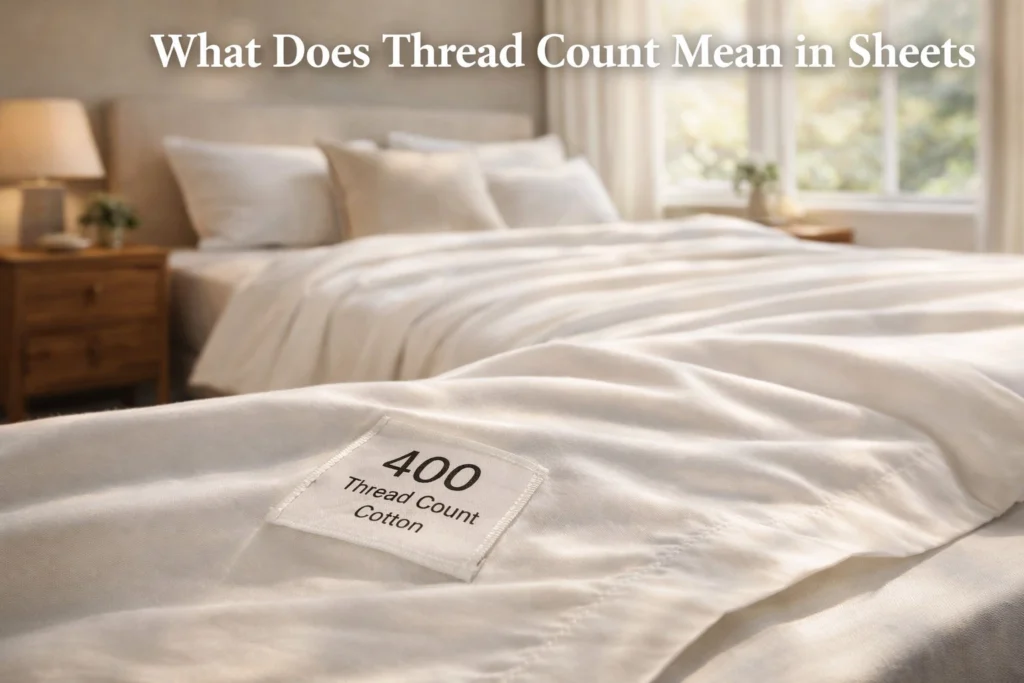
Thread count refers to the number of threads woven into one square inch of fabric, including both horizontal threads (weft) and vertical threads (warp).
When shopping for bed sheets, you have probably noticed the phrase thread count printed prominently on the packaging. Many brands highlight numbers like 300, 600, or even 1000 thread count, suggesting that the higher the number, the better the sheets will be. But what does thread count actually mean, and does a higher number always guarantee softer or higher quality bedding?
Understanding thread count can help you make smarter choices when buying sheets. It can also prevent you from falling for marketing tricks that make certain sheets seem more luxurious than they really are.
In this guide, we will explain what thread count means in sheets, how it affects comfort and durability, the ideal thread count range, and what other factors matter when choosing the perfect bedding.
In simple terms, thread count measures how tightly the threads are woven together in a piece of fabric.
For example, if a sheet has:
- 150 horizontal threads
- 150 vertical threads
The total thread count would be 300 threads per square inch.
A higher thread count often means the fabric feels smoother and more tightly woven, but thread count alone does not determine the quality of the sheets.
The Origin of Thread Count in Bedding
Thread count has long been used in the textile industry as a way to describe fabric density. Originally, it was simply a technical measurement used by manufacturers to indicate how tightly a material was woven.
Over time, bedding companies realized that consumers associated higher numbers with better quality. As a result, thread count became a marketing tool, especially in the luxury bedding market.
In the late twentieth century, brands began advertising high thread count sheets as more comfortable, more durable, and more luxurious. This trend continues today, with some sheets claiming thread counts of 800, 1000, or even higher.
However, textile experts now emphasize that thread count alone does not determine sheet quality. The type of cotton, weave style, and yarn quality also play a major role.
How Thread Count Is Calculated
Thread count is calculated by adding together the number of threads woven horizontally and vertically in one square inch of fabric.
The two types of threads involved are:
- Warp threads which run vertically in the fabric
- Weft threads which run horizontally across the fabric
If a fabric contains 200 warp threads and 200 weft threads per square inch, the thread count would be 400.
This measurement helps describe the density of the fabric weave.
Example Table: How Thread Count Works
| Warp Threads | Weft Threads | Total Thread Count |
|---|---|---|
| 150 | 150 | 300 |
| 200 | 200 | 400 |
| 250 | 250 | 500 |
| 300 | 300 | 600 |
This table shows how thread count increases as more threads are woven into the same square inch of fabric.
Why Thread Count Matters in Bed Sheets
Thread count affects several aspects of how sheets feel and perform.
First, it influences softness. Sheets with a moderate thread count often feel smoother because the threads are woven more closely together.
Second, it affects durability. A higher thread density can help sheets last longer because the fabric structure is stronger.
Third, it can influence breathability. Sheets that are woven too tightly may trap heat, while sheets with a balanced weave allow better airflow.
However, the relationship between thread count and quality is not always straightforward. Extremely high thread counts may not necessarily provide better comfort.
Ideal Thread Count for Comfortable Sheets
Experts generally recommend a thread count between 200 and 600 for most types of cotton sheets.
Sheets within this range usually provide a good balance of softness, breathability, and durability.
Here is a general guide.
| Thread Count Range | Quality Level | Typical Feel |
|---|---|---|
| 150 to 200 | Basic quality | Lightweight and breathable |
| 200 to 400 | Good quality | Soft and comfortable |
| 400 to 600 | Premium quality | Smooth and durable |
| 600 and above | Luxury range | Very dense fabric |
Many bedding experts consider 300 to 500 thread count to be the sweet spot for comfortable and durable sheets.
When Higher Thread Count Can Be Misleading
Some manufacturers advertise extremely high thread counts, such as 800 or 1000. While this may sound impressive, it does not always mean the sheets are better.
In some cases, companies achieve higher numbers by twisting multiple thin fibers together and counting each strand separately. This practice can artificially inflate the thread count without improving the actual quality of the fabric.
As a result, a well made 400 thread count sheet made from high quality cotton may feel softer and last longer than a poorly made 1000 thread count sheet.
This is why experts recommend looking beyond thread count when choosing bedding.
Other Factors That Affect Sheet Quality
Thread count is only one piece of the puzzle. Several other factors influence how comfortable and durable your sheets will be.
Type of Cotton
The quality of cotton fibers plays a major role in how sheets feel.
Some of the most popular types include:
- Egyptian cotton
- Pima cotton
- Supima cotton
- Upland cotton
Longer cotton fibers typically produce smoother and stronger yarn.
Fabric Weave
The way threads are woven together also affects the texture of sheets.
Two common weaves include:
- Percale weave, which feels crisp and breathable
- Sateen weave, which feels smooth and slightly silky
Both types can be comfortable depending on personal preference.
Yarn Quality
High quality yarn made from long staple fibers tends to produce softer and more durable sheets.
Shorter fibers can make fabric feel rougher over time.
Example Table: Thread Count vs Other Quality Factors
| Factor | Why It Matters |
|---|---|
| Thread count | Indicates fabric density |
| Cotton type | Affects softness and durability |
| Weave style | Influences texture and breathability |
| Yarn quality | Determines smoothness and strength |
This table highlights why thread count should be considered alongside other factors.
How Thread Count Affects Different Types of Sheets
Different materials use thread count differently.
For example, cotton sheets often rely on thread count to describe density and comfort.
However, materials like linen or bamboo may have lower thread counts while still feeling soft and breathable.
Here is a simple comparison.
| Material | Typical Thread Count | Feel |
|---|---|---|
| Cotton | 200 to 600 | Soft and versatile |
| Linen | 80 to 150 | Breathable and textured |
| Bamboo | 250 to 350 | Smooth and cooling |
This shows that thread count numbers vary depending on the material.
How to Choose the Right Thread Count for Your Sheets
When buying bed sheets, consider these practical tips.
Look for a thread count between 300 and 500 for most cotton sheets. This range often provides the best balance of softness and durability.
Pay attention to the type of cotton used. Long staple cotton usually produces higher quality fabric.
Check the weave style if you have a preference for crisp or silky textures.
Avoid focusing only on extremely high thread counts. Quality materials and construction matter more.
Finally, consider your sleeping preferences. If you tend to sleep hot, breathable fabrics with moderate thread counts may feel more comfortable.
FAQs
What does thread count mean in sheets?
Thread count refers to the total number of horizontal and vertical threads woven into one square inch of fabric. It is used to measure the density of the fabric used in bed sheets.
Is a higher thread count always better?
Not necessarily. While higher thread counts can indicate smoother fabric, extremely high numbers may be the result of marketing techniques rather than actual quality improvements.
What is the best thread count for bed sheets?
Most experts recommend a thread count between 300 and 500 for cotton sheets. This range usually offers a good balance of softness, breathability, and durability.
Are 1000 thread count sheets better than 400 thread count sheets?
Not always. A well made 400 thread count sheet made from high quality cotton can feel softer and last longer than a poorly made 1000 thread count sheet.
Does thread count affect how cool sheets feel?
Yes, but it is not the only factor. Sheets with extremely high thread counts may trap heat, while breathable fabrics with moderate thread counts often feel cooler.
Do linen sheets have low thread counts?
Yes. Linen sheets typically have lower thread counts than cotton sheets, but they can still be very comfortable and durable.
What type of cotton is best for high quality sheets?
Egyptian cotton, Pima cotton, and Supima cotton are often considered high quality options because they use long staple fibers that produce smoother fabric.
Should thread count be the main factor when buying sheets?
No. Thread count should be considered along with cotton type, weave style, and fabric quality to determine the overall comfort and durability of sheets.
Conclusion
Thread count is an important term in the bedding industry, but it is often misunderstood. In simple terms, it refers to the number of threads woven into one square inch of fabric.
While higher thread counts can sometimes indicate smoother and more durable sheets, they do not automatically guarantee better quality. The type of cotton, weave style, and yarn quality are equally important factors that influence how sheets feel and perform.
For most people, choosing sheets with a thread count between 300 and 500 offers the best balance of comfort, breathability, and durability. By understanding what thread count really means, you can make more informed decisions and choose bedding that provides a better night’s sleep.
Read More Related Articles:
- What Does @ Mean in Texting: And How to Use It Correctly In 2026
- From Concentrate Mean in Juice: How It Affects Your Drink In 2026
- What Does C and H Mean in Car: How to Protect Your Engine In 2026

Megan Foster is a thoughtful and creative content creator at Meanzy.com with a strong curiosity for language and communication. Known for her clarity and attention to detail, she simplifies confusing slang, acronyms, and modern terms into easy, relatable meanings readers can trust.