
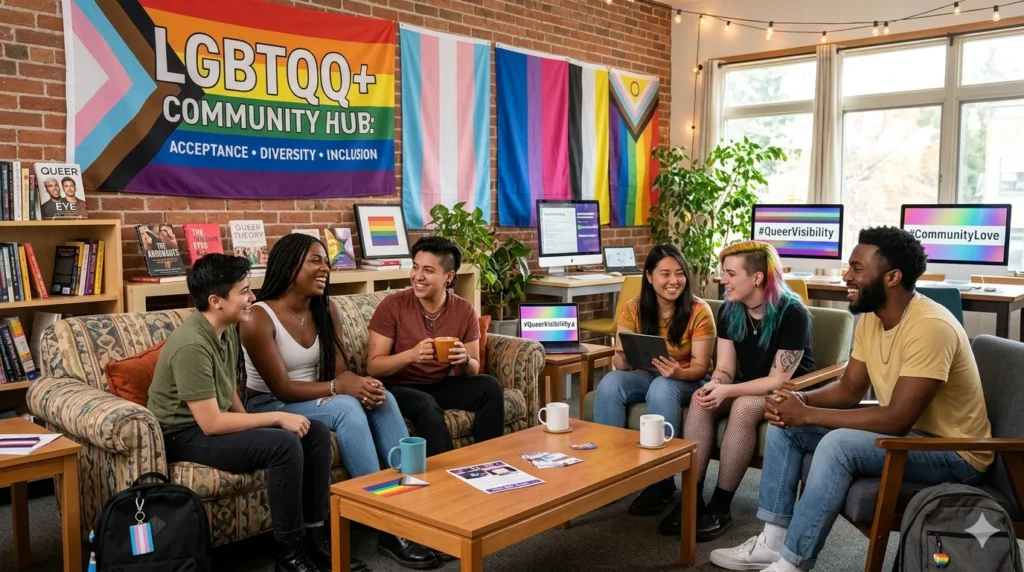
Q in LGBTQ stands for “Queer” or “Questioning.”
It is used to describe sexual orientations, gender identities, or individuals who are exploring their sexual or gender identity. Queer is an inclusive term for people who do not strictly identify as heterosexual or cisgender, while Questioning refers to individuals who are unsure or exploring their identity.Example:
“I identify as LGBTQQ because I am questioning my gender identity.”
If you have seen the acronym LGBTQ, you might have wondered what each letter stands for, especially the Q. While L, G, B, and T are widely understood to represent lesbian, gay, bisexual, and transgender, the Q sometimes causes confusion. Some people wonder whether it refers to a sexual orientation, a gender identity, or something else entirely.
Understanding Q in LGBTQ is important because it represents a growing and recognized part of the LGBTQ community. It acknowledges identities and experiences that may not fit into traditional categories, and it fosters inclusivity and understanding.
In this article, we will explain exactly what Q means, its origin, usage, related terms, and how it fits into the LGBTQ acronym. We will also provide examples, comparisons, alternatives, and FAQs to help you understand it fully.
What Does Q Mean in LGBTQ?
The Q in LGBTQ can represent two main meanings:
- Queer:
Queer is an umbrella term for people whose sexual orientation, gender identity, or expression does not conform to societal norms of heterosexuality or traditional gender identities. Queer is intentionally broad, allowing individuals to describe themselves without rigid categories. - Questioning:
Questioning refers to people who are exploring or uncertain about their sexual orientation or gender identity. It acknowledges the process of self-discovery and the fact that identity can be fluid over time.
Why Q Was Added to LGBTQ
Historically, LGBTQ was initially just LGBT. Over time, activists and communities recognized that the acronym did not fully include everyone who experiences gender or sexual diversity. Adding Q makes the acronym more inclusive and highlights that identity is personal, fluid, and evolving.
Including Q also normalizes the experience of questioning and exploration. Many people may not have fully settled on a label for themselves, and the Q gives them space to exist in the community without pressure.
Origin of Q in LGBTQ
The Q emerged in the 1980s and 1990s as the LGBTQ community expanded and activists aimed for broader inclusivity. Initially, queer was a derogatory term, often used to insult or marginalize LGBTQ people. However, the community reclaimed the word as a term of empowerment and inclusivity.
Queer now signifies flexibility, rejection of strict labels, and resistance to societal norms regarding sexuality and gender. Meanwhile, Questioning gained recognition as more mental health, education, and youth organizations focused on supporting individuals exploring their identity.
How Q Is Used in Conversations
Q can be used in different contexts depending on whether someone identifies as Queer or Questioning.
Queer Examples
- Individual identity: “I am queer, which means I don’t feel the need to fit into traditional categories.”
- Community inclusion: “Queer people often advocate for visibility and inclusivity.”
- Social media: Hashtags like #QueerPride, #QueerCommunity, or #QueerVisibility celebrate identities.
Questioning Examples
- Personal reflection: “I’m questioning my orientation and trying to understand my feelings.”
- Supportive context: “It’s okay to be questioning; take your time to explore your identity.”
- Educational resources: Many LGBTQ centers provide resources specifically for questioning youth.
Both uses acknowledge diversity, but one emphasizes identity, and the other emphasizes exploration.
Tone and Context of Q
- Affirmative tone: When Q is used as queer, it is empowering, inclusive, and self-affirming.
- Neutral tone: When Q refers to questioning, it is descriptive and supportive.
- Community-oriented tone: In LGBTQ spaces, Q signals that the community embraces fluidity and diversity.
Adding Q to the acronym helps make discussions more inclusive and respectful of people’s experiences.
Table of Q Meanings in LGBTQ
| Q Meaning | Description | Tone | Example |
|---|---|---|---|
| Queer | Inclusive term for non-heterosexual or non-cisgender identities | Affirming, inclusive | “I identify as queer because I don’t fit traditional categories.” |
| Questioning | Exploring sexual orientation or gender identity | Neutral, supportive | “I’m questioning my identity and learning more about myself.” |
Real World Examples of Q in LGBTQ Conversations
Example 1 – Social Media Post
“I’m proud to be LGBTQQ. I am queer and proud of my identity!”
Example 2 – Youth Group Discussion
Student: “I’m still figuring out who I am.”
Counselor: “That’s okay. Being questioning is a normal part of exploring your identity.”
Example 3 – Community Event
“Our LGBTQQ community event celebrates queer identities and supports questioning youth.”
These examples show how Q is both a personal and community-oriented label, promoting understanding and inclusivity.
Related Terms and Concepts
Q often overlaps with other LGBTQ terms and identities. Here are some related concepts:
- Pansexual: Attraction to people regardless of gender.
- Non-binary: Gender identity outside male/female categories.
- Genderqueer: Gender identity that is non-conforming or fluid.
- Fluid: Identity that can change over time.
Including Q in LGBTQ acknowledges these identities and gives people space to define themselves without strict labels.
Comparison With Other LGBTQ Letters
| Letter | Meaning | Notes |
|---|---|---|
| L | Lesbian | Women attracted to women |
| G | Gay | Men attracted to men or general attraction |
| B | Bisexual | Attraction to more than one gender |
| T | Transgender | Gender identity differs from assigned sex at birth |
| Q | Queer or Questioning | Inclusive term or someone exploring identity |
Q is unique because it can describe a broad identity (queer) or a process of self-discovery (questioning), unlike other letters which describe specific identities.
Alternate Interpretations of Q
While Q in LGBTQ usually means queer or questioning, occasionally it may appear in other contexts:
- Quirky: Rarely, in casual online chats, some people jokingly use Q for quirky.
- Queerplatonic: In relationships, sometimes Q is associated with queerplatonic partnerships, which are non-romantic but deeply intimate relationships.
Despite these uses, in official LGBTQ contexts, queer and questioning remain the standard meanings.
Polite and Respectful Alternatives
In conversation or professional contexts, it is important to respect how someone self-identifies. If someone prefers not to use Q, alternatives include:
- Use the full term queer when appropriate.
- Say exploring identity or questioning for someone unsure of their orientation or gender.
- Avoid assumptions; always ask respectfully.
Example:
Instead of “You must be Q,” you could say, “Are you comfortable sharing how you identify?”
Practical Tips for Using Q Correctly
- Understand the difference between queer and questioning.
- Use Q respectfully in conversations and avoid labeling others without consent.
- Recognize that queer is an umbrella term and can be inclusive of multiple identities.
- When addressing youth or newcomers, emphasize support and exploration.
- Use Q to signal inclusivity in community discussions, events, or online spaces.
These tips help ensure that Q is used in a positive, affirming way.
Table of Examples of Q in Context
| Context | Example | Tone |
|---|---|---|
| Personal identity | “I am queer and proud of who I am” | Affirming |
| Exploration | “I am questioning my orientation” | Supportive |
| Social media | #QueerVisibility | Celebratory |
| Community event | “LGBTQQ+ youth support group” | Inclusive |
FAQs
What does Q mean in LGBTQ?
Q stands for queer or questioning. Queer is an inclusive term for diverse sexual orientations or gender identities. Questioning refers to exploring one’s identity.
Is Q offensive?
Queer was historically used as a slur, but it has been reclaimed by the community as an empowering, inclusive term. Use it respectfully.
Can anyone use Q?
Yes, people can identify as Q if it aligns with their experience. However, avoid labeling others without consent.
What is the difference between queer and questioning?
Queer describes an identity, while questioning describes the process of exploring identity.
Is Q inclusive of non-binary people?
Yes, queer is an umbrella term that includes non-binary, genderqueer, and other gender-diverse identities.
Why is Q important in LGBTQ?
It fosters inclusivity, acknowledges fluidity, and supports individuals exploring their identity.
Does Q only refer to sexual orientation?
No, queer can refer to both sexual orientation and gender identity.
What is the significance of adding Q to LGBTQ?
It recognizes people who do not fit traditional categories and promotes inclusivity in the community.
Conclusion
Q in LGBTQ is a meaningful and inclusive addition to the acronym. Representing queer or questioning, it allows individuals to identify themselves or acknowledge their process of self-discovery without judgment. Queer is an empowering term that embraces non-conformity, diversity, and fluidity, while questioning recognizes the natural journey of exploring one’s sexual orientation or gender identity.
Including Q ensures that the LGBTQ community remains inclusive, welcoming, and affirming of people at all stages of self-understanding. It is a reminder that identity is personal, evolving, and valid in all forms.
By understanding Q, we foster empathy, visibility, and respect for diverse experiences in our conversations, communities, and online interactions.
Read More Related Articles:
- VSC Mean in a Car: Stability, Safety and Control In 2026
- Invalid Syntax Mean in Python: Error Every Coder Faces In 2026
- What Does @ Mean in Texting: And How to Use It Correctly In 2026

Megan Foster is a thoughtful and creative content creator at Meanzy.com with a strong curiosity for language and communication. Known for her clarity and attention to detail, she simplifies confusing slang, acronyms, and modern terms into easy, relatable meanings readers can trust.