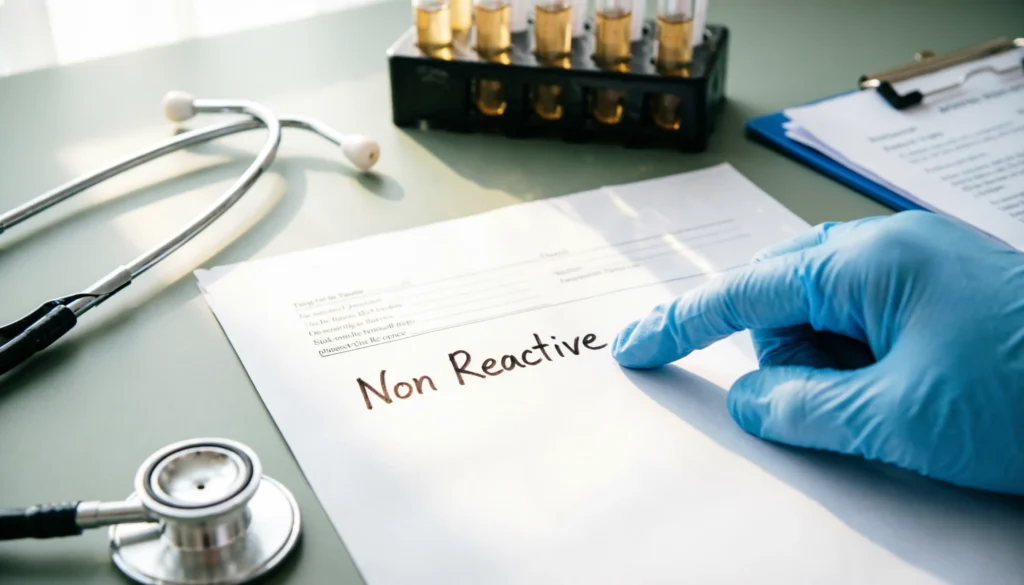
A non reactive test result means that the test did not detect the presence of the substance, infection, or marker it was designed to check. In other words, it indicates a negative outcome for the condition being tested, suggesting no evidence of infection, antibodies, or relevant activity in the sample.
Understanding your test results can feel confusing or even stressful, especially when unfamiliar terms like non reactive appear. This guide explains what “non reactive” truly means, its implications, examples, comparisons, and professional alternatives, all in a friendly, easy-to-digest way.
Origin and Meaning of Non Reactive in Test Results
The term “non reactive” originates from medical and laboratory testing terminology, where scientists needed a simple way to indicate the absence of a reaction in a diagnostic test.
- Reactive = the test detected the substance, antigen, or antibody it was designed to find.
- Non Reactive = the test did not detect the substance.
This phrasing became popular in blood tests, HIV screenings, hepatitis panels, and other laboratory diagnostics because it is precise and avoids unnecessary confusion.
Common Tests That Use “Non Reactive”
Here’s a table showing typical tests where you might see the term “non reactive”:
| Test Type | What Non Reactive Means | Typical Implication |
|---|---|---|
| HIV Test | No HIV antibodies detected | Likely negative for HIV infection |
| Hepatitis B/C Test | No viral antigens or antibodies detected | No infection detected |
| Syphilis (RPR/VDRL) | No antibodies detected | No evidence of syphilis infection |
| Blood Donation Screening | No infectious agents detected | Blood is safe to use |
| COVID-19 Antibody Test | No antibodies detected | No prior exposure detected |
Real-World Usage
In real-life medical scenarios, “non reactive” is a term doctors and laboratories use to communicate results clearly:
- Friendly example: “Your HIV test came back non reactive, which means you’re negative for HIV. That’s great news! 😊”
- Neutral example: “The hepatitis panel was non reactive. No infection was detected.”
- Professional/clinical note: Non reactive results are documented as part of routine medical reporting.
Why it matters: Knowing your result is non reactive can relieve stress but also guide further medical advice. Some conditions require follow-up tests even if the first result is non reactive, especially if testing occurred during a window period when the infection might not yet be detectable.
Comparison With Related Terms
| Term | Meaning | Key Difference from Non Reactive |
|---|---|---|
| Reactive | Indicates presence of antibodies or antigens | Opposite of non reactive |
| Negative | Often used interchangeably | Non reactive is more precise in lab context |
| Positive | Test detected the condition | Usually paired with medical guidance |
| Indeterminate | Test result unclear or borderline | Non reactive clearly indicates absence |
Tip: While “negative” and “non reactive” are sometimes used interchangeably, “non reactive” is more formal and lab-specific, ensuring less ambiguity in medical records.
Alternate Meanings of Non Reactive
Though mostly used in medical testing, “non reactive” can occasionally appear in other contexts:
- Chemical or Laboratory Settings:
- Indicates that a substance did not undergo a chemical reaction when combined with another substance.
- Behavioral or Social Context (rarely):
- Describes someone who did not respond to stimuli or interaction.
These alternate meanings are far less common in everyday healthcare discussions, but they highlight the versatility of the term.
Polite and Professional Alternatives
When communicating test results in person or in reports, professionals might use:
- “Your test did not detect the condition or antibodies.”
- “No infection was found.”
- “The screening was negative.”
- “Results indicate the absence of the target marker.”
These alternatives help patients understand results without unnecessary medical jargon, improving clarity and reassurance.
Examples With Context
Example Table of Non Reactive Results
| Scenario | Result | Interpretation |
|---|---|---|
| Routine HIV test | Non Reactive | No HIV antibodies detected; negative result |
| Pre-employment drug screening | Non Reactive | No prohibited substances found |
| Blood donation screening | Non Reactive | Blood is safe for transfusion |
| Prenatal infection screening | Non Reactive | No evidence of infection in mother |
| COVID-19 antibody test | Non Reactive | Likely no prior exposure to the virus |
Friendly Tone: “Great news! Your screening for hepatitis B is non reactive. That means your body shows no signs of infection.”
Neutral Tone: “The RPR test came back non reactive; no syphilis antibodies were detected.”
Clinical Note: “Results indicate non reactive status for HIV, HCV, and HBV antigens/antibodies.”
FAQs
1. What does non reactive mean for HIV testing?
Non reactive in an HIV test means the test did not detect HIV antibodies, suggesting you are negative for HIV. Follow-up testing may be recommended if recent exposure is suspected.
2. Is non reactive the same as negative?
Yes, in most medical contexts, non reactive is essentially the formal lab version of negative, though “negative” is more commonly used in patient-facing reports.
3. Can a non reactive result ever be wrong?
Yes. Timing of the test is crucial. For example, if testing occurs during the window period of an infection, the result may appear non reactive even if exposure occurred. Retesting later is often advised.
4. What should I do after a non reactive test result?
Usually, no action is needed. However, continue regular screenings as advised by your healthcare provider and maintain healthy practices.
5. Are non reactive results always permanent?
Non reactive reflects the current test result. If exposed to the condition later, a future test could be reactive.
6. Does non reactive mean I have immunity?
Not necessarily. For some conditions, a non reactive result just means no current infection, not that you are immune. Vaccination and other preventive measures may still be required.
7. How do doctors explain non reactive results to patients?
Doctors typically say something like: “Your test was non reactive, which means no evidence of infection was found. This is good news, but let’s discuss follow-ups if needed.”
8. Can non reactive appear on home test kits?
Yes, many at-home tests, such as HIV or pregnancy tests, may indicate non reactive to show a negative result. Instructions usually clarify what the term means.
Conclusion:
- Non reactive = generally good news: It indicates no evidence of the target condition.
- Understand the window period: Some infections may not show immediately; retesting may be advised.
- Read lab notes carefully: Doctors often provide context along with the term non reactive.
- Don’t confuse with immunity: Non reactive does not mean your body cannot get the infection in the future.
- Ask questions: Always feel free to ask your healthcare provider if you don’t fully understand the term in your results.
Read More Related Articles:
- Caps Means in Soccer Explained: Why Players Earn “Caps” In 2026
- What Does OG Mean in Fortnite? Simple Explanation for New Players In 2026
- What Does EMD Mean in Text? Definition, Usage, Examples & Alternatives (2026)

Megan Foster is a thoughtful and creative content creator at Meanzy.com with a strong curiosity for language and communication. Known for her clarity and attention to detail, she simplifies confusing slang, acronyms, and modern terms into easy, relatable meanings readers can trust.