
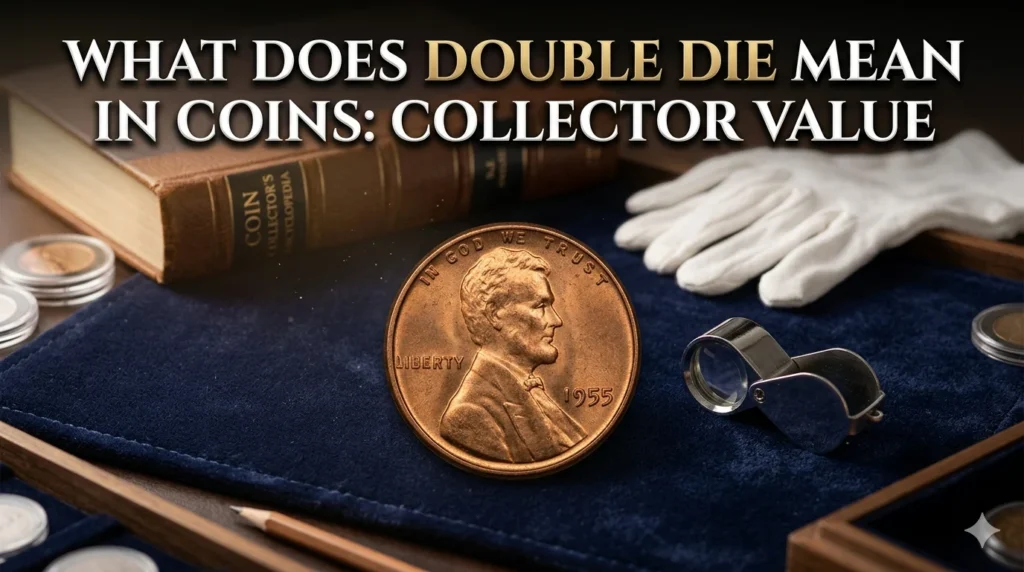
A double die coin is a coin created when the die used to stamp the coin design receives multiple misaligned impressions during the manufacturing process. This causes certain elements of the coin’s design such as letters, numbers, or images to appear doubled.
Coin collectors often get excited when they hear the phrase “double die.” At first glance, it might sound like a damaged coin or a simple minting mistake. But in the world of numismatics, a double die coin can be extremely valuable and highly sought after by collectors.
Some of the most famous coins in history became valuable precisely because of this unusual minting error. A simple penny with a noticeable doubled design can sometimes be worth hundreds or even thousands of dollars.
If you have ever noticed letters or numbers on a coin that look slightly duplicated or shadowed, you might be looking at a double die coin. Understanding what this means can help you identify rare coins and appreciate how these fascinating mint errors occur.
Unlike damage that happens after a coin leaves the mint, a double die occurs during the coin’s production and becomes part of the coin’s original design.
In simple terms, a double die coin shows a clear duplicated design because the minting die itself was incorrectly created.
Understanding How Coins Are Made
To fully understand a double die error, it helps to know a little about how coins are produced.
The minting process involves several steps:
- A master design is created.
- The design is transferred to a working hub.
- The hub presses the design into a die.
- The die is used to strike coins from metal blanks.
A die is essentially a hardened metal tool that stamps the design onto coins. Each time the die presses a blank coin, the design transfers onto the metal surface.
Sometimes, during the creation of the die itself, the design is impressed more than once and not perfectly aligned. When that happens, every coin struck by that die shows the same doubled features.
That is what creates a double die coin.
Origin of the Term Double Die
The term double die comes directly from the minting process.
Historically, dies were made by repeatedly pressing a hub into a steel blank to transfer the design. If the hub was slightly misaligned during a second impression, the design elements could appear doubled.
Before modern technology improved the process, this type of error happened more frequently.
Today, most mints use advanced machinery that reduces the chance of hub misalignment. However, rare cases still occur, which makes modern double die coins even more exciting for collectors.
Why Double Die Coins Are Popular Among Collectors
Double die coins are highly valued because they represent genuine minting errors. Unlike damaged coins or coins altered after leaving the mint, these errors occurred during the official production process.
Collectors appreciate them for several reasons:
• They are authentic mint errors
• Some varieties are extremely rare
• They can significantly increase a coin’s value
• They add historical interest to a collection
A famous example is the 1955 doubled die Lincoln penny, which became one of the most recognized mint errors in coin collecting.
Coins like these show dramatic doubling in the lettering, making them easy to spot and highly collectible.
How to Identify a Double Die Coin
Many people confuse double die coins with coins that simply look blurry or damaged. True double die coins have very specific characteristics.
Look for these signs:
• Clear duplication in letters or numbers
• Shadow like outlines on design elements
• Separation between the doubled images
• Consistent doubling across multiple features
For example, the word “LIBERTY” or the date on a coin might appear slightly shifted with a second impression visible.
A magnifying glass or coin microscope often helps collectors confirm the doubling.
Common Examples of Double Die Coins
Some coins are famous for their double die varieties. These coins often appear in collector guides and auctions.
Famous Double Die Coins
| Coin | Year | Description | Estimated Collector Interest |
|---|---|---|---|
| Lincoln Cent | 1955 | Strong doubling in lettering and date | Extremely famous error |
| Lincoln Cent | 1972 | Noticeable doubling on obverse text | Popular among collectors |
| Lincoln Cent | 1969 S | Rare doubled design with strong details | Very valuable |
| Roosevelt Dime | 1964 | Subtle doubled design in lettering | Moderate collector demand |
These coins can sometimes be identified without professional tools because the doubling is so obvious.
Real World Examples of Double Die Coins
To understand how collectors talk about these coins, it helps to look at typical examples.
Example Situations
| Situation | Explanation |
|---|---|
| A collector notices the date on a penny looks doubled | They might suspect a double die error |
| Someone finds a coin with doubled lettering under magnification | It could be a valuable mint error |
| A coin dealer identifies a doubled design during evaluation | The coin may receive a higher value |
In coin collecting communities, people often share photos online asking whether their coins show true double die characteristics.
Different Types of Double Die Errors
Not all double die coins look the same. Some show dramatic doubling, while others are subtle.
Major Double Die
Major double die errors display obvious duplication that can often be seen without magnification.
Example: the 1955 doubled die penny.
Minor Double Die
Minor versions show slight doubling that usually requires magnification to detect.
Obverse vs Reverse Double Die
| Type | Meaning |
|---|---|
| Double Die Obverse (DDO) | Doubling appears on the front of the coin |
| Double Die Reverse (DDR) | Doubling appears on the back of the coin |
Collectors often use these abbreviations when describing coin varieties.
Double Die vs Machine Doubling
Many beginners mistake machine doubling for a double die error. The two are very different.
Key Differences
| Feature | Double Die | Machine Doubling |
|---|---|---|
| Cause | Die created with doubled design | Mechanical shift during coin strike |
| Appearance | Clear, separated doubling | Flat or smeared look |
| Value | Often valuable | Usually little collector value |
| Origin | Occurs during die creation | Happens during coin striking |
Machine doubling is far more common and does not usually increase a coin’s value.
Learning this distinction helps collectors avoid misidentifying coins.
Why Double Die Coins Can Be Valuable
The value of a double die coin depends on several factors:
• Rarity
• Coin condition
• Visibility of the doubling
• Collector demand
• Historical significance
Some dramatic errors can sell for thousands of dollars at auction.
However, minor doubling might only add a small premium.
Collectors often consult professional grading services to verify authenticity.
Alternate Meanings of Double Die
While the phrase is most commonly used in coin collecting, it may appear in other contexts.
For example:
• In manufacturing, double die could refer to duplicated stamping errors
• In casual conversation, people might incorrectly use it when describing doubled images on objects
However, in numismatics the meaning specifically refers to a minting error caused during die production.
Polite or Professional Ways to Describe Double Die Coins
When discussing coins with collectors or dealers, certain phrases are commonly used.
Instead of saying a coin is simply “messed up,” professionals might say:
• It has a doubled die variety
• It shows hub doubling
• It appears to be a double die obverse
• The coin displays clear doubling in the design
Using these terms helps communicate clearly in coin collecting discussions.
Tips for New Coin Collectors
If you want to search for double die coins in your pocket change, keep these tips in mind.
• Use a magnifying glass or coin loupe
• Study known examples from collector guides
• Compare suspected coins with verified images
• Avoid confusing machine doubling with real double die errors
• Store valuable coins in protective holders
Many collectors discover their first interesting coin simply by carefully examining everyday change.
FAQs
What does double die mean on a coin?
A double die coin is a coin that shows duplicated design features because the die used to stamp the coin received multiple misaligned impressions during manufacturing.
Are double die coins rare?
Some double die coins are very rare, while others are more common. The rarity depends on how many coins were produced with the faulty die.
How can I tell if my coin is a double die?
Look for clear duplication in letters, numbers, or design elements. Using magnification can help identify the separation between the doubled images.
Are double die coins valuable?
Yes, many double die coins are valuable, especially famous varieties such as the 1955 doubled die penny. However, value varies depending on rarity and condition.
What is the difference between double die and machine doubling?
Double die errors occur when the die itself is created incorrectly. Machine doubling happens during the coin striking process and usually does not add value.
Which coins are known for double die errors?
Several coins are known for this error, including certain Lincoln cents, Roosevelt dimes, and other U.S. coins produced in specific years.
Can modern coins have double die errors?
Yes, although modern minting technology reduces the chances, double die errors can still occur occasionally.
Should I get a double die coin professionally graded?
If you believe your coin might be a valuable double die variety, professional grading can confirm authenticity and help determine its market value.
Conclusion
Double die coins are one of the most fascinating mint errors in coin collecting. They occur when the die used to stamp coins receives multiple misaligned impressions during production, causing design elements to appear doubled.
These coins capture the interest of collectors because they are genuine mint mistakes that create unique and sometimes extremely valuable pieces.
Learning how to recognize the difference between a true double die error and common machine doubling is essential for anyone interested in coin collecting. With careful observation and the right tools, you might even discover a valuable double die coin in your own collection or pocket change.
For collectors, the thrill lies not just in the potential value but also in uncovering a small piece of minting history hidden in everyday coins.
Read More Related Articles:
- GTS Mean in Text Message: Definition and Real Examples In 2026
- Contrapositive Means in Geometry: Every Student Should Know In 2026
- Xer Means in Math: From Confusion to Clarity In 2026

Rachel Monroe is a digital content writer at Meanzy.com who focuses on explaining modern words, phrases, and online expressions. Her writing style is simple, practical, and reader-focused, helping users quickly understand the meaning and usage of today’s evolving language.