
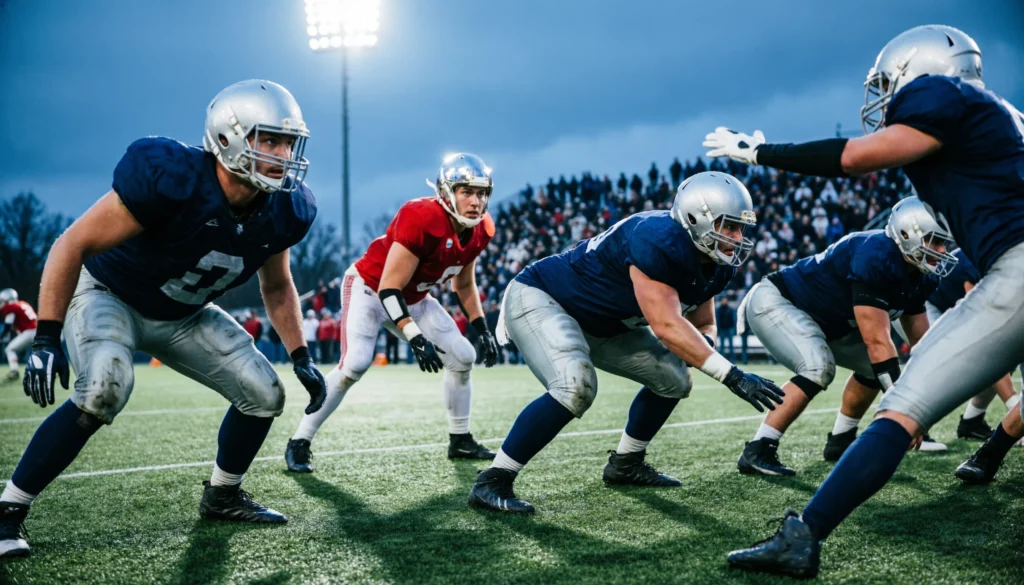
In football, Cover 2 is a defensive scheme where two safeties divide the deep portion of the field into halves, each responsible for protecting one side, while cornerbacks and linebackers cover the short and intermediate zones. This strategy focuses on preventing big plays while keeping pressure on the quarterback.
If you’ve ever watched football and heard commentators mention “Cover 2,” you might have wondered what it really means and why teams use it so often. Whether you are a casual fan or a budding football strategist, understanding Cover 2 defense is key to grasping how teams prevent explosive plays and control the game.
Cover 2 is more than just a play; it’s a philosophy. By assigning two safeties to the deep halves of the field and positioning cornerbacks and linebackers strategically in short zones, teams aim to create a balance between stopping the pass and supporting the run.
But how does this strategy work in real games? And why is it so popular among coaches at all levels, from high school to the NFL? Let’s break it down step by step.
The Origin of Cover 2
The Cover 2 defense has roots in zone-based defensive strategies from the 1960s and 1970s. It was popularized in the NFL by legendary coaches like Tony Dungy, who implemented a version called the Tampa 2, a slightly modified Cover 2 that allowed the middle linebacker to drop deeper into coverage.
Key points about the origin:
- Early zone concepts: Developed to counter emerging passing offenses.
- Tampa 2 evolution: Added flexibility in the middle of the field.
- Popularity: Used widely in college and professional football because of its balance against both run and pass plays.
Today, Cover 2 remains a staple in defensive playbooks because it is simple to teach yet effective in preventing big plays.
How Cover 2 Works: The Basics
At its core, Cover 2 splits the deep field into two halves covered by the free safety and the strong safety. Meanwhile:
- Cornerbacks cover the short-to-intermediate zones near the sidelines.
- Linebackers cover short middle zones and can support against the run.
Defensive Responsibilities in Cover 2
| Position | Primary Responsibility | Notes |
|---|---|---|
| Free Safety | Deep half of the field | Prevents long passes |
| Strong Safety | Deep half of the field | Often supports run defense |
| Cornerbacks | Flat zones and short routes | Can play man on quick receivers if needed |
| Linebackers | Hook/curl zones and intermediate zones | Can blitz or cover tight ends |
| Defensive Line | Apply pressure on the quarterback | Often 4 linemen, but blitz packages are possible |
The strategy is designed to prevent explosive plays, especially long touchdown passes, while allowing the defense to control underneath routes.
Cover 2 vs Other Defensive Schemes
Understanding Cover 2 is easier when you compare it with other common defensive schemes:
| Scheme | Deep Coverage | Strengths | Weaknesses |
|---|---|---|---|
| Cover 2 | Two safeties | Limits deep passes, simple to teach | Vulnerable in deep middle, between safeties |
| Cover 3 | One safety | Strong against deep middle routes | Can allow short passes on sidelines |
| Man-to-Man | Individual matchups | Aggressive, adaptable | Can be beaten by speed or misdirection |
| Tampa 2 (Cover 2 variant) | Two safeties + MLB deep drop | Strong against both run and pass | Requires athletic middle linebacker |
Key takeaway: Cover 2 emphasizes a “bend but don’t break” philosophy. It concedes shorter passes but prevents big scoring plays, making it safer against vertical offenses.
Examples of Cover 2 in Action
To make this more concrete, let’s look at a few examples with context:
Example Table: Cover 2 Scenarios
| Situation | How Cover 2 Responds | Commentary |
|---|---|---|
| Quarterback targets deep sideline | Safeties cover their half; cornerbacks play short zone | Big play is prevented |
| Running back catches a screen pass | Linebackers step up; cornerbacks stay in zone | Quick passes are contained |
| Tight end runs seam route | Linebackers drop back slightly; safeties watch | Middle can be vulnerable if MLB misses |
| Blitzing situation | Defensive line pressures QB; safeties cover deep | Can force QB into rushed throws |
Real-World Example:
In a 2019 NFL game, the Tampa Bay Buccaneers used a Tampa 2 defense against a passing-heavy opponent. The two safeties split the deep field, preventing any touchdown passes longer than 25 yards, while the linebackers and cornerbacks limited short gains. The result? A controlled game where the offense struggled to break through.
Advantages of Cover 2
- Prevents big plays: Deep halves covered by safeties reduce the chance of long touchdowns.
- Simplifies assignments: Each defender knows their zone, reducing mistakes.
- Supports the run: Strong safety and linebackers can help stop running plays.
- Flexible against short passes: Cornerbacks cover quick routes near sidelines.
Disadvantages and Limitations
- Vulnerable middle: Between the two safeties, deep seam routes can succeed if the middle linebacker doesn’t drop fast enough.
- Requires disciplined players: Missteps in zone coverage can lead to big plays.
- Less aggressive than man-to-man: Can allow teams to complete short passes consistently.
Variations of Cover 2
Tampa 2
- Developed by Tony Dungy.
- Middle linebacker drops deep to cover the middle seam.
- More aggressive against runs and versatile against passing attacks.
Cover 2 Man
- Combines zone and man coverage.
- Cornerbacks may press receivers but still cover short zones.
Cover 2 vs Cover 3: Key Differences
| Feature | Cover 2 | Cover 3 |
|---|---|---|
| Deep Coverage | Two safeties split halves | One safety covers middle, corners cover thirds |
| Vulnerable Areas | Middle deep field | Short sideline passes |
| Ideal Use | Balanced run and pass defense | Strong against vertical passes |
| Complexity | Easier to teach | Slightly more complex |
Alternate Meanings of Cover 2
Although primarily a football term, Cover 2 could occasionally appear in:
- Insurance or finance: A type of coverage plan (rare).
- Board games or strategy games: Could describe a defensive position.
In most contexts, especially sports-related, Cover 2 almost always refers to football.
Tips for Coaches and Players Using Cover 2
- Train safeties to read quarterback eyes for effective deep coverage.
- Teach linebackers to quickly drop into middle zones to prevent seam passes.
- Practice communication between cornerbacks and safeties to avoid coverage gaps.
- Mix Cover 2 with occasional blitzes to confuse the quarterback.
- Analyze opponent tendencies—Cover 2 works best against balanced or short-pass-heavy offenses.
FAQs
1. What does Cover 2 mean in football?
Cover 2 is a defensive formation where two safeties cover the deep halves of the field while cornerbacks and linebackers cover short and intermediate zones.
2. Who invented Cover 2?
While zone defenses existed earlier, Tony Dungy popularized the modern Tampa 2, a variation of Cover 2, in the NFL.
3. What is the main goal of Cover 2 defense?
Its primary goal is to prevent big passing plays while still defending short routes and supporting the run.
4. How is Cover 2 different from Cover 3?
Cover 2 uses two safeties to split the deep field, whereas Cover 3 has one safety covering the middle and corners splitting the deep thirds.
5. Is Cover 2 used in college football?
Yes, Cover 2 is widely taught in college football due to its simplicity and effectiveness against a variety of offenses.
6. Can Cover 2 stop a strong passing team?
It can slow them down, but teams may exploit the middle seam or sideline passes. Adjustments like Tampa 2 improve effectiveness.
7. What positions are crucial in Cover 2?
Safeties and the middle linebacker are critical because they handle deep zones and the middle seam.
8. What are common mistakes in Cover 2?
Mistimed drops by linebackers, poor communication between safeties and cornerbacks, or overcommitting to the run can lead to big plays.
Conclusion:
Cover 2 is a classic defensive strategy that balances simplicity and effectiveness. By understanding its strengths and weaknesses, players and coaches can implement it successfully to:
- Prevent long passing plays
- Provide balanced defense against both run and pass
- Reduce defensive mistakes through zone responsibilities
Whether you are analyzing NFL games, coaching a high school team, or just deepening your football knowledge, understanding Cover 2 is essential. Remember, the key to mastering it lies in discipline, communication, and strategic adjustments.
Read More Related Articles:
- IDP Meaning in Fantasy Football: A Beginner’s Complete Guide In 2026
- Aigoo Meaning in Korean: Why Everyone Says It! In 2026
- Volver Meaning in Spanish: When Should You Use It? (2026)

Megan Foster is a thoughtful and creative content creator at Meanzy.com with a strong curiosity for language and communication. Known for her clarity and attention to detail, she simplifies confusing slang, acronyms, and modern terms into easy, relatable meanings readers can trust.