
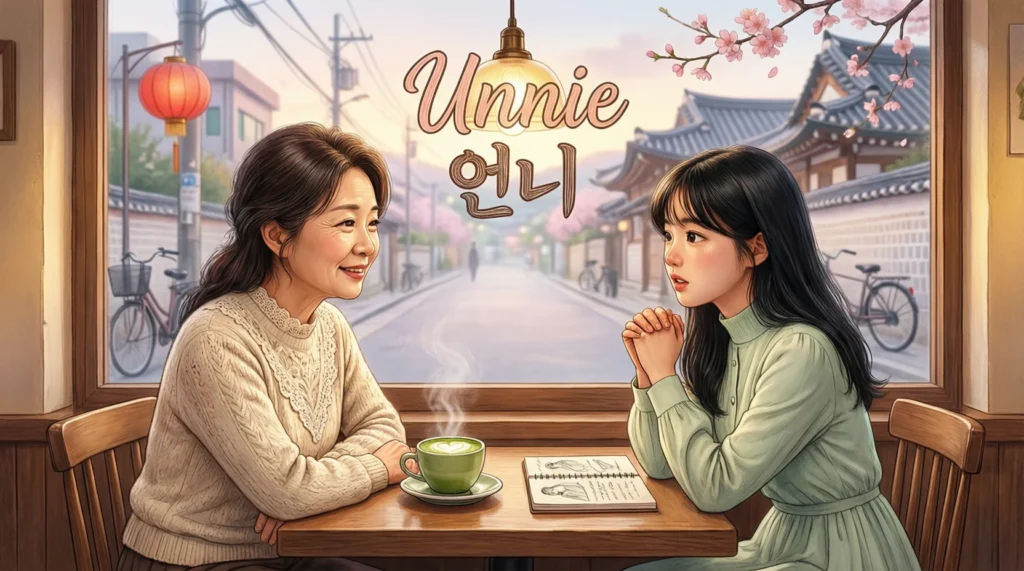
Unnie means older sister in Korean, but it is used only by females to address an older female who is close to them.
In English, it loosely translates to “older sister,” “big sister,” or a respectful and affectionate way to address an older woman you feel close to.
Unnie is a Korean word that has quietly crossed borders, turning up in K dramas, K pop fandoms, and everyday online conversations. If you have ever heard someone say “unnie” and wondered what it actually means in English, you are not alone. The word sounds cute and friendly, but it also carries deep cultural meaning that does not translate perfectly into one single English word.
This article explains the true meaning of unnie, its origin, real world usage, tone variations, examples, comparisons with similar Korean terms, polite alternatives, and frequently asked questions. By the end, you will know exactly when and how to use “unnie” naturally and correctly.
Understanding the Core Meaning of Unnie
At its heart, unnie is about relationship and respect, not just age.
In Korean culture, age plays a huge role in how people speak to one another. Language changes depending on whether someone is older or younger than you, and unnie is one of those relationship based terms.
When a girl or woman calls someone “unnie,” she is saying all of the following at once:
• You are older than me
• You are female
• We have some level of closeness
• I respect you
• I feel comfortable with you
English does not have a single word that combines all these meanings, which is why unnie is often left untranslated even in subtitles or fan conversations.
Origin of the Word Unnie
The word unnie comes from the Korean word 언니, pronounced roughly as “uhn nee.”
Linguistic background
In traditional Korean families, children use specific terms to address siblings based on age and gender. These terms later expanded into social relationships beyond family.
Originally, unnie was used strictly within families to mean an older sister. Over time, its usage widened to include:
• Older female cousins
• Close family friends
• School students
• Coworkers
• Friends
• Mentors
This expansion reflects how Korean culture values hierarchy while also emphasizing warmth and emotional closeness.
Why Unnie Became Popular Worldwide
Unnie became globally popular mainly due to Korean entertainment and internet culture.
Key reasons for its popularity
• K dramas frequently use the term in emotional and everyday scenes
• K pop idols often call older female members unnie on camera
• Korean variety shows highlight age based relationships
• Social media and fandom culture adopted the term
• Subtitles often keep the word instead of translating it
Fans began using “unnie” as a term of affection even outside Korean culture, especially among close female friends.
Today, you will see unnie used casually on Twitter, TikTok, Instagram, and fan forums.
How Unnie Is Used in Real Life
Unnie is not used randomly. It follows clear social rules.
Who can say unnie
Only females use the word unnie. Men do not use it.
Who can be called unnie
• A female older than the speaker
• Someone the speaker feels emotionally close to
• A person with whom informal speech is acceptable
Using unnie with a stranger or in a very formal situation can feel awkward or disrespectful.
Tone and Emotional Meaning of Unnie
Unnie is generally warm and friendly, but tone and context matter.
Common emotional tones
• Affectionate
• Respectful
• Playful
• Supportive
• Sometimes teasing
In rare cases, tone can make it sound sarcastic or dismissive, but this depends heavily on context and delivery.
Examples of Unnie in Different Contexts
Below is a table showing how unnie can sound depending on tone and situation.
Table 1: Unnie Usage by Tone
| Tone | Example Sentence | Meaning in English |
|---|---|---|
| Friendly | Unnie, let’s eat together | Big sister, let’s eat |
| Affectionate | I missed you, unnie | I missed you, sis |
| Playful | Unnie, you are so dramatic | You are funny, sis |
| Respectful | Unnie, can you help me | Older sister, please help |
| Teasing | Wow unnie, you’re late again | Teasing an older friend |
As you can see, the English translations vary, but none fully capture the warmth of the original word.
Unnie in K Pop and K Drama Culture
K pop fans often hear idols say unnie when speaking to older female group members.
For example:
• Younger female idols call senior members unnie
• Female trainees use unnie for older trainees
• Actresses call older actresses unnie if they are close
This usage reinforces teamwork, respect, and emotional bonding.
In dramas, unnie often signals trust and closeness. When a character switches from a formal title to unnie, it usually means their relationship has grown deeper.
Can Unnie Be Used Outside Korean Culture?
Yes, but carefully.
Many non Koreans use unnie as a cute or affectionate term among friends. While this is common online, it is best to understand the cultural context first.
Tips for non Korean speakers
• Use it only with someone who is comfortable with it
• Avoid using it in professional settings
• Do not use it with strangers
• Be mindful of age and relationship dynamics
Used respectfully, it can be a sweet way to show closeness.
Comparison with Similar Korean Terms
Unnie is part of a larger system of Korean relationship terms. Here is a comparison to help clarify.
Table 2: Comparison of Korean Relationship Terms
| TermUsed ByRefers ToEnglish Meaning | |||
|---|---|---|---|
| Unnie | Female | Older female | Older sister |
| Noona | Male | Older female | Older sister |
| Oppa | Female | Older male | Older brother |
| Hyung | Male | Older male | Older brother |
Each term depends on both the speaker’s gender and the person being addressed.
Unnie vs Noona
This is a common point of confusion.
Unnie and noona both refer to an older female, but the speaker’s gender changes the word.
• A girl says unnie
• A boy says noona
Using the wrong term can sound unnatural or incorrect in Korean.
Alternate Meanings of Unnie
Unnie does not have many alternate meanings, but its emotional role can change slightly depending on context.
In some cases, it can imply:
• Emotional support figure
• Mentor or guide
• Someone you admire
• A comforting presence
However, these are extensions of its original meaning, not separate definitions.
Polite and Professional Alternatives to Unnie
Unnie is informal. In professional or formal environments, other titles are more appropriate.
Table 3: Polite Alternatives to Unnie
| Situation | Alternative | Meaning |
|---|---|---|
| Workplace | Sunbae | Senior colleague |
| Formal setting | Name plus title | Ms or position |
| Respectful distance | Seonsaengnim | Teacher or mentor |
| Business | Job title | Manager, Director |
Using unnie at work can feel too casual unless the relationship is clearly friendly.
When You Should Not Use Unnie
Avoid using unnie in these situations:
• With strangers
• In business emails
• In official meetings
• With someone younger than you
• When speaking as a male
Understanding when not to use it is just as important as knowing when to use it.
How Unnie Is Written and Pronounced
Unnie is written in Korean as 언니.
Pronunciation tips:
• The first sound is soft, like “uhn”
• The second part is “nee”
• Stress is gentle, not sharp
Correct pronunciation helps avoid confusion with similar sounding words.
Unnie in Online and Fan Culture
Online, unnie is sometimes used playfully even between people who have never met.
Fans may call an older idol unnie as a sign of affection. However, this is more symbolic than literal and works mainly in fandom spaces.
FAQs
What does unnie mean in English exactly?
Unnie means “older sister.” It is used by females to address an older female they are close to, such as a sister, friend, or someone they feel comfortable with.
Can men use the word unnie?
No. Men do not use unnie. Instead, they use noona to refer to an older female.
Is unnie formal or informal?
Unnie is informal and affectionate. It reflects closeness rather than respect in a formal sense.
Can I call my female friend unnie?
Yes, you can—as long as she is older than you and is comfortable with it. Consent and familiarity matter.
Is unnie romantic?
No. Unnie is not romantic. It is familial and friendly, though it can sound warm or caring.
Why do K-pop idols say unnie so often?
Because age hierarchy and personal closeness are very important in Korean culture, especially within groups and friendships.
Can unnie be rude?
It can sound rude if used sarcastically or in the wrong context, especially toward someone you are not close to.
Is unnie used only in Korea?
It is Korean in origin, but it is now widely used globally, especially in K-pop and K-drama fan communities.
Conclusion:
Unnie is more than a simple word. It reflects how Korean language blends respect, age, and emotional closeness into everyday speech.
Here are the most important points to remember:
• Unnie means older sister used by females
• It shows affection, respect, and closeness
• Context and relationship matter
• It is informal and personal
• English translations are approximate
• Cultural awareness is essential
If you want to sound natural and respectful, always consider who you are talking to and how close you are before using unnie.
Read More Related Articles:
- BFN Meaning in Texts: Is It Friendly or Rude? (2026)
- GMFU in Text Messages: Meaning, Mood and How to Respond (2026)
- What Does Rincón Mean: How Do Spanish Speakers Use It in 2026

Megan Foster is a thoughtful and creative content creator at Meanzy.com with a strong curiosity for language and communication. Known for her clarity and attention to detail, she simplifies confusing slang, acronyms, and modern terms into easy, relatable meanings readers can trust.