
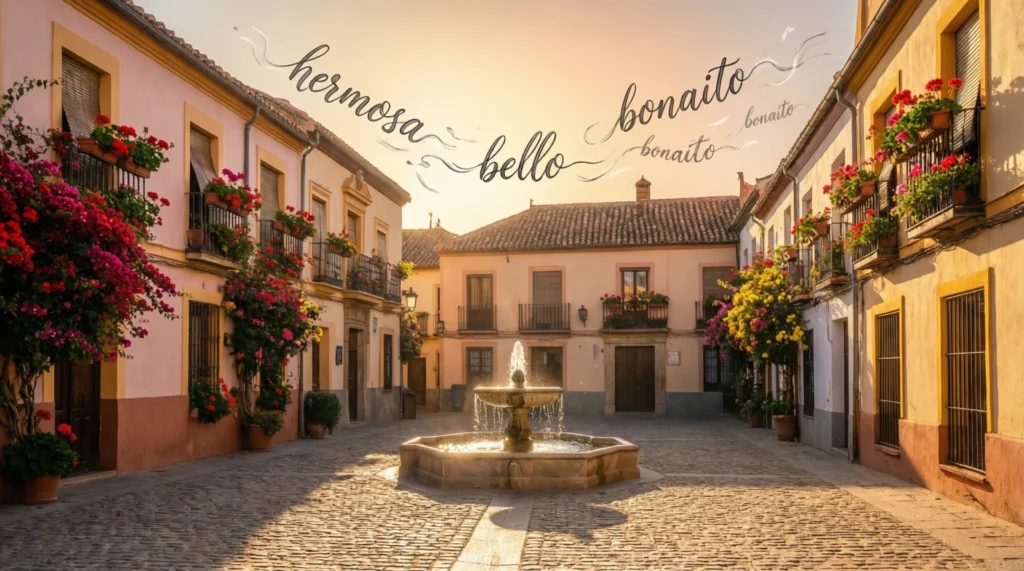
Beautiful in Spanish most commonly means hermoso, hermosa, bello, or bella.
These words describe something or someone that is visually attractive, pleasing, or emotionally moving, and their exact use depends on context, gender, tone, and region.
The idea of beauty is universal, but the way languages express it is deeply cultural. If you have ever wondered what does beautiful mean in Spanish, the answer is richer than a single word. Spanish offers several ways to say beautiful, each carrying its own shade of meaning, emotional weight, and social tone. From romantic compliments to polite descriptions and even poetic expressions, beauty in Spanish is layered and expressive.
This guide walks you through everything you need to know. You will learn the main Spanish words for beautiful, where they come from, how native speakers actually use them, how tone changes meaning, and how to choose the right word in real conversations. By the end, you will not only know the translation but also understand how to sound natural, respectful, and confident when using it.
What Does Beautiful Mean in Spanish?
In Spanish, the word beautiful does not have just one direct translation. Instead, it is expressed through several adjectives, each with its own nuance.
The most common meanings of beautiful in Spanish include:
• Hermoso or hermosa meaning very beautiful or lovely
• Bello or bella meaning beautiful in a refined or artistic sense
• Bonito or bonita meaning pretty or nice
• Lindo or linda meaning cute or sweet
All of these words communicate beauty, but they are not interchangeable in every situation. Gender agreement, formality, emotional tone, and regional preference all matter.
Origin and Linguistic Background of Beautiful in Spanish
Spanish comes from Latin, and its words for beauty reflect that history.
Hermoso comes from the Latin word formosus, which meant well shaped or elegant. Over time, it evolved to mean beautiful in both appearance and feeling.
Bello comes from Latin bellus, meaning pretty, charming, or pleasing. This word has retained a slightly poetic or elevated tone.
Bonito comes from bonus, meaning good. This explains why bonito often feels softer or more casual than hermoso or bello.
Lindo has roots in older Romance forms and often conveys affection, sweetness, or charm rather than striking beauty.
Because Spanish is spoken across many countries, these words developed different frequencies and emotional flavors depending on region.
Popularity and Real World Usage Across Spanish Speaking Countries
Spanish is spoken by over 500 million people worldwide, and how people say beautiful varies by country.
In Spain, bonito and hermoso are very common in daily speech. In Mexico and much of Latin America, hermoso is widely used for people, places, and experiences. Lindo is especially common in Argentina, Chile, and parts of Central America. Bello often appears in literature, music, and formal descriptions across regions.
Despite these variations, all Spanish speakers understand these words, even if some sound more natural locally than others.
Main Spanish Words That Mean Beautiful
Hermoso and Hermosa
Hermoso is one of the strongest and most expressive ways to say beautiful in Spanish. It conveys admiration and emotional impact.
It is commonly used for:
• People
• Landscapes
• Experiences
• Deep feelings
Example in context
Ella tiene una sonrisa hermosa
She has a beautiful smile
This word often carries warmth and sincerity and can feel romantic or heartfelt depending on tone.
Bello and Bella
Bello has a refined, almost artistic feel. It is often used in writing, speeches, and formal compliments.
It is frequently used for:
• Art
• Nature
• Abstract concepts
• Formal praise
Example in context
Es una ciudad bella llena de historia
It is a beautiful city full of history
In casual conversation, bello sounds slightly elevated, but it is still perfectly correct.
Bonito and Bonita
Bonito is friendly, light, and conversational. It often translates more closely to pretty or nice, though it still means beautiful.
It is commonly used for:
• Clothes
• Objects
• Homes
• Casual compliments
Example in context
Tu vestido es muy bonito
Your dress is very beautiful
Bonito is safe, polite, and widely used in everyday Spanish.
Lindo and Linda
Lindo expresses sweetness, charm, and affection. It is often used with children, pets, and endearing situations.
It is popular in many Latin American countries.
Example in context
Qué niño tan lindo
What a cute beautiful child
Lindo focuses more on emotional warmth than dramatic beauty.
Table: Common Spanish Words for Beautiful and Their Nuances
| Spanish Word | Gender Form | Common Meaning | Emotional Tone | Typical Usage |
|---|---|---|---|---|
| Hermoso | Hermoso Hermosa | Beautiful lovely | Strong warm | People places experiences |
| Bello | Bello Bella | Beautiful elegant | Poetic formal | Art cities concepts |
| Bonito | Bonito Bonita | Pretty nice | Casual friendly | Clothes objects daily speech |
| Lindo | Lindo Linda | Cute sweet | Affectionate | Children pets endearments |
Gender Agreement and Grammar Rules
Spanish adjectives must agree in gender and number with the noun they describe.
Masculine singular
Un hombre hermoso
Feminine singular
Una mujer hermosa
Masculine plural
Paisajes hermosos
Feminine plural
Flores hermosas
This rule applies to all forms of beautiful in Spanish and is essential for sounding natural.
Tone and Context: Friendly, Neutral, and Romantic Usage
The tone of beautiful in Spanish depends heavily on context and delivery.
Friendly tone
Bonito and lindo feel light and kind. They are safe for casual compliments.
Neutral tone
Hermoso works well when describing places, events, or experiences without sounding flirtatious.
Romantic tone
Hermoso and bello can become romantic when directed at a person with emotional emphasis.
Example with warmth
Te ves hermosa hoy
You look beautiful today
Emoji or punctuation such as exclamation points can intensify emotion in informal writing.
Can Beautiful Ever Sound Negative or Dismissive?
In most cases, beautiful words in Spanish are positive. However, tone matters.
Sarcasm can change meaning
Qué bonito
Said with sarcasm can imply the opposite, similar to English.
Overuse in formal contexts
Using bonito in a serious professional description may sound dismissive or childish.
Context and voice are key to avoiding misunderstanding.
Comparison With Related Spanish Terms
Spanish has many words related to beauty that add precision.
Guapo or Guapa
Guapo often means handsome rather than beautiful and is commonly used for people.
Precioso or Preciosa
Precioso means gorgeous or stunning and expresses strong admiration.
Atractivo or Atractiva
Atractivo means attractive and is more neutral or descriptive.
Table: Comparison of Beautiful With Related Spanish Words
| Word | Closest English Meaning | Typical Context | Formality |
|---|---|---|---|
| Hermoso | Beautiful lovely | Emotional visual | Medium |
| Guapo | Handsome attractive | People | Casual |
| Precioso | Gorgeous stunning | Strong admiration | Medium |
| Atractivo | Attractive | Neutral description | Formal |
Polite and Professional Alternatives
In professional or formal settings, some words are more appropriate.
Better professional choices include:
• Atractivo for designs or proposals
• Elegante for style or presentation
• Estéticamente agradable for formal descriptions
Example
El diseño es elegante y atractivo
The design is elegant and attractive
These options sound respectful and polished in business or academic environments.
Alternate Meanings and Figurative Uses
Beautiful in Spanish can describe more than appearance.
Emotional beauty
Un gesto hermoso
A beautiful gesture
Moral beauty
Una acción bella
A beautiful act
Experiential beauty
Fue una experiencia hermosa
It was a beautiful experience
These uses show how beauty in Spanish often connects to feeling and meaning, not just looks.
Table: Literal and Figurative Uses of Beautiful in Spanish
| Context | Spanish Example | English Meaning |
|---|---|---|
| Physical appearance | Una mujer hermosa | A beautiful woman |
| Nature | Un paisaje bello | A beautiful landscape |
| Emotion | Un momento hermoso | A beautiful moment |
| Morality | Un acto bello | A beautiful act |
Common Mistakes Learners Make
Using only one word for everything
Relying only on hermoso limits expression.
Ignoring gender agreement
Incorrect endings sound unnatural.
Using bonito in romantic contexts
Bonito can feel too mild for deep emotion.
Learning variety improves fluency and confidence.
FAQs
What is the most common word for beautiful in Spanish?
Hermoso and bonita are among the most commonly used words, depending on context.
Is bonito the same as beautiful?
Yes, but it often feels closer to pretty or nice rather than deeply beautiful.
How do you say beautiful woman in Spanish?
Mujer hermosa or mujer bella.
Is bello formal or casual?
It leans slightly formal or poetic, but it is still widely understood and used.
Can lindo mean beautiful?
Yes, especially in an affectionate, sweet, or charming way.
How do you politely say something is beautiful in Spanish?
Es muy bonito or es elegante y atractivo.
Is guapo the same as beautiful?
Guapo usually means handsome or good-looking and is mainly used for people.
Which word should I use for professional writing?
Atractivo or elegante works best in professional or formal contexts.
Conclusion:
Understanding what does beautiful mean in Spanish goes far beyond memorizing a single translation. Spanish offers multiple words for beauty, each shaped by emotion, culture, and context. Hermoso expresses deep admiration, bonito keeps things friendly, bello adds elegance, and lindo brings warmth.
Choosing the right word helps you communicate more naturally and respectfully. Whether you are complimenting a person, describing a place, or writing professionally, Spanish gives you the tools to express beauty with precision and heart.
Read More Related Articles:
- Muy Meaning in Spanish: How to Use It Correctly (2026)
- Como Estas Mean in English: Usage Explained (2026)

Rachel Monroe is a digital content writer at Meanzy.com who focuses on explaining modern words, phrases, and online expressions. Her writing style is simple, practical, and reader-focused, helping users quickly understand the meaning and usage of today’s evolving language.