
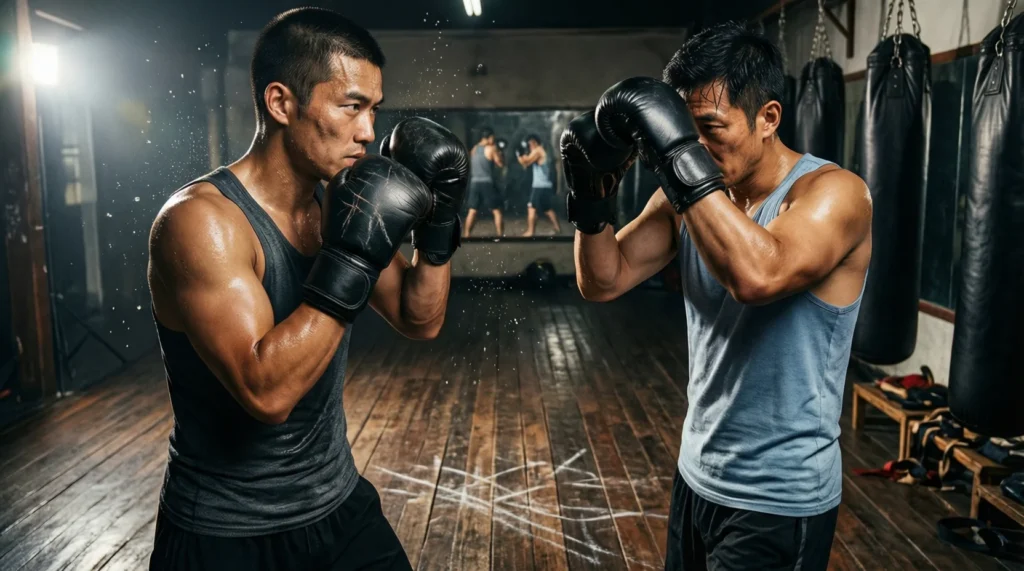
Southpaw in boxing refers to a fighter who leads with their right hand and right foot forward, typically because they are left handed. This stance places the power left hand at the rear and creates unique angles that often trouble orthodox fighters.
Southpaw in boxing is one of those terms fans hear all the time but don’t always fully understand. Commentators mention it with a serious tone. Fighters build entire game plans around it. Opponents either fear it or feel awkward against it. So what exactly does it mean, and why does it matter so much inside the ring?
Let’s break it all down clearly and conversationally, from the definition and history to real fight examples, tone usage, comparisons, FAQs, and practical tips for beginners and fans alike.
Why the Southpaw Stance Matters in Boxing
Boxing is a sport of angles, timing, and positioning. A southpaw stance changes all three.
Most fighters train primarily against orthodox opponents, who lead with the left hand and left foot. When a southpaw steps into the ring, everything feels reversed. Jabs come from unexpected angles. Foot positioning becomes a chess match. Defensive habits suddenly fail.
That unfamiliarity is why southpaws have earned a reputation for being tricky, awkward, and dangerous.
What Does Southpaw Mean in Boxing? Full Explanation
In simple terms, a southpaw boxer stands with:
- Right foot forward
- Right hand as the lead jab
- Left hand as the rear power punch
This is the opposite of the orthodox stance, which is the most common style in boxing.
Southpaw Stance Basics
A southpaw boxer typically:
- Uses the right jab to set up attacks
- Generates power from the rear left hand
- Keeps the lead foot outside the opponent’s lead foot
- Creates open angles for straight left punches
While most southpaws are naturally left handed, not all left handed people box southpaw. Some choose orthodox for strategic or training reasons.
Origin of the Term Southpaw
The word southpaw did not originate in boxing, but boxing helped popularize it.
Where the Term Comes From
The most widely accepted origin traces back to baseball in the 19th century. Baseball fields were often oriented so batters faced east to avoid the sun. A left handed pitcher would throw with their left arm facing south, hence the term south paw.
Over time, the word spread to other sports, especially boxing, where stance orientation plays a critical role.
When Boxing Adopted the Term
Boxing adopted southpaw as a way to describe fighters who stood opposite to the traditional stance. By the early 20th century, the term was firmly embedded in boxing vocabulary and remains standard today.
Why Southpaw Boxers Are So Effective
Southpaw fighters are not automatically better, but their stance creates strategic advantages that can be difficult to counter.
Key Advantages of the Southpaw Stance
- Unfamiliar angles Most fighters spar less with southpaws
- Power hand alignment The rear left hand lines up directly with an orthodox opponent’s center
- Foot positioning battles Winning the lead foot position opens clear punching lanes
- Defensive confusion Opponents often misjudge distance and timing
Psychological Edge
Many fighters enter the ring already uneasy when facing a southpaw. That hesitation alone can shift momentum.
Famous Southpaw Boxers and Real World Examples
Southpaw boxing is not rare at the elite level. Some of the most dominant champions in history fought from this stance.
Legendary Southpaw Boxers
| Boxer Name | Weight Class | Notable Strength |
|---|---|---|
| Manny Pacquiao | Welterweight | Speed and angles |
| Pernell Whitaker | Lightweight | Defense and footwork |
| Marvin Hagler | Middleweight | Power and switch hitting |
| Vasiliy Lomachenko | Lightweight | Footwork and precision |
| Terence Crawford | Welterweight | Adaptability and IQ |
These fighters used the southpaw stance not just as a novelty, but as a core strategic weapon.
Southpaw vs Orthodox Stance Comparison
Understanding the difference between southpaw and orthodox is key to understanding boxing matchups.
Stance Comparison Table
| Feature | Southpaw | Orthodox |
|---|---|---|
| Lead hand | Right | Left |
| Power hand | Left | Right |
| Lead foot | Right | Left |
| Commonality | Less common | Most common |
| Typical advantage | Angles and surprise | Familiarity and fundamentals |
When a southpaw faces an orthodox fighter, the matchup is often described as a mirror battle.
How Southpaw Is Used in Boxing Commentary and Conversation
The word southpaw carries different tones depending on context.
Neutral and Informative Tone
“He’s a southpaw, so the champion will need to adjust his footwork.”
Used by commentators, analysts, and trainers in an objective way.
Respectful or Admiring Tone
“That southpaw left is deadly.”
This highlights skill or danger without negativity.
Dismissive or Negative Tone
“He’s just awkward because he’s a southpaw.”
Sometimes implies inconvenience rather than genuine skill, often used by frustrated opponents.
Example Sentences With Context
| Sentence | Tone |
|---|---|
| “Facing a southpaw always changes the game plan.” | Neutral |
| “That southpaw angle is beautiful to watch.” | Positive |
| “I hate fighting southpaws, nothing feels right.” | Frustrated |
| “He relies too much on being a southpaw.” | Critical |
Occasionally, you might see emojis used in casual boxing discussions online, especially on social media.
“That southpaw jab though 😮🔥”
Southpaw Strategy and Tactics in Boxing
Southpaw fighters often rely on specific tactical principles to maximize their stance advantage.
Common Southpaw Techniques
- Right jab to disrupt rhythm
- Straight left hand down the center
- Lead foot outside positioning
- Counterpunching off orthodox jabs
- Angled exits to the right
Defensive Considerations
Southpaws must protect against:
- Orthodox straight right hands
- Left hooks around the guard
- Body shots from the open stance
Training discipline is critical, as the stance alone does not guarantee success.
Alternate Meanings of Southpaw Outside Boxing
Southpaw is not exclusive to boxing.
Other Common Uses
- Baseball Left handed pitcher
- General sports Any left handed athlete
- Casual language Someone who favors their left hand
Example:
“She’s a southpaw at tennis too.”
In boxing, however, the term is more technical and specific.
Polite or Professional Alternatives to the Term Southpaw
In formal writing or coaching contexts, alternatives may be preferred.
Professional Alternatives
- Left handed stance
- Left lead fighter
- Opposite stance boxer
These are especially useful in technical manuals or training guides.
Common Myths About Southpaw Boxers
Myth 1 Southpaws Are Automatically Better
Reality Skill, training, and experience matter far more than stance.
Myth 2 Orthodox Fighters Cannot Beat Southpaws
Reality Many champions have defeated elite southpaws with proper preparation.
Myth 3 Southpaw Means Left Handed
Reality Some fighters choose southpaw for tactical reasons despite being right handed.
FAQs
What does southpaw mean in boxing exactly?
It means a boxer stands with their right hand and right foot forward, placing their left hand at the rear as the power hand.
Are all left handed boxers southpaws?
No. Some left handed fighters choose an orthodox stance based on comfort or coaching.
Why do boxers struggle against southpaws?
Most boxers train mainly against orthodox opponents, so the angles and timing of southpaws feel unfamiliar.
Is southpaw a disadvantage in boxing?
Not inherently. It can be an advantage or disadvantage depending on training and execution.
Who is the most famous southpaw boxer?
Manny Pacquiao is often cited as the most famous modern southpaw boxer.
Can a boxer switch between orthodox and southpaw?
Yes. Fighters who do this are called switch hitters, like Terence Crawford.
Is southpaw used only in boxing?
No. The term is used across sports and general language to describe left handed orientation.
Should beginners learn southpaw boxing?
Only if it feels natural. Forcing a stance usually slows development rather than helping.
Conclusion:
Southpaw in boxing is more than just a stance. It is a strategic identity that shapes how fights unfold.
To recap:
- Southpaw means right side forward with a rear left power hand
- The term originated outside boxing but became iconic within it
- Southpaws create unique angles and tactical challenges
- Success depends on skill, not stance alone
- Understanding southpaw dynamics improves both viewing and training
Whether you are a fan trying to understand commentary or a boxer sharpening your fundamentals, knowing what southpaw means gives you deeper insight into the sport.
Read More Related Articles:
- HP Meaning in Games: Everything You Need to Know to Play Better (2026)
- PMU Mean in Texts: Answer Might Surprise You (2026)
- Grade Horse Meaning: Buyers Need to Know Before Purchasing (2026)

Megan Foster is a thoughtful and creative content creator at Meanzy.com with a strong curiosity for language and communication. Known for her clarity and attention to detail, she simplifies confusing slang, acronyms, and modern terms into easy, relatable meanings readers can trust.