
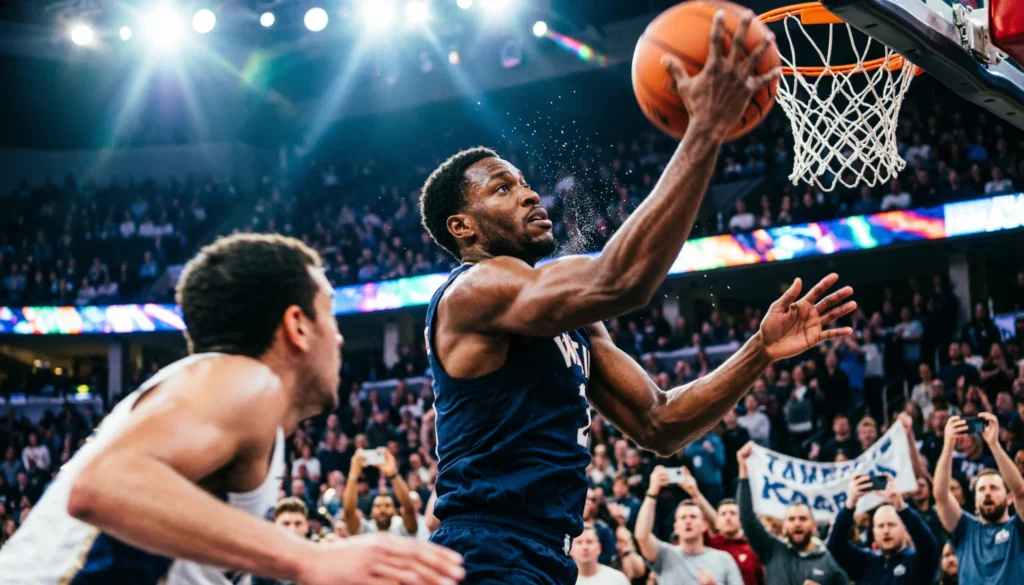
In basketball, a rebound is the act of gaining possession of the ball after a missed field goal or free throw. Rebounds are crucial for maintaining offensive momentum or stopping the opposing team from scoring.
Players who excel at grabbing rebounds are often referred to as strong rebounders, and the statistic is tracked closely in every game.
A rebound in basketball refers to gaining possession of the ball after a missed shot, whether it comes off the rim or the backboard. Rebounding is a fundamental part of the game because it determines which team controls the ball next and often creates extra scoring opportunities.
Strong rebounding helps teams limit opponents’ second-chance points while giving their own offense additional chances to score. Whether on offense or defense, rebounding reflects effort, positioning, and awareness, making it a key skill for players at every level of basketball.
Origin of the Term “Rebound” in Basketball
The term “rebound” in basketball dates back to the early 1900s when the game was first gaining popularity. It comes from the simple action of the basketball bouncing back or “rebounding” off the rim or backboard after a missed shot.
- Popularity: Over time, the concept became a key metric to evaluate players’ defensive and offensive contributions.
- Cultural Impact: In sports commentary, a player grabbing a rebound is often celebrated because it shows determination, awareness, and hustle—key traits that fans love.
Basketball legends like Dennis Rodman and Wilt Chamberlain became famous for their rebounding abilities, making the term a household word among fans and analysts alike.
Understanding Rebounds: How They Work
Rebounds can be divided into two main types:
| Type | Definition | Example |
|---|---|---|
| Offensive Rebound | When a player recovers the ball after their own team misses a shot. | A forward misses a layup, but a teammate grabs the ball and scores. |
| Defensive Rebound | When a player gains possession after the opposing team misses a shot. | A center grabs a missed three-pointer from the opponent and starts a fast break. |
Key Points About Rebounds
- Positioning is critical: Players must anticipate where the ball will land.
- Timing matters: Jumping too early or too late can cost a rebound.
- Physicality counts: Boxing out opponents—using your body to prevent them from reaching the ball—is a crucial skill.
Rebounds aren’t just about height or jumping ability; they involve strategy, anticipation, and hustle.
Real-World Usage of “Rebound” in Basketball
In basketball discussions, “rebound” is frequently used in multiple ways:
- Statistical Context:
“LeBron grabbed 12 rebounds in last night’s game.” This shows a player’s contribution beyond scoring. - Commentary and Praise:
“That was a crucial defensive rebound!” It emphasizes a key moment that prevented the opposing team from scoring. - Casual Conversations:
Fans often say, “He’s great at rebounding,” meaning the player excels in grabbing the ball after missed shots.
Examples in Different Contexts
Here are some examples of how rebound might be used in conversation, both on and off the court:
| Tone | Example |
|---|---|
| Friendly | “Did you see Curry grab that rebound and pass it for a three-pointer? Amazing!” |
| Neutral | “The team had 40 rebounds tonight, with 18 offensive and 22 defensive.” |
| Critical/Dismissive | “He needs to work on his rebounding; he leaves too many balls for the other team.” |
Rebounds can reflect both a player’s skill and effort, which is why they are highlighted in game stats and player evaluations.
How Rebounds Compare to Related Terms
| Term | Difference from Rebound |
|---|---|
| Assist | An assist is when a player passes the ball to a teammate who scores, while a rebound is about recovering a missed shot. |
| Turnover | A turnover is losing possession, whereas a rebound is regaining possession. |
| Steal | A steal involves taking the ball from an opponent during play, whereas a rebound occurs after a missed shot. |
| Putback | A putback is when a player immediately scores after an offensive rebound. |
Understanding these distinctions can help fans and players analyze games more effectively.
Alternate Meanings of Rebound
While basketball is the most common context, rebound has other meanings:
- Emotional Rebound: Quickly entering a new relationship after a breakup.
- Medical or Health Rebound: Symptoms returning after stopping treatment.
When talking about sports, it’s always clear from context that we mean basketball rebounding.
Professional and Polite Alternatives
Sometimes, you may want to use alternatives to “rebound” in commentary or professional discussions:
- Recover possession – More formal, often used in coaching.
- Grab the board – Casual and common in player conversations.
- Secure the ball – Highlights the action of controlling the ball after a miss.
Key Skills for Effective Rebounding
Rebounding is not just luck. Players develop skills like:
- Boxing out: Using your body to shield opponents.
- Timing jumps: Predicting when and where the ball will land.
- Reading the trajectory: Watching the ball’s spin and angle off the rim.
- Anticipating plays: Knowing where the shot is likely to miss.
Legendary rebounders often combine physical ability with mental awareness.
Example Table of Top NBA Rebounders (2023–2024)
| Player | Position | Average Rebounds per Game | Notes |
|---|---|---|---|
| Rudy Gobert | Center | 14.2 | Known for defensive dominance. |
| Giannis Antetokounmpo | Forward | 11.1 | Great at both offensive and defensive rebounds. |
| Domantas Sabonis | Center/Forward | 10.8 | High basketball IQ and positioning. |
| Bam Adebayo | Center | 10.5 | Aggressive and physical under the rim. |
This table illustrates how rebounding stats reflect both player ability and team strategy.
Tips for Fans and Players
- Watch both offensive and defensive rebounds for full context.
- Look for rebound-to-score conversions—these show the impact of the rebound.
- Learn the terminology: putbacks, boards, second-chance points.
Rebounds can turn games around, making them one of the most exciting parts of basketball.
FAQs
1. What does it mean when a player has a double-double in rebounds?
A double-double occurs when a player records double-digit stats in two categories, often points and rebounds. For example, 15 points and 12 rebounds.
2. Who holds the NBA record for most rebounds in a game?
Wilt Chamberlain holds the record with 55 rebounds in a single game.
3. How are rebounds counted in basketball?
A rebound is counted whenever a player gains possession after a missed shot, whether offensive or defensive.
4. What is the difference between offensive and defensive rebounds?
Offensive rebounds happen when your team recovers a missed shot, giving a second chance to score. Defensive rebounds happen when you stop the opposing team from scoring.
5. Can a guard get rebounds too?
Yes! While centers and forwards dominate rebounding, guards can collect rebounds with good positioning and hustle.
6. What is a putback in basketball?
A putback is when a player immediately scores after grabbing an offensive rebound, often with a quick shot near the rim.
7. Why are rebounds important in basketball?
Rebounds control possession, limit opponents’ scoring chances, and create additional opportunities to score.
8. Is there a negative rebound stat?
While rebounds are always positive, missed rebounds on your side (letting the opponent get the ball) can be seen negatively in analysis.
Conclusion
Rebounding in basketball is much more than grabbing a ball. It requires anticipation, skill, and physical effort, making it a critical part of both offense and defense. Players who excel at rebounding often control the pace of the game, create scoring opportunities, and show resilience.
Whether you are a fan analyzing stats or a player developing your game, understanding rebounding mechanics, terminology, and strategy is essential. Remember, a game can be won or lost on the boards—so keep an eye on those rebounds! 🏀
Read More Related Articles:
- Meaning of Salute in Italian: From Health to Cheers In 2026
- Meaning of Basta in Italian: How It’s Used and What It Conveys In 2026
- BMing Meaning in Clash Royale: Why It Annoys Players So Much In 2026

Rachel Monroe is a digital content writer at Meanzy.com who focuses on explaining modern words, phrases, and online expressions. Her writing style is simple, practical, and reader-focused, helping users quickly understand the meaning and usage of today’s evolving language.