
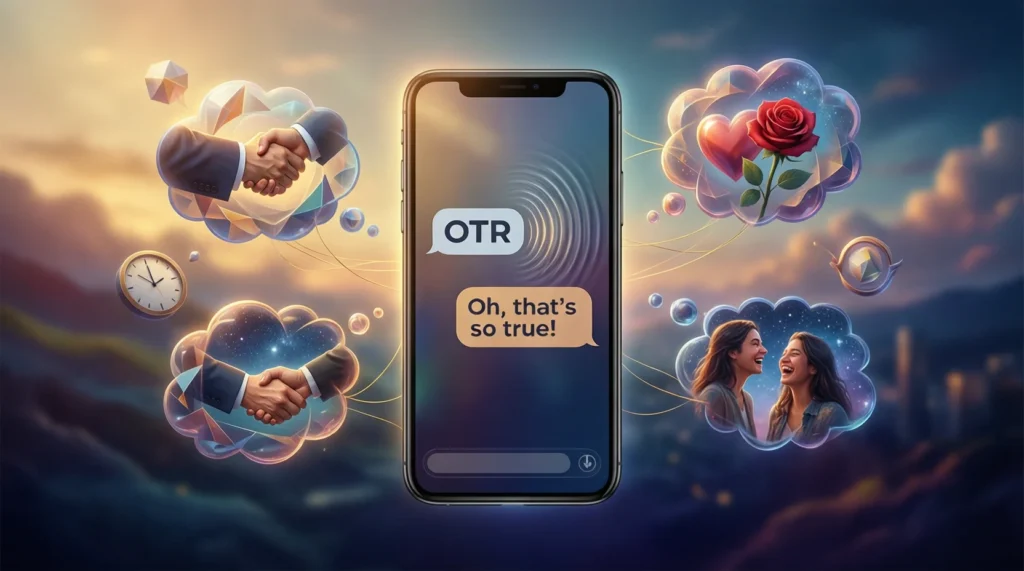
OTR means “On the real” in text messaging.
It is an informal slang term used to show honesty, seriousness, or genuine intent. The meaning depends on context and how the message is delivered.
OTR is a common abbreviation used in messages and online chats that usually means “On the real.” It is used to express honesty, seriousness, or sincerity in a conversation. When someone says OTR, they are signaling that they are being truthful or speaking seriously.
Text slang often changes meaning depending on tone and setting. OTR is no different. Sometimes it adds emphasis. Other times it reassures the reader that no joke is involved. Understanding how OTR works helps you read between the lines in modern digital communication.
What Does OTR Mean in Texting and Online Chats?
In everyday texting, OTR is used when someone wants to stress that they are being truthful. It often appears before or after an important statement. People use it to show they are not exaggerating or joking.
Common implied meanings include:
• I’m being serious
• Honestly speaking
• No joke
• I truly mean this
OTR is usually casual. It works best among friends or peers rather than formal conversations.
Origin and Background of OTR
OTR comes from spoken slang rather than written language. “On the real” has been part of conversational English for years, especially in informal settings. As texting grew, the phrase was shortened to its initials.
Social media and chat apps accelerated its popularity. Shortened expressions became the norm. OTR followed the same path as slang like TBH and FR. Each emphasizes honesty while saving time.
Where OTR Is Commonly Used
OTR appears mostly in relaxed digital spaces. Professional environments rarely use it.
Common places include:
• Text messages between friends
• Instagram captions and comments
• Snapchat chats
• Twitter or X replies
• Casual group chats
Emails and workplace tools usually avoid OTR. Full sentences sound clearer in those settings.
Tone and Emotional Meaning of OTR
OTR generally carries a sincere tone. Still, delivery matters.
Tone Interpretation Table
| Context | Example Message | Implied Tone |
|---|---|---|
| Honest opinion | “OTR, that movie was boring” | Sincere |
| Emotional moment | “OTR I miss you” | Genuine |
| Casual chat | “That game was hard OTR” | Emphasis |
| Argument | “OTR you’re wrong” | Blunt |
| Joke clarification | “OTR I’m not kidding” | Serious |
Tone becomes stronger when OTR is placed at the start of a sentence.
Emojis and Formatting That Affect Meaning
Visual cues influence how OTR is received.
Emoji and Punctuation Table
| Message Style | How It Feels |
|---|---|
| otr | Casual |
| OTR | Emphasized |
| OTR 😅 | Honest but light |
| OTR 😐 | Serious |
| OTR!!! | Intense |
| otr 😂 | Playful honesty |
Formatting adds emotional context that words alone may lack.
Is OTR Rude or Offensive?
OTR is not rude by default. Problems arise when honesty is delivered without tact.
It may feel harsh when:
• Used during sensitive discussions
• Combined with criticism
• Typed in all caps
• Sent without explanation
Honesty sounds better when paired with respect.
Suggestions for Using OTR Naturally
To use OTR effectively, consider these tips:
• Use it to emphasize truth, not insult
• Avoid using it during emotional conflicts
• Pair it with respectful wording
• Keep it casual and conversational
• Avoid professional settings
Thoughtful placement keeps the message clear.
OTR Compared With Similar Slang Terms
Comparison Table
| Term | Meaning | Typical Tone |
|---|---|---|
| OTR | On the real | Honest |
| TBH | To be honest | Reflective |
| FR | For real | Emphatic |
| NGL | Not gonna lie | Casual honesty |
| IDC | I don’t care | Dismissive |
OTR stands out for signaling seriousness rather than casual admission.
Alternate Meanings of OTR
In non-text contexts, OTR can mean:
• On the road
• Off the record
• Over the air (technical use)
These meanings depend on industry or situation. In texting, “On the real” is most common.
Polite and Professional Alternatives to OTR
When clarity or professionalism matters, use full phrases instead:
• “Honestly speaking”
• “To be clear”
• “I genuinely believe”
• “In all seriousness”
These options avoid slang while keeping intent intact.
How to Respond When Someone Uses OTR
Responses should acknowledge sincerity.
Possible replies include:
• “I appreciate your honesty.”
• “I understand what you mean.”
• “Thanks for being real.”
• “That makes sense.”
Matching tone builds trust.
Why OTR Remains Popular in Text Culture
OTR remains common because it is quick, expressive, and widely understood. Digital conversations often lack tone. Slang fills that gap. OTR helps signal sincerity in short messages. People value efficiency, especially online. That need keeps abbreviations like OTR relevant across platforms.
FAQs
What does OTR mean in text messages?
OTR means “On the real,” used to express honesty or seriousness.
Is OTR slang?
Yes, OTR is informal internet slang.
Can OTR sound rude?
It can if used bluntly or during sensitive moments.
Is OTR okay to use with friends?
Yes, it is commonly used among friends.
Should OTR be used in professional messages?
Professional communication should avoid slang like OTR.
What is the difference between OTR and TBH?
OTR emphasizes seriousness, while TBH reflects honesty or reflection.
Why do people use OTR in texting?
It adds emphasis and saves time.
Does OTR have other meanings?
Yes, but in texting it usually means “On the real.”
Conclusion
Understanding what OTR means in text helps decode sincerity in digital conversations. While it simply stands for “On the real,” its purpose goes deeper. OTR signals honesty, seriousness, or emotional truth. Used casually, it strengthens connection. Used carelessly, it may sound blunt. Context, tone, and formatting shape interpretation. Emojis and placement matter more than people expect.
When conversations involve emotions, clear wording works best. Knowing when to use OTR and when to choose a full phrase improves communication. Thoughtful language builds trust, reduces misunderstandings, and keeps conversations respectful across modern messaging platforms.
Read More Related Articles:
- What Does R Mean in Movies? Parent’s Guide to R Rating (2026)
- LMC Meaning in Text: What It Stands For and How to Use It (2026)

John Miller is a professional meanings writer at Meanzy.com, specializing in word definitions, internet slang, acronyms, and text abbreviations. He focuses on delivering clear, accurate explanations with practical examples, helping readers easily understand modern digital terms and their real-life usage.