
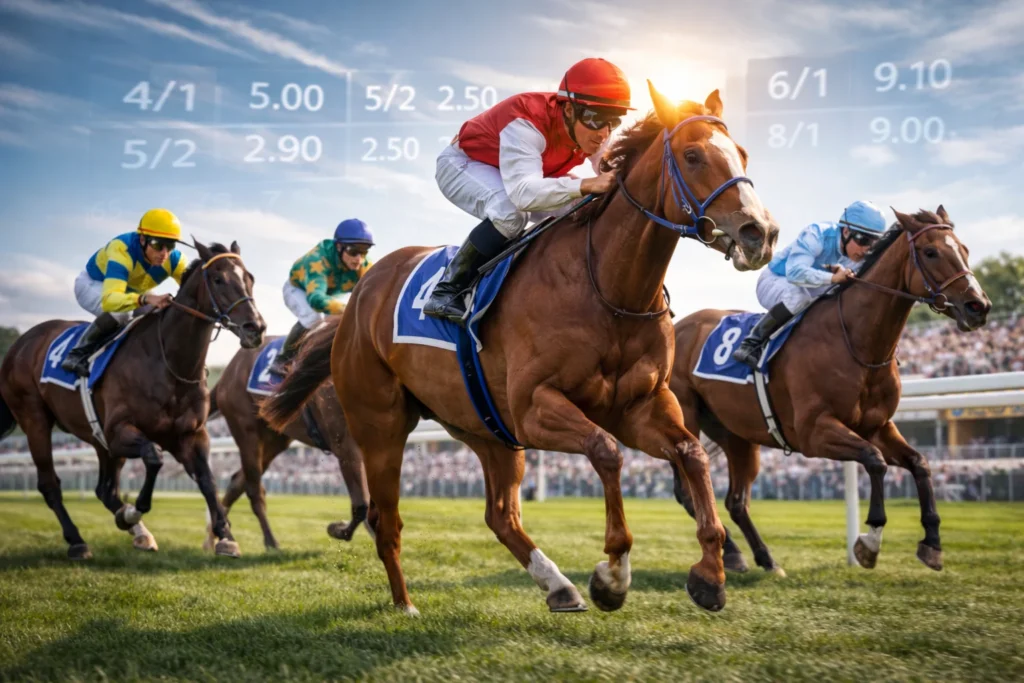
In horse racing, odds represent the probability of a horse winning a race and determine the potential payout if that horse wins. They are expressed in formats like fractional (e.g., 5/1), decimal (e.g., 6.0), or moneyline (e.g., +500) and help bettors understand both risk and reward.
Horse racing is thrilling, not just for the speed and excitement on the track, but also for the strategy behind betting. Understanding odds is essential for anyone who wants to make informed decisions, whether you are a casual bettor or a serious punter. But what do odds really mean, and how do they affect your betting experience? Let’s dive in. 🏇
Origin of Odds in Horse Racing
The concept of odds in horse racing has a long history, dating back to the early 17th century in England. Betting on horses became a formalized sport, and bookmakers needed a method to express the likelihood of a horse winning and the payout associated with that risk.
- Fractional odds (e.g., 5/1) originated in Britain and are still popular there today.
- Decimal odds (e.g., 6.0) became widely used in Europe and Australia due to their simplicity.
- Moneyline odds (e.g., +500) are common in the United States.
Essentially, odds translate the bookmaker’s estimate of a horse’s chance of winning into numbers that bettors can use to gauge potential returns.
How Odds Work in Horse Racing
Odds serve two main purposes:
- Indicating Probability – They show how likely a horse is to win according to the bookmaker or betting market.
- Determining Payouts – They tell you how much you can win relative to your stake.
Understanding Different Odds Formats
| Format | Example | Meaning | Payout Calculation |
|---|---|---|---|
| Fractional | 5/1 | Horse has a 1 in 6 chance of winning | Bet $10, win $50 plus stake |
| Decimal | 6.0 | Total return including stake | Bet $10, total return $60 |
| Moneyline (US) | +500 | Betting $100 wins $500 | Bet $20, win $100 |
Quick Tip: Fractional odds are traditional, decimal odds are easier to calculate, and moneyline odds are the standard in American betting culture.
Real-World Usage and Popularity
Horse racing remains one of the most popular sports for betting worldwide, with odds being central to the experience.
- In the UK, fractional odds dominate traditional betting shops and online platforms.
- In Europe and Australia, decimal odds are preferred for their straightforward math.
- In the US, moneyline odds are used not just for horse racing, but also for other sports like football and basketball.
Odds are updated constantly based on betting volume, horse form, track conditions, and other variables. A horse’s odds can shorten if a lot of people bet on it, signaling increased perceived chances of winning.
Example: If Horse A starts at 10/1 and receives many bets, the odds might shorten to 5/1. This reflects both market confidence and reduced potential payout.
Examples of Odds in Context
Here are a few examples to understand how odds function in real betting scenarios:
| Horse Name | Fractional Odds | Decimal Odds | Implied Probability | Example Payout on $10 Bet |
|---|---|---|---|---|
| Thunderbolt | 3/1 | 4.0 | 25% | $40 ($30 profit + $10 stake) |
| Lightning Dash | 10/1 | 11.0 | 9.1% | $110 ($100 profit + $10 stake) |
| Midnight Star | 2/5 | 1.4 | 71.4% | $14 ($4 profit + $10 stake) |
Friendly Explanation Example
“Thunderbolt looks strong today! At 3/1, a $10 bet gives you $40 if he wins. Not bad for a favorite, right? 🏇”
Neutral Example
“Lightning Dash is at 10/1. You might win big, but the horse isn’t the most likely to take first place.”
Cautious/Dismissive Example
“Midnight Star is heavy favorite at 2/5. Betting here is safe, but the profit is minimal. Might not be worth the risk if you want big returns.”
Comparing Odds with Related Terms
Horse racing has several terms related to odds that bettors should understand:
| Term | Meaning | Relation to Odds |
|---|---|---|
| Favorite | Horse expected to win | Usually has the shortest odds |
| Long shot | Horse less likely to win | Usually has long odds with high payout |
| Parimutuel odds | Determined by betting pool | Varies until bets close |
| Bookmaker odds | Set by bookmaker | May include margins |
Knowing these distinctions helps you interpret odds more accurately and choose your strategy.
Alternate Meanings of Odds
While “odds” mostly refer to betting probability in horse racing, the term also appears in other contexts:
- General Probability: “The odds of rain tomorrow are high.”
- Sports Betting: Outside horse racing, odds function similarly in football, tennis, and other events.
Polite or Professional Alternatives
In professional or analytical discussions, you can use phrases like:
- Probability of winning
- Expected return
- Likelihood of outcome
- Betting line
For example: “The expected return on Horse A is high based on current odds and performance history.”
Tips for Using Odds Effectively
- Always check the format (fractional, decimal, or moneyline) to avoid confusion.
- Compare odds from different bookmakers for best value.
- Remember that odds reflect probability, not certainty. A favorite can still lose.
- Consider risk vs. reward: shorter odds are safer but lower payout, long shots are risky but potentially lucrative.
- Keep track of past performance, jockey, and track conditions for smarter betting.
FAQs
1. What do odds really mean in horse racing?
Odds indicate the probability of a horse winning and determine the potential payout for a bet.
2. How are fractional odds calculated?
Fractional odds show the profit relative to your stake. For 5/1, you earn $5 for every $1 bet plus your original stake.
3. What are decimal odds?
Decimal odds show total return including stake. For example, 6.0 means a $10 bet returns $60 in total if successful.
4. How do bookmakers set odds?
Bookmakers analyze horse form, track conditions, jockey performance, and betting patterns to estimate probabilities and potential payouts.
5. What is a favorite in horse racing?
A favorite is the horse expected to win, often with the shortest odds.
6. What does “long shot” mean?
A long shot is a horse with a low probability of winning, usually offering higher payouts if it wins.
7. Can odds change before a race?
Yes, odds can shorten or lengthen depending on betting volume and new information about horses.
8. Are odds the same in every country?
No. Fractional odds are common in the UK, decimal odds in Europe and Australia, and moneyline odds in the US.
Conclusion
Understanding what odds mean in horse racing is fundamental for anyone interested in betting. Odds are more than just numbers; they reflect probability, market perception, and potential payouts. Whether you are placing a casual bet or analyzing the race like a pro, knowing how to read and interpret odds allows you to make informed decisions and enjoy the thrill of the sport responsibly.
Horse racing odds may seem complex at first, but with practice, you can confidently navigate them, compare favorites and long shots, and even identify smart betting opportunities. 🏇💰
Read More Related Articles:
- What Does OTE Mean in Salary? Full Explanation for Job Seekers In 2026
- What Does BIN Mean in Selling? How It Works in Selling In 2026
- What Does Waive Mean in NFL? This Guide Explains Everything In 2026

John Miller is a professional meanings writer at Meanzy.com, specializing in word definitions, internet slang, acronyms, and text abbreviations. He focuses on delivering clear, accurate explanations with practical examples, helping readers easily understand modern digital terms and their real-life usage.