
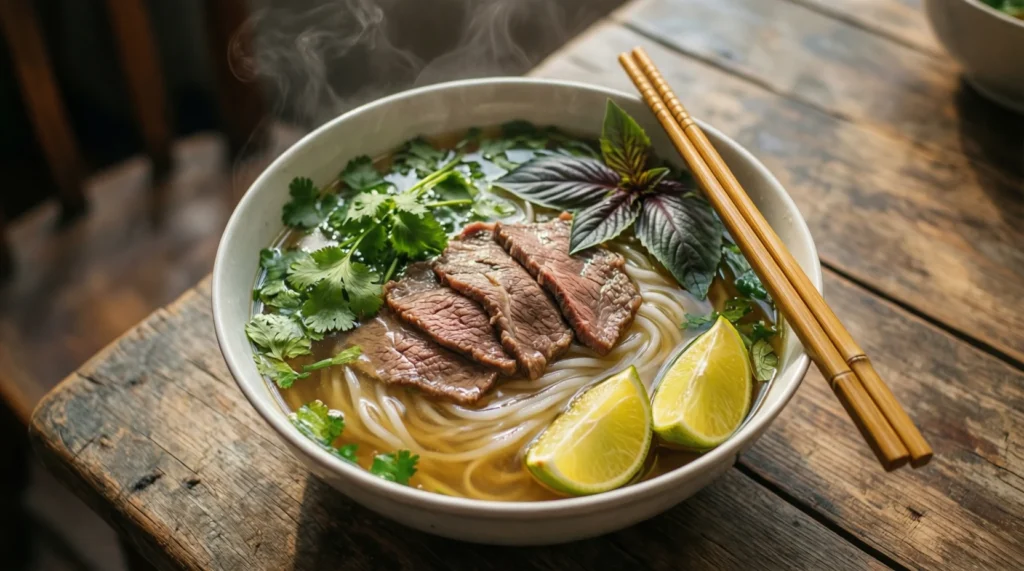
Pho in Vietnamese refers to a traditional noodle soup made with rice noodles, aromatic broth, herbs, and meat, most commonly beef or chicken.
The word “pho” specifically names the dish itself and represents one of Vietnam’s most iconic foods, deeply tied to Vietnamese culture, history, and daily life.
If you have ever seen the word pho on a restaurant menu or heard someone talk passionately about Vietnamese food, you already know it carries more weight than just being a soup. Pho is comfort food, street food, family food, and national pride all rolled into one warm bowl. Understanding what pho means in Vietnamese helps you appreciate not only the dish but also the culture behind it.
In this guide, we will explore the meaning of pho, where the word comes from, how it is used in everyday Vietnamese language, its cultural importance, and how it compares to similar dishes. By the end, you will know exactly what pho means and why it matters so much.
What Does Pho Mean in Vietnamese?
At its simplest, pho means Vietnamese noodle soup. In Vietnamese, the word phở refers to a specific dish rather than a category of soups. When a Vietnamese person says phở, they are usually talking about a bowl of flat rice noodles served in a clear, fragrant broth with herbs and meat.
The word is written with a tone mark in Vietnamese as phở, which changes how it is pronounced. The tone gives it a rising then falling sound, closer to “fuh” than “fo” or “faux.”
Pho is not slang, not an abbreviation, and not a general term for soup. It is the proper name of a dish that holds deep cultural meaning in Vietnam.
The Origin of the Word Pho
The origin of the word pho is a fascinating mix of history, language, and food culture.
Historical background
Pho is believed to have originated in northern Vietnam in the early 20th century, particularly around Hanoi. At that time, Vietnam was under French colonial rule, and many scholars believe that pho was influenced by French cuisine.
One popular theory suggests that pho comes from the French word pot-au-feu, which means “pot on the fire” and refers to a slow cooked beef stew. Vietnamese cooks may have adapted the idea of a long simmered beef broth and combined it with rice noodles and local herbs.
Another theory suggests that the word pho evolved independently in Vietnamese, connected to traditional rice noodle dishes that existed before French influence. Regardless of its exact linguistic roots, pho as we know it today is distinctly Vietnamese.
Evolution over time
Originally, pho was made almost exclusively with beef because cattle were more commonly used during the colonial period. Later, especially after periods of food scarcity, chicken pho became popular. Over time, regional variations developed, giving us the rich variety of pho styles we see today.
How Pho Is Used in Real Life Vietnamese Language
Pho is both a noun and a cultural reference. In daily Vietnamese conversation, the word is used very naturally.
Here are common ways Vietnamese speakers use the word pho.
Everyday usage
People use pho when talking about meals, plans, or comfort food. It often appears in casual, friendly conversations.
Examples:
“I am going to eat pho for breakfast.”
“There is a good pho shop near my house.”
“When I feel sick, I want a bowl of pho.”
Pho is not associated with negative or dismissive tones. It is almost always warm, positive, or neutral in feeling.
Emotional and cultural tone
Pho often carries emotional meaning. It can represent home, nostalgia, or care. When someone cooks pho for you, it often means effort and love, since the broth takes hours to prepare.
In Vietnamese culture, offering pho to guests is a welcoming gesture, especially in informal settings.
Pronunciation and Tone Explained
Vietnamese is a tonal language, so pronunciation matters.
Pho is written as phở with a specific tone mark. This tone affects meaning and sound.
Here is a simple guide.
Pho pronunciation table
| Written form | Approximate sound | Meaning |
|---|---|---|
| phở | fuh with a gentle rise and fall | Vietnamese noodle soup |
| pho (English) | fo or fuh | English adaptation of phở |
English speakers often pronounce it as “foe,” but in Vietnamese, it is softer and shorter.
What Is Pho Made Of?
While the word pho means the dish itself, understanding its components helps explain why it is so beloved.
Core ingredients
Pho usually includes:
• Flat rice noodles
• Clear broth made from bones and spices
• Meat such as beef or chicken
• Fresh herbs like cilantro and basil
• Garnishes like lime and chili
The broth is the soul of pho. It is simmered for hours with spices such as star anise, cinnamon, cloves, and ginger, giving pho its signature aroma.
Popular Types of Pho in Vietnam
Pho is not just one dish. There are many variations depending on region, ingredients, and personal taste.
Common pho varieties table
| Type of pho | Description | Popular region |
|---|---|---|
| Pho bo | Beef pho | Northern Vietnam |
| Pho ga | Chicken pho | Nationwide |
| Pho tai | Rare beef pho | Urban areas |
| Pho chin | Well done beef pho | Traditional style |
| Pho dac biet | Mixed beef cuts | Restaurants |
In northern Vietnam, pho is usually simpler, with fewer herbs and a clearer broth. In southern Vietnam, pho tends to be sweeter and comes with more garnishes.
Cultural Importance of Pho in Vietnam
Pho is more than food. It is a cultural symbol.
National identity
Pho is often described as Vietnam’s national dish. It represents resilience, creativity, and the blending of history and tradition.
Daily life
Pho is commonly eaten for breakfast, but many people enjoy it at any time of day. Street vendors serve it early in the morning, and restaurants serve it late into the night.
Global recognition
Pho has become internationally famous. You can now find pho restaurants around the world, from small family kitchens to high end dining spots.
Examples of Pho Used in Context
Here are examples showing how pho appears naturally in conversation.
Friendly tone
“Let’s grab a bowl of pho together tonight 😊”
Neutral tone
“I usually eat pho for breakfast before work.”
Expressive tone
“Nothing beats hot pho on a rainy day!”
As you can see, pho almost always carries positive or comforting feelings.
Comparison With Similar Vietnamese Terms
Pho is often confused with other Vietnamese noodle dishes. Here is how it compares.
Pho vs bun vs hu tieu table
| Dish name | Noodles used | Broth style | Key difference |
|---|---|---|---|
| Pho | Flat rice noodles | Clear, aromatic | Focus on spice infused broth |
| Bun | Round rice noodles | Varies | Often served with grilled meat |
| Hu tieu | Thin rice noodles | Light or dry | Influenced by Chinese cuisine |
Each dish has its own identity. Calling all Vietnamese soups “pho” is inaccurate, though common outside Vietnam.
Alternate Meanings of Pho
Pho does not have many alternate meanings in Vietnamese. It is not slang and does not usually mean anything else in modern usage.
In some non Vietnamese contexts, “pho” may appear as part of brand names or creative spellings, but these are unrelated to the Vietnamese word.
Polite or Professional Alternatives
Since pho is a dish name, there are no direct polite or professional alternatives. However, in formal writing, it is appropriate to use the accented form phở to show linguistic accuracy.
In professional menus or articles, you may see:
“Vietnamese beef noodle soup (pho)”
This helps readers unfamiliar with the term.
Example Table: Ordering Pho in Vietnam
| Phrase | Meaning | When to use |
|---|---|---|
| Cho tôi một tô phở | Please give me a bowl of pho | Polite ordering |
| Phở bò hay phở gà | Beef pho or chicken pho | Asking preference |
| Phở không hành | Pho without onions | Custom request |
Why Pho Is So Popular Worldwide
Pho’s global popularity comes from several factors.
• It is flavorful but not heavy
• It can be customized easily
• It feels comforting and nourishing
• It suits many diets
Pho is also naturally gluten free when made traditionally, which has helped increase its appeal internationally.
FAQs
What does pho literally mean in Vietnamese?
Pho literally refers to the specific noodle soup dish made with rice noodles and broth. It does not translate word for word into another English term.
Is pho Vietnamese or Chinese?
Pho is Vietnamese. While it may have been influenced by French or Chinese cooking methods, it is considered a Vietnamese national dish.
Why is pho eaten for breakfast in Vietnam?
Pho is light yet filling, making it ideal for starting the day. Street vendors traditionally serve it early in the morning.
How do you correctly pronounce pho?
Pho is pronounced like “fuh” with a gentle tonal movement, not “foe.”
Is pho always made with beef?
No. Pho can be made with beef, chicken, or even vegetarian ingredients.
Does pho mean soup in Vietnamese?
No. Soup in Vietnamese is “canh.” Pho is a specific type of noodle soup.
What is the difference between pho bo and pho ga?
Pho bo uses beef, while pho ga uses chicken. The broth flavor and aroma differ slightly.
Can pho be considered healthy?
Pho can be very nutritious depending on ingredients. It contains protein, herbs, and broth, but portion size and toppings matter.
Conclusion:
Pho means much more than just noodle soup. It represents Vietnamese culture, history, and everyday comfort. The word pho refers specifically to a beloved dish with rice noodles and aromatic broth, not a general soup category.
When talking about pho:
• Use the word to describe the dish, not all Vietnamese food
• Pronounce it softly as “fuh”
• Understand that it carries positive and cultural meaning
If you want to truly experience pho, try it in different regional styles and pay attention to the broth. That is where the magic lives.
Read More Related Articles:
- What Does DNF Mean in F1: Real-Life Race Examples (2026)
- What Does EMD Mean in Text? Definition, Usage, Examples & Alternatives (2026)
- What Does Folding Mean in Slang? Definition, Origin, Examples & Usage (2026)

John Miller is a professional meanings writer at Meanzy.com, specializing in word definitions, internet slang, acronyms, and text abbreviations. He focuses on delivering clear, accurate explanations with practical examples, helping readers easily understand modern digital terms and their real-life usage.