
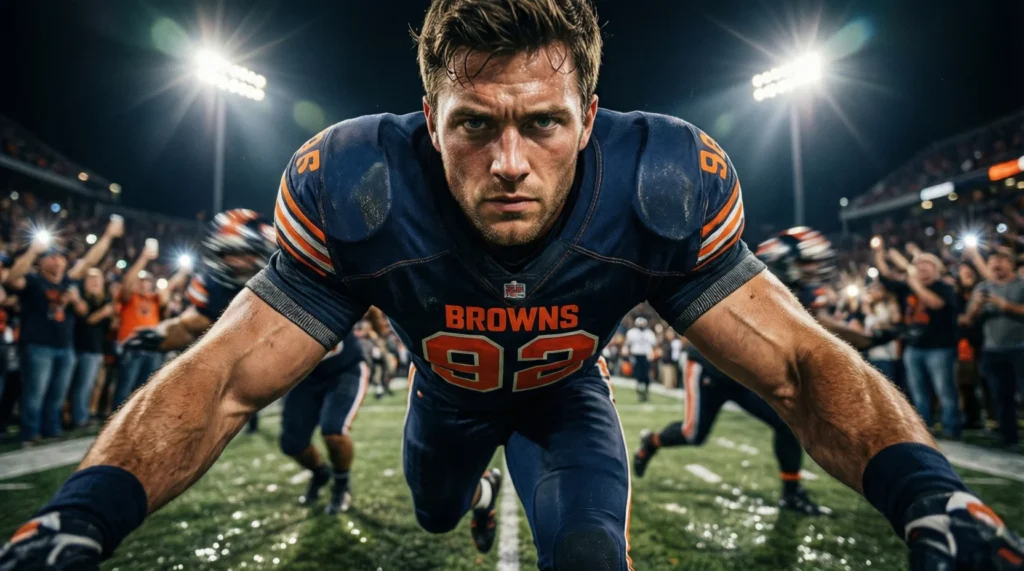
LB in football stands for Linebacker.
A linebacker is a defensive player who lines up behind the defensive linemen and is responsible for stopping the run, covering receivers, rushing the quarterback, and reading offensive plays.
In simple terms, linebackers are the all purpose defenders who connect the defensive line with the secondary.
LB is one of those football abbreviations you see everywhere on depth charts, stat sheets, TV graphics, and fantasy lineups. If you’re new to the game or just want a clearer understanding, you’re not alone.
Whether you’re watching the NFL, college football, or even playing Madden or fantasy football, understanding what LB means in football helps you follow the game more intelligently and appreciate defensive play at a deeper level.
Let’s break it all down clearly and conversationally.
Understanding the Linebacker Position in Football
The linebacker position is one of the most demanding and versatile roles in football. LBs must combine strength, speed, intelligence, and instincts. They are constantly reacting, adjusting, and communicating on defense.
Linebackers typically line up:
- Behind the defensive linemen
- In front of the defensive backs
They act as the heartbeat of the defense, often calling out formations and adjustments before the snap.
Origin of the Term “Linebacker”
The term linebacker originated in early American football as the game evolved into more specialized positions.
Originally:
- Defensive players were grouped loosely
- As offenses became more complex, defenses needed players who could “back” the defensive line
Hence the name:
- “Line” refers to the defensive line
- “Backer” refers to the player positioned behind that line
Over time, linebackers became central to defensive strategy, especially with the rise of passing offenses.
Why the LB Position Is So Important
Linebackers are asked to do more than almost any other defensive player. A good LB must:
- Read the offense before the snap
- React instantly after the snap
- Tackle powerful running backs
- Cover fast tight ends and receivers
- Blitz the quarterback when needed
Because of this versatility, elite linebackers often become the face of a defense.
Main Responsibilities of a Linebacker
Here’s a clear breakdown of what linebackers do on the field.
Key Linebacker Duties
- Stop running plays between the tackles
- Drop into pass coverage
- Blitz the quarterback
- Spy mobile quarterbacks
- Communicate defensive adjustments
- Force turnovers with tackles, sacks, or interceptions
Linebackers must constantly switch roles from one play to the next, sometimes within seconds.
Types of Linebackers Explained
Not all linebackers play the same role. Their responsibilities depend on the defensive scheme.
Common Linebacker Types
| Linebacker Type | Abbreviation | Primary Role |
|---|---|---|
| Middle Linebacker | MLB | Defensive leader, play reader |
| Outside Linebacker | OLB | Edge setting, coverage, pass rush |
| Weakside Linebacker | WLB | Speed, coverage, pursuit |
| Strongside Linebacker | SLB | Strength, tight end coverage |
Middle Linebacker (MLB)
The MLB is often called the quarterback of the defense.
Responsibilities include:
- Calling defensive plays
- Reading the offense
- Filling run gaps
- Covering the middle of the field
Famous MLBs include Ray Lewis and Luke Kuechly.
Outside Linebacker (OLB)
Outside linebackers usually line up on the edges of the defense.
Their job may include:
- Rushing the passer
- Setting the edge against runs
- Covering running backs or tight ends
In some defensive systems, OLBs act almost like defensive ends.
Weakside vs Strongside Linebacker
| Role | Alignment | Skill Focus |
|---|---|---|
| Weakside LB | Away from tight end | Speed, coverage |
| Strongside LB | On tight end side | Strength, tackling |
Each side demands a different physical profile and skill set.
LB in Different Defensive Schemes
The meaning of LB stays the same, but the role changes depending on the defensive formation.
4–3 Defense
- 4 defensive linemen
- 3 linebackers
Linebackers focus more on:
- Run stopping
- Pass coverage
3–4 Defense
- 3 defensive linemen
- 4 linebackers
In this system:
- Outside LBs are often primary pass rushers
- They rack up sacks like defensive ends
This is why you’ll sometimes see linebackers with very high sack totals.
LB on Depth Charts and Stat Sheets
When you see LB on a roster, it usually refers to a general linebacker designation.
Other common abbreviations include:
- MLB
- OLB
- ILB (Inside Linebacker)
On stat sheets, linebackers often lead in:
- Total tackles
- Tackles for loss
- Sacks
- Interceptions
Real Game Examples of LB Usage
Here are examples of how LB is used in football conversations, with tone context.
Friendly or Neutral Tone
- “That LB made a great read on the run play.”
- “He transitioned from safety to LB this season.”
- “Our defense relies heavily on its linebackers.”
Professional or Analytical Tone
- “The LB core struggled in pass coverage last week.”
- “This scheme allows the LB to blitz more frequently.”
- “Linebacker depth will determine defensive success.”
Negative or Dismissive Tone
- “The LB completely missed his assignment.”
- “Poor LB play cost them the game.”
- “That linebacker looked lost out there.”
Occasionally fans add emojis for emphasis:
- “That LB was everywhere tonight 🔥”
- “Missed tackle by the LB again 😬”
Comparison: LB vs Similar Football Positions
Linebackers are often confused with other defensive roles. Here’s how they compare.
DL vs LB
| Aspect | Linebacker | Defensive Lineman |
|---|---|---|
| Alignment | Behind the line | On the line |
| Coverage duties | Yes | Rare |
| Speed required | High | Moderate |
| Primary role | Versatility | Trench control |
LB vs Defensive Back (DB)
| Aspect | Linebacker | Defensive Back |
|---|---|---|
| Size | Bigger | Smaller |
| Coverage range | Short to mid | Deep field |
| Run defense | Major role | Support role |
| Blitzing | Frequent | Occasional |
LB in Fantasy Football
In IDP (Individual Defensive Player) fantasy leagues, LBs are extremely valuable.
Why?
- They accumulate high tackle numbers
- They stay on the field most snaps
- They can contribute sacks and interceptions
Many fantasy managers prioritize linebackers early when building IDP rosters.
Alternate Meanings of LB (Briefly Explained)
While LB means linebacker in football, the abbreviation can have other meanings in different contexts.
| Context | Meaning |
|---|---|
| General measurement | Pound |
| Boxing | Lower body |
| Gaming | Left bumper |
| Fitness | Pound (weight) |
In football discussions, however, LB almost always means linebacker.
Polite or Professional Alternatives to “LB”
In formal writing or commentary, you may see these instead of LB:
- Linebacker
- Defensive linebacker
- Inside linebacker
- Outside linebacker
- Defensive second level player
Using the full term is often better in professional or educational settings.
FAQs
What does LB stand for in football?
LB stands for linebacker, a defensive position responsible for stopping the run, covering receivers, and rushing the quarterback.
Is LB offense or defense in football?
LB is a defensive position. Linebackers play on the defensive side of the ball.
What is the difference between LB and MLB?
LB is a general term for linebacker, while MLB refers specifically to the middle linebacker.
Do linebackers cover receivers?
Yes. Linebackers often cover running backs, tight ends, and sometimes slot receivers.
Are linebackers fast or strong?
They must be both. Linebackers need strength to tackle and speed to cover and pursue plays.
Why are linebackers called the leaders of the defense?
They often call plays, adjust alignments, and read the offense before the snap.
Is LB important in fantasy football?
Yes, especially in IDP leagues where linebackers score consistently due to tackles.
Can a linebacker sack the quarterback?
Absolutely. Many linebackers are used as pass rushers, especially in blitz packages.
Conclusion:
Understanding what LB means in football gives you a much clearer picture of how defenses work.
Linebackers are:
- Versatile
- Intelligent
- Physically demanding players
- Central to both run defense and pass coverage
Whether you’re a fan, fantasy player, student of the game, or casual viewer, knowing the linebacker role helps you appreciate the complexity and strategy of football at a deeper level.
Next time you hear an announcer praise an LB, you’ll know exactly why.
Read More Related Articles:
- Meaning of Nissan in Japanese: From Language to Legacy In 2026
- What Kanna Means in Indian Traditions: From Language to Culture In 2026
- Why Idolatry Matters in the Bible: Spiritual Impact (2026)

Rachel Monroe is a digital content writer at Meanzy.com who focuses on explaining modern words, phrases, and online expressions. Her writing style is simple, practical, and reader-focused, helping users quickly understand the meaning and usage of today’s evolving language.