In Japanese, karaoke (カラオケ) literally means empty orchestra. It comes from combining kara meaning empty and oke which is short for orchestra. The word refers to singing along to instrumental music without a live band.
Karaoke is one of those words that feels universal. You hear it in cafés, offices, birthday parties, and even wedding halls across the world. But while almost everyone knows what karaoke is, far fewer people know what karaoke actually means in Japanese and why the word carries so much cultural weight.
This article goes deep into the meaning of karaoke in Japanese, where it came from, how Japanese people really use it, and why it became a global phenomenon. Whether you are learning Japanese, writing content, traveling to Japan, or just curious about language and culture, this guide will give you a clear, human explanation with real context.
Understanding the Literal Meaning of Karaoke
To fully understand karaoke, it helps to break the word into its original Japanese parts.
The Two Parts of Karaoke
| Japanese Part | Writing | Meaning | Explanation |
|---|---|---|---|
| Kara | 空 | Empty | Refers to the absence of vocals |
| Oke | オケ | Orchestra | Shortened form of orchestral accompaniment |
When combined, karaoke means an orchestra without singers. In simple terms, it describes music tracks that are missing the lead vocal so someone else can sing.
This literal meaning perfectly matches how karaoke works in real life. You step in, pick a song, and the music plays without the singer so you can become the singer.
The Origin of Karaoke in Japan
Where and When Did Karaoke Begin?
Karaoke originated in Japan in the late 1960s and early 1970s. The concept is often credited to Daisuke Inoue, a Japanese musician who created recorded backing tracks for clients who wanted to sing along when live musicians were unavailable.
At first, karaoke was not a flashy entertainment industry. It was practical. Businessmen wanted music to sing with after work. Bars wanted cheaper alternatives to hiring bands. Karaoke machines solved both problems.
Why the Term “Empty Orchestra” Made Sense
In Japan, music culture traditionally involved live performers. Removing the singer felt like leaving the orchestra empty at the center. Instead of seeing that as a flaw, Japanese culture turned it into a feature. Anyone could step in and fill that empty space.
That mindset is a big reason karaoke became so popular in Japan and later worldwide.
Why Karaoke Became So Popular in Japanese Culture
Karaoke is not just entertainment in Japan. It is a social ritual.
Social and Cultural Reasons for Its Popularity
• It allows emotional expression in a society that values restraint
• It helps coworkers bond outside the workplace
• It reduces social barriers between age groups
• It offers stress relief after long workdays
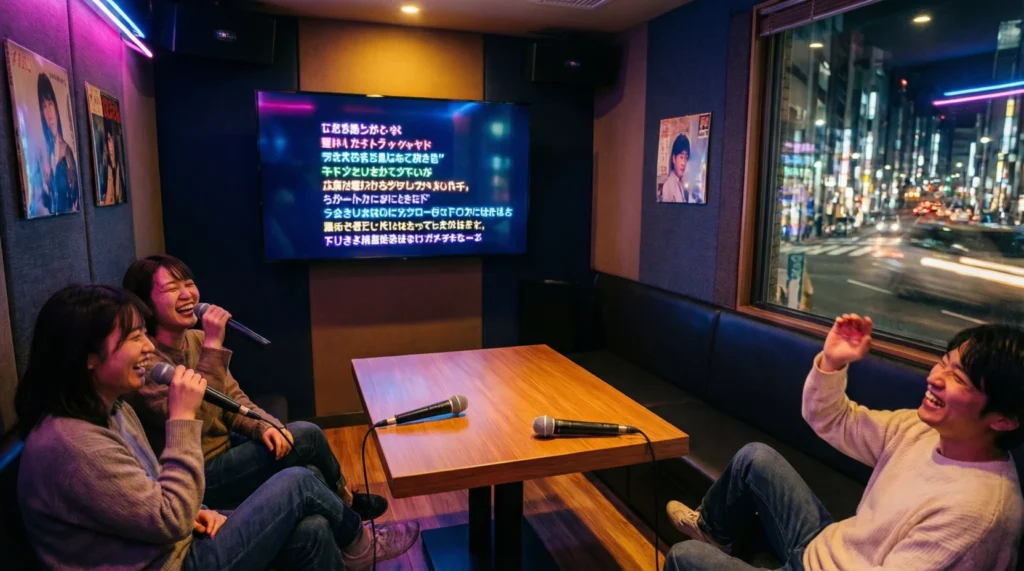
In Japan, karaoke rooms are private. Unlike Western bars where you sing in front of strangers, Japanese karaoke usually happens in soundproof rooms with friends, family, or coworkers. This privacy encourages even shy people to participate.
Karaoke and Japanese Work Culture
After work gatherings called nomikai often end at karaoke. Singing together helps relax hierarchy. A manager singing badly can feel more human. An employee singing well earns admiration. It balances social roles in subtle ways.
How Karaoke Is Used in Japanese Language
Karaoke is written in katakana, the script used for foreign or modern words.
Common Japanese Forms
| Form | Writing | Usage |
|---|---|---|
| Karaoke | カラオケ | Standard noun |
| Karaoke suru | カラオケする | To do karaoke |
| Karaoke box | カラオケボックス | Private karaoke room venue |
Example Sentence in Japanese
昨日、友達とカラオケをしました。
Yesterday, I did karaoke with my friends.
カラオケに行こう。
Let’s go to karaoke.
The word is neutral and casual. It fits daily conversation easily.
Real World Examples With Tone and Context
Karaoke can be used in different emotional tones depending on context.
Friendly or Casual Tone
カラオケ行かない?
Want to go to karaoke?
This sounds light, social, and inviting. Often used among friends or classmates.
🎤😊
Neutral or Informational Tone
日本ではカラオケはとても人気があります。
In Japan, karaoke is very popular.
Used in explanations, articles, or travel conversations.
Slightly Negative or Dismissive Tone
またカラオケ?もう飽きた。
Karaoke again? I am already tired of it.
Here, the word itself is neutral, but tone and context make it sound dismissive.
😅
Karaoke vs Similar Terms and Concepts
Although karaoke is widely known, there are related ideas that sometimes get confused with it.
Karaoke vs Singing Apps
| Feature | Karaoke | Singing Apps |
|---|---|---|
| Origin | Japan | Global digital era |
| Setting | Karaoke rooms or bars | Mobile phone |
| Social Aspect | Group focused | Often solo |
| Cultural Role | Strong in Japan | More casual worldwide |
Apps simulate karaoke, but they lack the social ritual that defines Japanese karaoke culture.
Karaoke vs Live Band Singing
| Aspect | Karaoke | Live Band |
|---|---|---|
| Music Source | Pre recorded instrumental | Live musicians |
| Flexibility | High song selection | Limited |
| Cost | Affordable | Expensive |
| Audience Pressure | Low in private rooms | Higher |
Karaoke removes pressure and makes singing accessible to everyone.
Are There Alternate Meanings of Karaoke?
Karaoke has no hidden or slang meanings in Japanese. It almost always refers to singing with instrumental music.
However, it can sometimes be used metaphorically in Japanese media or conversation to imply something is copied or missing originality. This usage is rare and context dependent.
Example
彼の演説はカラオケみたいだった。
His speech felt like karaoke.
This implies repetition without originality.
Polite and Professional Alternatives in Japanese
In professional writing or formal speech, karaoke is usually avoided simply because it is casual. However, if you need a more neutral expression, context matters.
| Situation | Alternative | Meaning |
|---|---|---|
| Formal writing | 音楽娯楽 | Musical entertainment |
| Business context | レクリエーション | Recreation |
| Event planning | 音楽活動 | Musical activity |
Still, in spoken Japanese, karaoke itself is perfectly acceptable even in semi professional settings.
Karaoke in Global Context
Japanese karaoke influenced global pop culture massively. The word entered English without translation, which is rare. Most loanwords change meaning or pronunciation. Karaoke stayed close to its original form.
In English speaking countries, karaoke often involves public performances. In Japan, privacy comes first. That difference reflects deeper cultural values around performance, confidence, and social harmony.
Example Table of Karaoke Usage Situations
| Situation | Is Karaoke Appropriate | Notes |
|---|---|---|
| Friends gathering | Yes | Very common |
| Company party | Yes | Builds team bonding |
| First date | Sometimes | Depends on comfort |
| Formal meeting | No | Too casual |
| Family event | Yes | Popular across ages |
Common Misconceptions About Karaoke
• Karaoke is not originally Western
• Karaoke does not mean singing badly
• Karaoke is not slang
• Karaoke is not informal Japanese only
It is a mainstream, culturally respected form of entertainment in Japan.
FAQs
1. What does karaoke literally translate to in English?
It literally means empty orchestra, referring to music played without a live singer.
2. Is karaoke a Japanese word or borrowed?
Karaoke is a native Japanese word formed from Japanese language elements.
3. Why is karaoke written in katakana?
Because it is a modern compound word and part of contemporary popular culture.
4. Is karaoke polite to say in Japanese?
Yes, it is neutral and commonly used in everyday conversation.
5. Do Japanese people use karaoke differently than Westerners?
Yes, in Japan karaoke usually takes place in private rooms rather than on public stages.
6. Is karaoke used in formal Japanese writing?
Rarely. It is more common in spoken language or casual writing.
7. Can karaoke have a negative meaning?
Only through tone or metaphor. The word itself is neutral.
8. Why did karaoke become popular worldwide?
Because it allows anyone to sing without needing professional musical skills or equipment.
Conclusion
Karaoke is more than just a fun pastime—it serves as a cultural bridge that connects music, language, and social interaction. The word karaoke comes from Japanese and literally means “empty orchestra,” highlighting the absence of vocals rather than any lack of talent. Originating in Japan, karaoke quickly spread across the world and became a global form of entertainment, while still playing a major role in Japanese social life today.
The term itself is neutral, widely accepted, and used naturally in everyday conversation. Whether you are learning Japanese, creating meaningful content, or traveling to Japan, understanding the origin and cultural significance of karaoke adds depth, authenticity, and a richer appreciation of this uniquely shared experience.
Read More Related Articles:
- Hallowed Mean in the Bible: Biblical Significance (2026)
- Meaning of Sophia in Bible: Wisdom and Spiritual Insight (2026)
- What Does the Number 444 Mean in the Bible? Explained (2026)

John Miller is a professional meanings writer at Meanzy.com, specializing in word definitions, internet slang, acronyms, and text abbreviations. He focuses on delivering clear, accurate explanations with practical examples, helping readers easily understand modern digital terms and their real-life usage.