
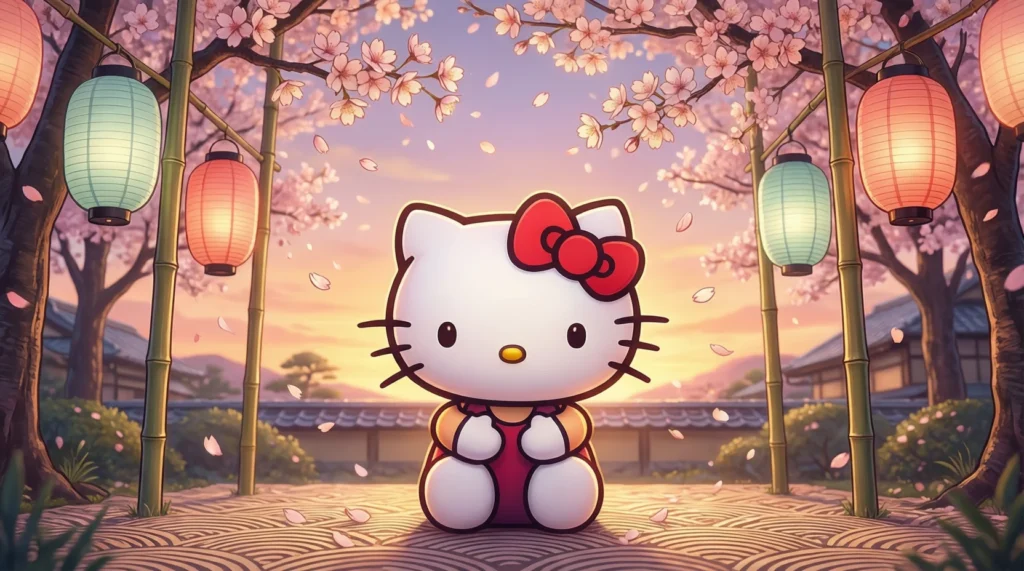
Hello Kitty does not have a literal meaning in Japanese. The character’s official Japanese name isハローキティ (Harō Kiti), which is simply a phonetic rendering of the English words “Hello Kitty.”
Rather than being a Japanese phrase, Hello Kitty represents a cultural concept centered on cuteness, friendliness, and emotional comfort.
If you have ever seen Hello Kitty on stationery, clothes, cafés, or even airplanes and wondered what the name actually means in Japanese, you are not alone. Many people assume it must hide a poetic or symbolic meaning. The reality is simpler but far more interesting once you understand the cultural background behind it.
This guide explains what Hello Kitty means in Japanese, where the name comes from, why it became so popular, how it is used in real life, and how it compares to similar Japanese cultural concepts. By the end, you will understand not just the words, but the feeling Hello Kitty represents.
What Does Hello Kitty Mean in Japanese?
In Japanese, Hello Kitty does not translate into a native Japanese phrase. Instead, it is written in katakana as ハローキティ, which is the script used for foreign words.
Let us break that down:
| English | Japanese writing | Pronunciation | Meaning |
|---|---|---|---|
| Hello Kitty | ハローキティ | Harō Kiti | English name written phonetically |
There is no hidden kanji, no secret symbolism, and no literal translation like “cute cat” or “friendly kitten.” The meaning comes entirely from cultural association, not linguistic definition.
Why Is Hello Kitty Written in Katakana?
Japanese uses three main writing systems: hiragana, katakana, and kanji. Katakana is used primarily for foreign words, loanwords, and names from outside Japan.
Hello Kitty is written in katakana because:
• The name is English in origin
• It was designed to sound international
• Katakana gives it a modern and global feel
This choice was deliberate. When Hello Kitty was created, the goal was not to make her feel traditionally Japanese, but universally appealing.
The Origin of Hello Kitty
Hello Kitty was created in 1974 by the Japanese company Sanrio. Her designer, Yuko Shimizu, was inspired by cute imagery, children’s illustrations, and Western culture.
Interestingly, Hello Kitty’s official backstory says she was born in London, not Japan. This explains why her name is in English and not Japanese.
Why an English Name?
During the 1970s, English words were seen as:
• Stylish
• Modern
• International
• Friendly and soft sounding
Using an English name helped Hello Kitty stand out and appeal to audiences beyond Japan.
What Does Hello Kitty Symbolize in Japanese Culture?
Although the name itself is not Japanese in meaning, Hello Kitty carries strong cultural symbolism in Japan.
Core ideas associated with Hello Kitty
• Cuteness (kawaii)
• Innocence
• Friendliness
• Emotional comfort
• Nostalgia
In Japanese culture, characters often function as emotional symbols rather than literal representations. Hello Kitty is less about language and more about feeling.
Hello Kitty and the Concept of Kawaii
To understand what Hello Kitty “means,” you need to understand kawaii, a core Japanese cultural concept.
| Concept | Meaning | Relation to Hello Kitty |
|---|---|---|
| Kawaii | Cute, lovable, emotionally soft | Hello Kitty is one of the most iconic examples |
| Iyashi | Healing or soothing | Hello Kitty provides emotional comfort |
| Moe | Affection for fictional characters | Fans form emotional attachment |
Hello Kitty embodies kawaii through her simple design, gentle expression, and childlike charm.
Why Does Hello Kitty Have No Mouth?
One of the most common questions is why Hello Kitty has no mouth.
Sanrio has explained that this design choice allows people to project their own emotions onto her.
If you are happy, she looks happy.
If you are sad, she looks comforting.
This makes Hello Kitty emotionally flexible, which is a major reason for her global success.
How Is Hello Kitty Used in Real Life in Japan?
Hello Kitty is everywhere in Japan, far beyond children’s products.
Common real world uses
• School supplies
• Fashion accessories
• Kitchenware
• Theme cafés
• Trains and airplanes
• Government and tourism campaigns
Yes, even official institutions use Hello Kitty to appear more friendly and approachable.
Is Hello Kitty a Cat?
This may sound strange, but according to Sanrio, Hello Kitty is not a cat. She is a girl with cat like features.
She has:
• A pet cat named Charmmy Kitty
• A family
• A human lifestyle
This reinforces that Hello Kitty is symbolic rather than realistic.
Tone and Context of Hello Kitty in Japanese Usage
Hello Kitty is almost always associated with positive or neutral tone.
Tone examples
| Tone | Context | Example |
|---|---|---|
| Friendly | Gifts, greetings, kids items | Hello Kitty stationery |
| Neutral | Branding, decor | Hello Kitty café |
| Playful | Fashion, pop culture | Hello Kitty streetwear |
There is no negative or dismissive tone attached to Hello Kitty in normal usage.
Does Hello Kitty Mean Anything Slang Wise?
No. Hello Kitty does not have slang meanings in Japanese. It is not used sarcastically or insultingly.
However, in some contexts outside Japan, people may jokingly associate Hello Kitty with extreme cuteness or childishness. This is cultural, not linguistic.
Comparison With Similar Japanese Characters
Hello Kitty belongs to a larger world of Japanese character culture.
| Character | Company | Core concept |
|---|---|---|
| Hello Kitty | Sanrio | Universal kawaii and friendliness |
| Rilakkuma | San X | Relaxation and comfort |
| Doraemon | Fujiko F Fujio | Friendship and imagination |
| Pikachu | Nintendo | Energy and adventure |
Hello Kitty stands out for her simplicity and emotional neutrality.
Alternate Meanings or Interpretations
There are no alternate literal meanings of Hello Kitty in Japanese.
Some fans interpret symbolic meanings such as:
• Innocence
• Timelessness
• Emotional safety
These interpretations are personal and cultural, not linguistic definitions.
Polite or Professional Alternatives
If Hello Kitty feels too cute or informal for a professional setting, Japanese culture offers alternatives.
| Situation | Alternative | Why it fits |
|---|---|---|
| Professional gifts | Minimal character designs | More mature tone |
| Corporate branding | Mascots with formal styling | Wider audience appeal |
| Adult fashion | Subtle Hello Kitty motifs | Keeps charm without childishness |
Example Table: Hello Kitty Usage by Age Group
| Age group | Typical usage | Popular items |
|---|---|---|
| Children | School supplies, toys | Bags, pencils |
| Teens | Fashion and accessories | Phone cases |
| Adults | Nostalgic or stylish items | Bags, home decor |
Hello Kitty is designed to grow with the user, which is rare for a character brand.
Why Is Hello Kitty So Popular Worldwide?
Hello Kitty’s success comes from a mix of design, psychology, and branding.
Key reasons include:
• Simple and recognizable design
• Emotional flexibility
• No language barrier
• Strong merchandising strategy
• Cross cultural appeal
Because the name is English and the character is visually universal, people everywhere can connect with her.
FAQs
What does Hello Kitty literally mean in Japanese?
Hello Kitty does not have a literal meaning in Japanese. It is an English name written in katakana (ハローキティ), which is the script used for foreign words.
Is Hello Kitty a Japanese word?
No. Hello Kitty is not a native Japanese word. It is an English phrase that has been adapted into Japanese writing and pronunciation.
Why did Japan create a character with an English name?
When Hello Kitty was created in the 1970s, English names were seen as modern, fashionable, and internationally appealing. Using an English name helped the character feel global rather than limited to Japan.
How do Japanese people pronounce Hello Kitty?
Japanese speakers pronounce it as Harō Kiti (ハロー・キティ), following Japanese sound rules, which simplify and adapt foreign words.
Does Hello Kitty represent anything cultural?
Yes. Hello Kitty is closely associated with kawaii culture, which emphasizes cuteness, warmth, emotional comfort, and friendliness.
Is Hello Kitty only for children in Japan?
No. Hello Kitty is popular with both children and adults. Many adults enjoy Hello Kitty products because of nostalgia, fashion, or personal style.
Is there a hidden meaning behind Hello Kitty?
There is no official hidden meaning. Any deeper symbolism people associate with Hello Kitty comes from personal interpretation rather than confirmed intent.
Why is Hello Kitty so famous compared to other characters?
Her simple design, neutral facial expression, emotional flexibility, and strong global branding have made Hello Kitty one of the most recognizable characters in the world.
Conclusion:
Hello Kitty does not mean anything specific in Japanese words, but she means a lot culturally. Her name is simply English written in katakana, yet her impact goes far beyond language.
In Japan, Hello Kitty represents comfort, cuteness, and emotional connection. She is a character designed not to speak, judge, or impose emotion, but to reflect what the viewer feels.
If you are learning Japanese or exploring Japanese culture, Hello Kitty is a perfect example of how meaning is not always found in dictionaries, but in shared feelings and cultural values.
Read More Related Articles:
- Meaning of Seven in the Bible: Symbol of Divine Perfection (2026)
- What Does CFS Mean in Text? Slang vs Real-World Meanings (2026)
- What Does Belle Mean in French? Complete Language Guide For 2026

Rachel Monroe is a digital content writer at Meanzy.com who focuses on explaining modern words, phrases, and online expressions. Her writing style is simple, practical, and reader-focused, helping users quickly understand the meaning and usage of today’s evolving language.