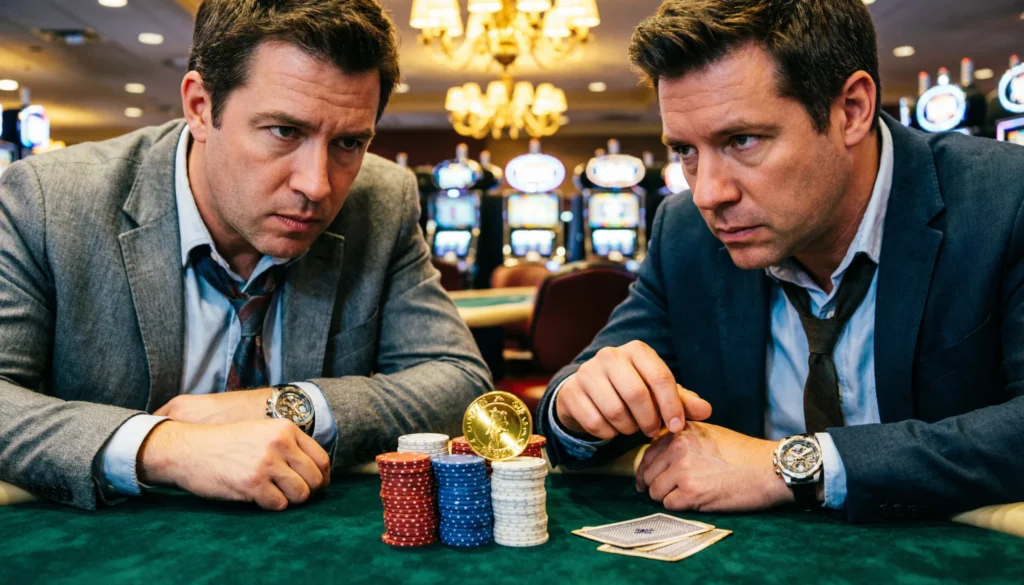
In poker, “heads up” refers to a game, hand, or situation where only two players are actively competing against each other. It often describes the final stage of a poker tournament or a one-on-one hand in cash games. Playing heads up requires different strategies compared to full-table play, as it is faster-paced and more aggressive.
When a poker game narrows down to just two players, the strategy shifts dramatically. This intense one-on-one format is known as heads up poker, and it requires a completely different mindset compared to full-table play. But what exactly does heads up mean, and why is it so important in modern poker?
In this article, we’ll break down the meaning of heads up poker, explain how it works, and explore the key strategic adjustments players must make in 2026’s competitive poker environment. From aggressive betting patterns to reading your single opponent, you’ll learn why heads up play is considered one of the purest tests of poker skill.
Origin of the Term “Heads Up” in Poker
The term “heads up” in poker has its roots in casual card games and gambling vernacular from the early 20th century. Originally, it was used to indicate that two players were facing each other directly, “head to head,” without any intervening players.
The phrase was adopted widely in tournaments to describe the final matchup between the last two contestants. It also spread into casual online poker, where players would use the term for any one-on-one hand, even outside of tournaments.
Interestingly, the term “heads up” is also used in military and aviation contexts to mean “be alert” or “pay attention,” but in poker, it is strictly a gameplay scenario descriptor.
Real-World Usage of “Heads Up” in Poker
“Heads up” is commonly used in poker discussions, both offline and online. Here’s how it’s applied:
- Tournament Final: When only two players remain, they are “playing heads up for the title.”
- Cash Game Hand: If a hand reaches the point where only two players are involved in betting, it’s called a heads-up hand.
- Strategy Discussion: Poker guides often mention “heads-up strategy” because it is significantly different from multi-player dynamics.
Examples of “Heads Up” in Context
Here are practical examples to help you understand how “heads up” is used in conversation and poker literature:
| Context | Example | Tone |
|---|---|---|
| Friendly | “Hey, you and I are heads up on this hand. Let’s see who takes it!” | Neutral, engaging |
| Tournament | “She went heads up against the chip leader and pulled off a big bluff.” | Neutral, professional |
| Casual/Negative | “It’s just heads up now, so don’t make rookie mistakes.” | Slightly dismissive, cautionary |
| Strategy Tip | “Heads-up play requires more aggression since you can’t rely on others folding for you.” | Informative, professional |
Notice that the tone can vary depending on context, from friendly banter to serious strategic advice.
Key Characteristics of Heads-Up Poker
Playing heads up is not the same as playing at a full table. Here are the key differences:
| Feature | Heads-Up Play | Full-Table Play |
|---|---|---|
| Number of Players | 2 | 6–10 |
| Betting Frequency | High | Moderate |
| Aggressiveness | Essential | Situational |
| Bluffing | More frequent | Less frequent |
| Positional Advantage | Very important | Important but less dominant |
Tip: Beginners often underestimate heads-up play because fewer players can make it seem easier. In reality, it demands sharp observation, fast decision-making, and adaptability.
How to Play Heads Up: Basic Strategy Tips
Whether you’re in a tournament final or just a cash game hand, heads-up strategy differs from normal play:
- Play More Hands: Since there are only two players, you’ll need to widen your range. Don’t wait for premium hands only.
- Aggression Pays Off: Betting and raising is key to winning small pots consistently.
- Watch Your Opponent: Every action is more noticeable, so observe patterns and tendencies closely.
- Adjust Positioning: The dealer/button position rotates differently, so use position to your advantage.
- Bluff Smartly: Bluffing works more often heads up because your opponent can’t hide behind other players.
Alternate Meanings of “Heads Up”
Although most commonly used in poker, heads up can appear in other scenarios:
- General Warning: “Heads up! There’s a car coming.” (alert, cautionary)
- Sports: In games like basketball or chess, it can indicate a direct one-on-one matchup.
- Business/Emails: “Just a heads up that the meeting is rescheduled.” (informal notification)
In poker-related content, clarity is key, so the term almost always refers to a two-player competition.
Comparison with Related Terms
Poker has many terms describing the number of players or type of gameplay. Here’s how heads up compares:
| Term | Meaning | Relation to Heads Up |
|---|---|---|
| Full Table | Standard game with multiple players | Opposite of heads up |
| Short-Handed | 3–5 players per table | Not as extreme as heads up |
| One-on-One | Casual description | Essentially the same as heads up |
| Multi-Way Pot | More than 2 players involved | Not heads up |
Understanding these terms helps clarify strategy and set expectations for gameplay.
Polite or Professional Alternatives
If you’re explaining poker in a professional or educational setting, consider alternatives to saying “heads up”:
- One-on-One Hand
- Two-Player Scenario
- Direct Matchup
- Final Stage Play (for tournaments)
These alternatives can make articles, lessons, or commentaries sound more formal without losing meaning.
Heads Up Poker Examples with Scenarios
| Scenario | Situation | Player Action |
|---|---|---|
| Tournament | Only two players left | Aggressive betting, observing opponent tendencies |
| Cash Game | Two players remain after folds | Bluffing and positional plays become key |
| Online Hand | Heads-up after flop | Player raises with top pair to pressure opponent |
| Learning Exercise | Training heads-up skills | Playing small pots to practice reads and aggression |
Common Mistakes in Heads-Up Play
- Being too passive: Waiting for premium hands is a fast way to lose.
- Ignoring position: Even one-step positional advantage matters a lot.
- Over-bluffing: Not all bluffs work heads up. Observe patterns.
- Underestimating aggression: The opponent will often raise frequently; be prepared.
FAQs
1. What does heads up mean in poker?
Heads up means a situation where only two players are competing against each other in a hand or tournament.
2. How is heads-up poker different from full-table play?
Heads-up poker is faster, more aggressive, and requires wider hand ranges and constant observation of your opponent.
3. When do you play heads up in a tournament?
You play heads up when only the last two players remain in the tournament.
4. Can you bluff more in heads-up poker?
Yes, bluffing is more effective heads up because there’s only one opponent to convince.
5. What is a good heads-up strategy?
Play more hands, be aggressive, watch your opponent closely, and adjust based on tendencies.
6. Does heads up always refer to tournaments?
No, it can also refer to a single cash game hand with only two active players.
7. Are heads-up skills important for beginners?
Yes, learning heads-up skills improves reading opponents, aggression control, and positional awareness.
8. What are polite alternatives to saying heads up?
You can use “one-on-one hand,” “direct matchup,” or “two-player scenario.”
Conclusion
Heads up in poker is an exciting, fast-paced, and strategic part of the game. Whether it’s the final stage of a tournament or a quick hand in a cash game, understanding heads-up dynamics is crucial. Key takeaways include:
- Recognize when a hand is heads up.
- Adjust your strategy to be more aggressive and observant.
- Use position, bluffing, and wide hand ranges wisely.
- Understand that heads-up play differs significantly from full-table strategy.
Mastering heads-up play can dramatically improve your overall poker skills and increase your chances of winning in tournaments and cash games alike.
Read More Related Articles:
- BEO Mean in Text Messages: Slang Meaning You Should Know (2026)
- D Meaning in Fantasy Football: It’s Not Just a Letter! In 2026
- Meaning of Phở in Vietnamese: Language, History and Culture In 2026

Rachel Monroe is a digital content writer at Meanzy.com who focuses on explaining modern words, phrases, and online expressions. Her writing style is simple, practical, and reader-focused, helping users quickly understand the meaning and usage of today’s evolving language.