
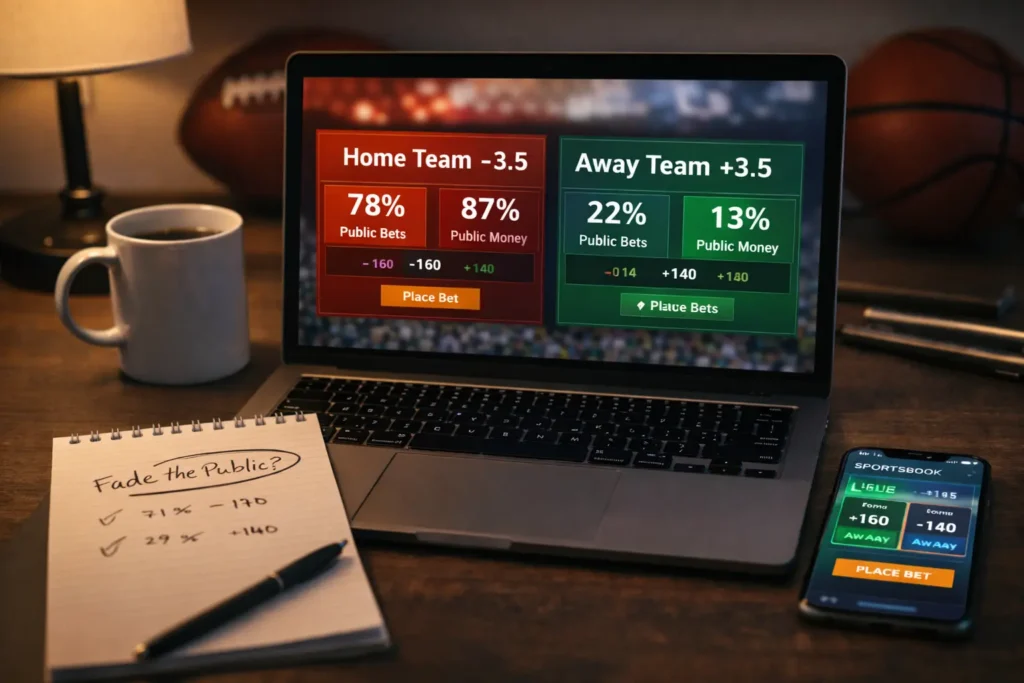
Fade in betting means to bet against a particular team, player, or public opinion. When a bettor “fades” someone, they are intentionally wagering on the opposite side of that selection, often because they believe the pick is overvalued or overhyped.
For example, if most bettors are backing the Dallas Cowboys, and you bet on their opponent instead, you are fading the Cowboys.
If you have ever heard someone say, “I’m fading that team tonight,” you might wonder what that actually means. Is it a prediction? A strategy? Or just gambling slang?
In sports betting, the word fade carries a very specific meaning. And understanding it can help you read betting discussions, follow expert picks, and even shape your own wagering strategy.
Simple, but powerful.
What Does Fade Mean in Betting?
At its core, fading is about opposition.
When you fade in sports betting, you:
• Bet against a popular team
• Bet against a heavily backed public pick
• Bet against a professional bettor’s recommendation
• Bet against a recent hot streak
Instead of following the crowd, you go the other way.
It is often linked to what bettors call “contrarian betting,” which is a strategy based on exploiting public bias and inflated betting lines.
Origin of the Term “Fade”
The word “fade” has roots in American gambling slang and street vernacular. In general usage, to fade someone can mean to challenge them, dismiss them, or go against them.
Over time, sportsbooks and bettors adopted the term to describe taking the opposite side of someone’s bet.
It became especially popular in sports media, betting forums, and platforms like ESPN where analysts discuss public betting trends and contrarian strategies.
Today, fading is a standard term in betting communities, podcasts, and betting analytics discussions.
Why Do Bettors Fade?
Fading is not random. It usually has strategic reasoning behind it.
Here are the most common reasons bettors fade a team or bettor:
1. Public Bias
Casual bettors often back:
• Popular teams
• Star players
• Recent winners
• Home favorites
Sportsbooks know this. When public money pours in on one side, bookmakers may adjust the line to balance risk.
Sharp bettors may fade the public because they believe the line has moved too far.
2. Overreaction to Recent Performance
If a team just won by 30 points, the public might rush to bet them again. But markets can overreact.
A bettor might fade that team believing the performance was unsustainable.
3. Fading a “Hot Capper”
Sometimes bettors fade a specific handicapper or analyst whose picks they believe are unreliable.
For example, if a popular sports personality on Barstool Sports makes a viral pick, some bettors immediately fade it.
4. Value-Based Betting
Professional bettors are often hunting for value. If the betting line seems inflated due to hype, fading can be a value-driven decision.
How Fading Works in Real Scenarios
Let’s look at clear, practical examples.
Example 1: Fading the Public
Suppose:
• 75 percent of bettors are backing the Los Angeles Lakers
• The point spread moves from Lakers minus 4 to minus 6
A contrarian bettor might:
• Bet on the opposing team plus 6
• Believe the line has shifted too much
That bettor is fading the Lakers.
Example 2: Fading a Hot Team
Team A has won five straight games.
The media is hyping them heavily.
You analyze:
• Tough upcoming matchup
• Poor underlying defensive stats
• Fatigue from travel
You bet against them.
You are fading the hot streak.
Example 3: Fading a Public Figure
If a well-known sports analyst predicts a guaranteed win for Team B and bettors pile in, someone who bets on the other side is fading that analyst’s pick.
Tone-wise, fading can sometimes carry a playful edge.
“I’m fading that pick 😄” sounds casual.
“I’m fading the public on this one” sounds strategic and analytical.
Example Table: What Fading Looks Like in Practice
| Scenario | Public Action | Your Action | Result |
|---|---|---|---|
| Popular Team | 80% backing Chiefs | Bet on opponent | You fade the Chiefs |
| Hot Streak | Team won 4 straight | Bet against them | You fade momentum |
| Celebrity Pick | Analyst says lock of the year | Bet opposite | You fade the analyst |
| Big Favorite | Heavy money on favorite | Bet underdog | You fade the favorite |
Fade vs Related Betting Terms
Understanding fade becomes easier when you compare it with related concepts.
Fade vs Tail
| Term | Meaning | Strategy Type |
|---|---|---|
| Fade | Bet against someone or a team | Contrarian |
| Tail | Copy someone’s bet | Following strategy |
If you tail a bettor, you follow them.
If you fade them, you oppose them.
Fade vs Hedge
| Term | Meaning | Purpose |
|---|---|---|
| Fade | Oppose a pick before outcome | Strategic position |
| Hedge | Place opposite bet after initial bet | Reduce risk |
Fading happens before the game starts.
Hedging happens after you already have exposure.
Fade vs Arbitrage
Arbitrage is a mathematical strategy exploiting pricing differences between sportsbooks.
Fading is more opinion-driven and value-based.
Types of Fades in Sports Betting
Fading is not limited to one type of bet.
1. Fading Against the Spread
You bet against a heavily backed team covering the spread.
Example: Betting underdog plus 7 when public loves the favorite.
2. Fading the Moneyline Favorite
Instead of betting the minus 200 favorite, you take the underdog at plus 170.
3. Fading Totals
If everyone expects a high-scoring game and the total is inflated, you bet the under.
4. Fading Player Props
Public loves a star player’s over points prop. You take the under.
When Fading Makes Sense
Fading can be effective in:
• Primetime games
• Playoff games
• Super Bowl level events
• Highly televised matchups
Public money tends to spike during major events.
For example, during the Super Bowl, recreational bettors flood sportsbooks. Contrarian bettors often look for inflated lines to fade.
Risk of Fading
Fading is not automatically profitable.
Risks include:
• Betting against strong teams for the wrong reasons
• Ignoring real statistical advantages
• Assuming public is always wrong
Sometimes the popular pick wins comfortably.
Blindly fading without research is just gambling.
Example Table: Pros and Cons of Fading
| Pros | Cons |
|---|---|
| Can exploit inflated lines | Public can be right |
| Encourages independent thinking | Requires strong analysis |
| Often creates better odds | Emotion-driven fading can backfire |
| Helps avoid hype traps | Not guaranteed edge |
Alternate Meanings of Fade
Outside sports betting, fade has other meanings:
• In barbering, a fade haircut blends hair gradually
• In music production, a song fades out
• In slang, fade can mean to dismiss someone
In betting context, however, it specifically means betting against.
Professional Alternatives to Saying “Fade”
In more formal analysis, instead of saying “I’m fading this team,” professionals might say:
• I’m taking the contrarian position
• I’m betting against the market consensus
• I’m opposing the public side
• I see value on the other side
These alternatives sound more polished in published content.
Psychological Side of Fading
Fading appeals to bettors who:
• Dislike herd mentality
• Prefer analytical approaches
• Believe in market inefficiency
There is also an emotional component.
Sometimes bettors fade simply because they dislike a team. That is not strategy. That is bias.
Smart fading relies on data, not emotion.
Advanced Example Table: Public Betting vs Contrarian Edge
| Factor | Public Behavior | Contrarian View |
|---|---|---|
| Star Player Returns | Overreaction | Wait for line inflation |
| Blowout Win | Momentum narrative | Regression expected |
| Media Hype | Heavy betting volume | Market imbalance |
| Rivalry Game | Emotional picks | Value in underdog |
FAQs
What does fade mean in sports betting?
Fade means to bet against a specific team, player, or betting pick. You intentionally take the opposite side, often because you believe the line is inflated or the public is overreacting.
Is fading the public a profitable strategy?
It can be, but only when supported by analysis. Simply fading every popular pick does not guarantee long term success.
What does it mean to fade a bettor?
It means you consistently bet opposite that bettor’s selections because you believe their predictions are unreliable.
What is the opposite of fading in betting?
The opposite of fading is tailing. When you tail someone, you copy their bet instead of opposing it.
Does fading mean betting the underdog?
Often yes, but not always. You can fade a popular underdog if public money is heavily on that side.
Why do sharp bettors fade the public?
Sharp bettors believe public money can distort betting lines. They look for value created by heavy recreational betting.
Is fading emotional or strategic?
It should be strategic. Emotional fading based on personal dislike is risky and unreliable.
Can you fade totals and player props?
Yes. You can fade any heavily backed side, including over unders, player props, and futures bets.
Conclusion
So what does fade mean in betting?
It means betting against. But more importantly, it represents a mindset.
Fading is about thinking independently, identifying overhyped narratives, and finding value where others are not looking.
Whether you are fading a popular team in a primetime matchup or opposing heavy money during the Super Bowl, the goal is not to be rebellious. The goal is to be strategic.
If you approach fading with research, discipline, and awareness of market psychology, it can become a powerful tool in your betting toolkit.
But if you use it emotionally, it becomes just another gamble.
Bet smart. Think independently. And always look for value.
Read More Related Articles:
- Why God Is Called Lord in the Bible: It’s Significance (2026)
- What GG Means in Texts: Ultimate Beginner-Friendly Guide (2026)
- Code Pink Meaning in Healthcare: What You Need to Know In 2026

John Miller is a professional meanings writer at Meanzy.com, specializing in word definitions, internet slang, acronyms, and text abbreviations. He focuses on delivering clear, accurate explanations with practical examples, helping readers easily understand modern digital terms and their real-life usage.