
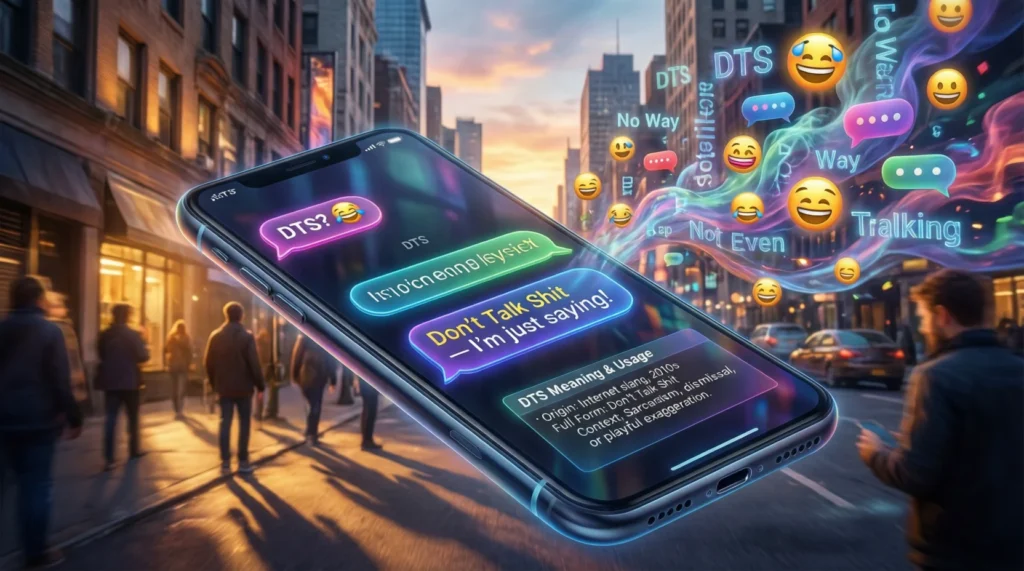
DTS in text most commonly means “Don’t Think So.” It is used to express doubt, disbelief, or disagreement in a casual and informal way.
You are scrolling through messages when someone replies with DTS, and suddenly the conversation feels unclear. Is it sarcasm, disagreement, or something else entirely? Text abbreviations move fast, and understanding them matters more than ever in digital communication.
This revised guide explains what does DTS mean in text, how people actually use it, tone variations, examples, comparisons, alternatives, and practical tips so you never misread it again.
What DTS Means in Everyday Texting
In normal text conversations, DTS stands for “Don’t Think So.” The phrase communicates uncertainty or disagreement without requiring a long explanation. Many people use it when responding quickly or when they want to keep the tone casual.
Although short, DTS carries emotional weight. The meaning often shifts based on punctuation, emojis, or the relationship between the people chatting.
Origin and Popularity of DTS
Text abbreviations became popular during early SMS and instant messaging days when typing space was limited. Phrases that appeared often were shortened for speed and convenience. “Don’t Think So” naturally turned into DTS.
As messaging platforms evolved, DTS spread across:
Private text messages
Social media replies
Gaming chats
Online forums
Casual group conversations
Its continued use comes from simplicity and familiarity rather than trendiness.
How DTS Is Commonly Used in Conversations
Expressing Doubt
People use DTS when they feel uncertain about a claim or expectation.
Example
“She says the app will launch today.”
“DTS.”
Disagreeing Casually
Instead of arguing, DTS allows a short response.
Example
“You think this plan will work?”
“DTS, honestly.”
Quick Reactions
Fast replies often include abbreviations.
Example
“Will traffic be light?”
“DTS.”
Tone Variations and What They Signal
Tone changes how DTS is received. Understanding this helps avoid misunderstandings.
Friendly or Playful Tone
Emojis soften the message.
Example
“You think we’ll finish early?”
“DTS 😄”
Neutral Tone
Straightforward replies sound factual.
Example
“Is the shop open?”
“DTS.”
Dismissive or Negative Tone
Short replies without context may sound rude.
Example
“You agree with him?”
“DTS.”
Expanded Example Table Showing Tone Differences
| Message Context | DTS Response | Interpreted Tone |
|---|---|---|
| Friends chatting | DTS 😅 | Friendly doubt |
| Group planning | DTS, based on timing | Neutral reasoning |
| Heated debate | DTS | Dismissive |
| Gaming chat | DTS lol | Playful |
| Casual work chat | DTS, deadline is tight | Informal professional |
When DTS Works Well and When It Does Not
Appropriate Situations
Casual texting
Social media comments
Friendly group chats
Relaxed online discussions
Situations to Avoid DTS
Formal emails
Client communication
Serious discussions
Academic or legal writing
Using DTS in the wrong setting can appear careless.
Polite and Professional Alternatives to DTS
When tone matters, full phrases communicate respect.
Casual but Polite Options
I don’t think so
Probably not
I’m unsure about that
Professional Alternatives
I do not believe that is likely
Based on current information, no
I respectfully disagree
Comparison With Similar Text Abbreviations
DTS vs IDTS
IDTS means “I Don’t Think So.”
DTS feels shorter and more abrupt.
DTS vs Nah
Nah sounds more slang based.
DTS carries a slightly analytical feel.
DTS vs Nope
Nope feels friendly and final.
DTS suggests reasoning or doubt.
Comparison Table for Quick Understanding
| Abbreviation | Meaning | Tone Level |
|---|---|---|
| DTS | Don’t Think So | Casual to blunt |
| IDTS | I Don’t Think So | Casual polite |
| Nah | No | Very casual |
| Nope | No | Friendly |
Alternate Meanings of DTS
Although uncommon in texting, DTS can mean other things depending on context.
Technology and Media
Digital Theater Systems
Used in sound and audio discussions
Business and Logistics
Direct To Store
Delivery Time Slot
Context usually makes the meaning obvious.
How to Identify the Correct Meaning of DTS
Look at the conversation topic
Notice whether it is casual or technical
Check if opinions are being discussed
In personal chats, DTS almost always means “Don’t Think So.”
Practical Usage Tips
Use DTS with people familiar with texting slang
Add emojis to soften the message
Avoid using DTS in sensitive discussions
Choose full sentences if clarity matters
Suggestions for Clearer Communication
Consider your audience before using abbreviations. Tone matters more than speed in many situations. When in doubt, expand the phrase instead of shortening it. Adding a short explanation after DTS can prevent misunderstandings. Emojis help, but only in informal spaces. Respectful language builds better conversations, especially online.
FAQs
What does DTS mean in text messages?
DTS usually means “Don’t Think So” and shows doubt or disagreement.
Is DTS considered rude?
It can sound rude if used abruptly or in serious conversations.
Can DTS be used jokingly?
Yes, emojis or casual wording often make it playful.
Is DTS still used today?
Yes, it remains common in texting and online chats.
Does DTS mean the same on social media?
Most of the time, yes. Context still matters.
What is a polite alternative to DTS?
“I don’t think so” is clearer and more respectful.
Can DTS mean something technical?
Yes, in audio or business contexts it has different meanings.
Should I use DTS at work?
Only in very casual environments where informal language is accepted.
Conclusion
DTS may be short, yet it carries clear meaning when used correctly. Most people use it to express doubt or disagreement in casual conversations, especially in texting and social media. Tone, context, and audience play a major role in how DTS is received. Emojis can soften the message, while abrupt use may sound dismissive.
Avoid DTS in formal or sensitive situations where clarity matters. When unsure, spelling out the phrase keeps communication respectful. Understanding abbreviations like DTS helps prevent confusion and improves digital conversations overall.
Read More Related Articles:
- Double Chance Meaning in Soccer: How It Works & Smart Betting Strategy 2025-26
- HP Meaning in Games: Everything You Need to Know to Play Better (2026)

Rachel Monroe is a digital content writer at Meanzy.com who focuses on explaining modern words, phrases, and online expressions. Her writing style is simple, practical, and reader-focused, helping users quickly understand the meaning and usage of today’s evolving language.