
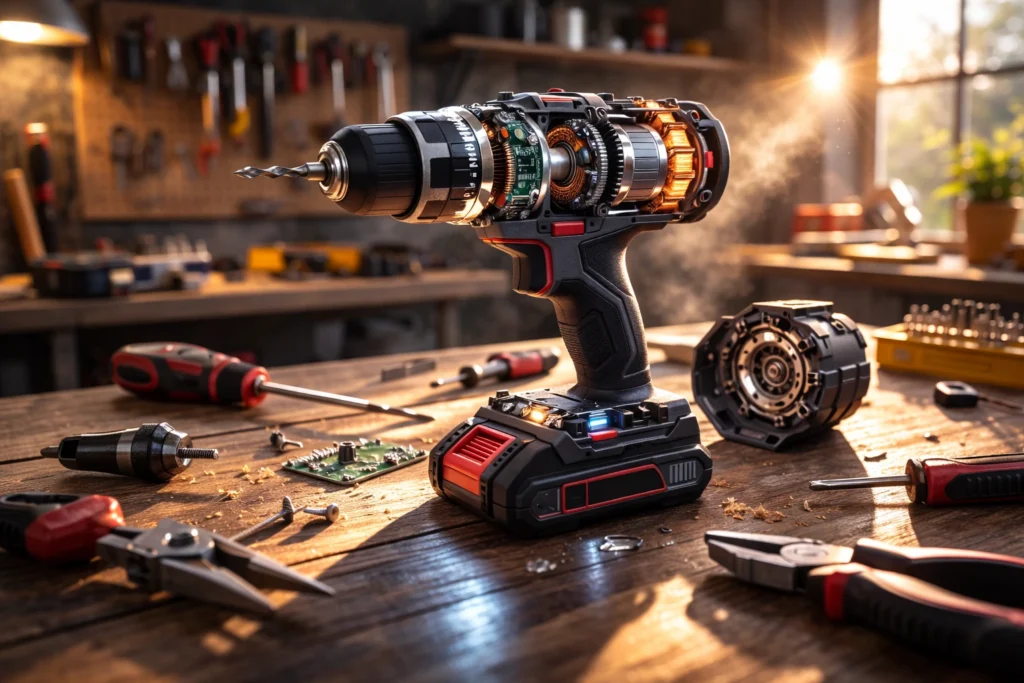
Brushless in tools refers to a motor design that operates without carbon brushes, using electronic controllers instead of physical contact to transfer electricity.
This results in higher efficiency, longer lifespan, less maintenance, and better battery performance compared to traditional brushed motors.
If you have ever shopped for a cordless drill, impact driver, or saw, you have probably seen the word “brushless” printed proudly on the box. It usually comes with a higher price tag. So what exactly does brushless mean in tools, and is it really worth the extra money?
Let’s break it down in simple, practical language so you can decide whether brushless tools are right for you.
Understanding What Brushless Means in Power Tools
At its core, the word brushless describes the type of motor inside the tool.
Traditional power tools use brushed motors. These motors contain small carbon brushes that physically touch a spinning component called a commutator. This contact transfers electricity and makes the motor spin.
Brushless motors, on the other hand, do not use brushes at all. Instead, they rely on electronic circuitry to control the flow of electricity.
Because there is no physical friction from brushes rubbing against parts, brushless tools:
• Generate less heat
• Waste less energy
• Last longer
• Run more quietly
• Deliver more consistent power
That is the simple explanation. But there is much more happening inside.
The Origin of Brushless Motor Technology
Brushless motor technology is not new. It was developed in the mid twentieth century for industrial and aerospace applications. Early brushless motors were expensive and complex, so they were mostly used in advanced systems like aircraft, robotics, and manufacturing equipment.
The real turning point came when electronics became smaller and cheaper. As microchips and electronic controllers improved, manufacturers began integrating brushless motors into consumer tools.
Today, major tool brands like:
• DeWalt
• Makita
• Milwaukee Tool
• Bosch
offer entire brushless tool lines.
What was once industrial grade technology is now common in everyday cordless drills and saws.
Why Brushless Tools Became So Popular
The rise of lithium ion batteries changed everything.
Older cordless tools used nickel cadmium batteries, which were heavy and less efficient. Once lithium ion batteries became standard, companies wanted motors that could maximize battery performance.
Brushless motors are far more efficient, meaning they use less battery power for the same amount of work. That means:
• Longer runtime per charge
• Stronger torque
• Faster performance
• Less overheating
Contractors and DIY users quickly noticed the difference.
For professionals who use tools daily, longer runtime and reduced downtime are huge advantages. That is one major reason brushless tools have become the new industry standard.
How a Brushless Motor Works in Simple Terms
Instead of brushes touching a commutator, brushless motors use:
• Permanent magnets
• Electronic controllers
• Sensors that adjust power automatically
The electronic controller continuously adjusts current based on resistance and workload. If you are drilling into soft wood, the motor uses less energy. If you hit dense hardwood, the motor automatically increases torque.
This intelligent power management is something brushed motors cannot do as efficiently.
Brushless vs Brushed Tools Comparison
Here is a clear comparison table to help you understand the difference.
Table 1: Brushless vs Brushed Motor Tools
| Feature | Brushless Motor | Brushed Motor |
|---|---|---|
| Uses Carbon Brushes | No | Yes |
| Maintenance Required | Very low | Moderate |
| Energy Efficiency | High | Lower |
| Heat Production | Minimal | Higher |
| Lifespan | Longer | Shorter |
| Battery Runtime | Longer | Shorter |
| Price | Higher upfront | Lower upfront |
| Noise Level | Quieter | Louder |
The key takeaway is that brushless tools cost more initially but often last longer and perform better.
Real World Usage Examples
Let’s look at how the word brushless is used in context.
Friendly Tone Example
“I upgraded to a brushless drill and wow, the battery lasts forever. Totally worth it.”
This tone shows excitement and satisfaction.
Neutral Tone Example
“This model features a brushless motor for improved efficiency and durability.”
This is typical marketing language.
Slightly Dismissive Tone Example
“It’s brushless, but honestly, I don’t need that for simple home projects.”
Here, the speaker feels brushless technology might be unnecessary for light use.
Where You’ll Commonly See Brushless Tools
Brushless motors are commonly found in:
• Cordless drills
• Impact drivers
• Circular saws
• Angle grinders
• Lawn equipment
• Chainsaws
• Nail guns
If you are buying professional grade cordless tools today, chances are they are brushless.
Advantages of Brushless Tools
Here is a deeper look at why many people prefer brushless tools.
1. Longer Lifespan
Because there are no brushes wearing down over time, the motor lasts significantly longer.
2. Less Maintenance
Brushed motors require brush replacements. Brushless motors do not.
3. Better Battery Life
Brushless motors waste less energy as heat, meaning more power goes directly to work.
4. Smarter Power Control
Many brushless tools adjust torque automatically based on resistance.
5. Lighter and More Compact Designs
Without brushes and commutators, motors can be smaller and lighter.
Potential Drawbacks of Brushless Tools
No technology is perfect. Here are some downsides to consider.
Higher Initial Cost
Brushless tools are usually more expensive.
Electronic Complexity
If something fails, repair may involve electronics rather than simple mechanical parts.
However, for most users, the benefits outweigh the drawbacks.
Table 2: When to Choose Brushless vs Brushed
| Situation | Recommended Option |
|---|---|
| Daily professional use | Brushless |
| Heavy duty construction work | Brushless |
| Occasional home DIY | Either works |
| Budget focused purchase | Brushed |
| Long battery runtime needed | Brushless |
If you are a contractor or serious DIY enthusiast, brushless is usually worth the investment.
Brushless vs Other Related Terms
Let’s clarify some related terms people often confuse.
Brushless vs Corded
Brushless refers to motor design. Corded refers to power source.
A tool can be:
• Corded and brushed
• Cordless and brushed
• Cordless and brushless
Most modern brushless tools are cordless, but not always.
Brushless vs Digital Motor
Some brands use terms like digital motor. In most cases, this simply means brushless with electronic control.
Brushless vs Induction Motor
Induction motors are common in large industrial equipment, not typical handheld power tools.
Table 3: Brushless Motor Technical Comparison
| Specification | Brushless Motor | Brushed Motor |
|---|---|---|
| Electrical Contact | Electronic switching | Physical brushes |
| Friction Level | Low | High |
| Efficiency Rate | Up to 85 to 90 percent | Around 75 to 80 percent |
| Maintenance Cost Over Time | Low | Moderate to high |
| Heat Generation | Lower | Higher |
This technical comparison shows why brushless tools tend to last longer.
Are Brushless Tools Worth It?
Here is the honest answer.
If you use tools frequently, value performance, and want longer battery life, brushless tools are absolutely worth it.
If you only drill a few holes per year, a brushed tool may be perfectly fine.
It comes down to usage, budget, and long term expectations.
Alternate Meanings of Brushless
Outside of power tools, brushless can also refer to:
• Brushless car washes that use high pressure water instead of rotating brushes
• Brushless RC motors in hobby vehicles
• Brushless cooling fans in electronics
In most consumer searches, however, brushless refers to power tool motors.
Professional Alternatives and Polite Usage
In professional writing, instead of simply saying brushless, you may say:
• Equipped with a brushless motor
• Features advanced brushless motor technology
• Powered by an electronically controlled motor
These sound more polished in marketing or technical descriptions.
FAQs
What does brushless mean in cordless tools?
It means the tool uses a motor without carbon brushes and relies on electronic controls instead. This improves efficiency, battery life, and durability.
Is a brushless tool really better?
Yes, in most cases. Brushless tools are more efficient, last longer, and perform better under heavy loads. However, they cost more upfront.
Do brushless motors last longer?
Yes. Because there are no brushes to wear down, brushless motors typically have a longer lifespan.
Why are brushless tools more expensive?
They include advanced electronics and more complex motor design, which increases manufacturing costs.
Can brushless tools overheat?
They can still heat up, but they generally run cooler than brushed tools because there is less friction.
Is brushless better for DIY home use?
It depends. For light, occasional use, brushed tools are fine. For frequent or demanding projects, brushless tools are better.
Do brushless tools need maintenance?
They require less maintenance since there are no brushes to replace, but general care like cleaning and battery maintenance is still important.
What brands make the best brushless tools?
Many top brands offer excellent brushless options, including DeWalt, Makita, Milwaukee Tool, and Bosch.
Conclusion
So what does brushless mean in tools?
It refers to a motor that operates without carbon brushes and uses electronic control for improved efficiency, durability, and battery performance.
Brushless tools offer:
• Longer lifespan
• Better battery runtime
• Reduced maintenance
• Smarter power delivery
• Quieter operation
While they cost more upfront, they often provide better long term value, especially for professionals and serious DIY users.
If you are investing in tools for the future, brushless technology is a smart choice. If your needs are occasional and budget focused, brushed tools still get the job done.
The right choice depends on how you plan to use your tools.
Read More Related Articles:
- Odds Mean in Horse Racing: What They Tell You About a Race In 2026
- Ceasing Meaning in the Bible: Scriptural Context (2026)
- EDT Mean in Perfume: Light, Fresh and Perfect for Daily Wear In 2026

Megan Foster is a thoughtful and creative content creator at Meanzy.com with a strong curiosity for language and communication. Known for her clarity and attention to detail, she simplifies confusing slang, acronyms, and modern terms into easy, relatable meanings readers can trust.