
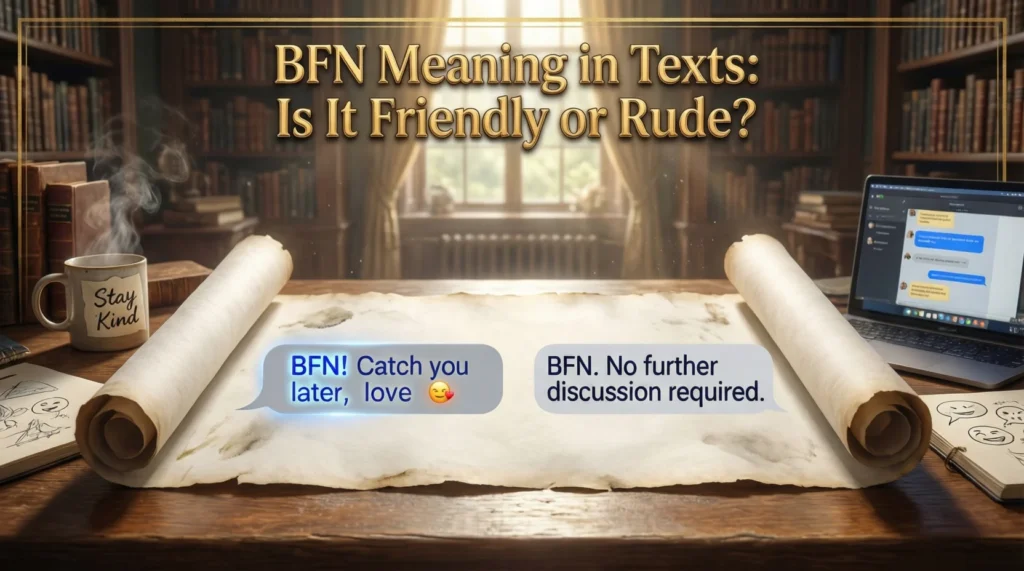
BFN means “Bye For Now.”
It is a casual text abbreviation used to say goodbye temporarily, suggesting the conversation will continue later.
It is commonly used at the end of messages in texting, chats, forums, and informal online communication.
Texting slang evolves fast, but some abbreviations stick around for years. BFN is one of those terms that still pops up in messages, even though many people are unsure what it actually means or how it comes across. If you have ever received a message ending with BFN and wondered whether it was friendly, awkward, or slightly cold, you are not alone.
This in depth guide explains what does BFN mean in text, where it came from, how people use it today, and when you should avoid it. You will also see real message examples, tone comparisons, tables for clarity, and better alternatives depending on the situation.
Why Understanding BFN Matters
Small abbreviations can change how a message feels. BFN may seem harmless, but tone plays a big role in how it is interpreted. Some people read it as friendly and relaxed, while others feel it sounds short or distant.
People often search this term because:
• They received BFN and were unsure how to respond
• They want to know if it sounds rude
• They are deciding whether to use it themselves
• They want clearer or more modern alternatives
Knowing the meaning is helpful, but knowing the social impact is even more important.
The Origin and History of BFN
BFN comes from early digital communication, when saving time and characters mattered. It gained popularity during:
• Early SMS texting with character limits
• AOL Instant Messenger and chat rooms
• Online forums and message boards
During this period, phrases like “talk to you later” and “bye for now” were shortened to fit fast conversations. While many newer abbreviations have replaced it, BFN remains recognizable and understandable.
How BFN Is Used in Modern Texting
Today, BFN is mostly used in casual contexts. It signals that someone is leaving the conversation but expects to reconnect later.
Common Situations Where BFN Appears
• Ending a relaxed chat with friends
• Signing off from a group discussion
• Stepping away from an online conversation
• Informal personal emails
It is rarely used in formal writing or professional communication.
Tone Matters: How BFN Can Feel Different
The tone of BFN depends heavily on context, punctuation, and what comes before it.
Tone Interpretation Table
| Message | Context | How It Feels |
|---|---|---|
| Heading out now BFN 🙂 | Friendly chat | Warm and casual |
| Got to go BFN | Neutral update | Straightforward |
| Ok BFN | Short reply | Cold or dismissive |
| Fine. BFN | Argument | Dismissive or annoyed |
This table highlights why people sometimes misread BFN. The surrounding words make all the difference.
Real World Examples of BFN in Text Messages
Friendly Example
“Dinner time here. Talk later BFN 😊”
This feels warm because it includes context and an emoji.
Neutral Example
“Need to step away for a bit. BFN.”
This feels informational and neutral.
Negative or Abrupt Example
“Whatever. BFN.”
In this case, BFN sounds dismissive because of the emotional context.
Emoji and Punctuation Effects on BFN
Small visual cues change meaning fast in text communication.
Emoji and Punctuation Table
| Version | Emotional Impact |
|---|---|
| BFN 🙂 | Friendly |
| BFN! | Upbeat |
| BFN… | Distant or annoyed |
| BFN | Neutral to cold |
If you use BFN, adding warmth avoids confusion.
Is BFN Polite or Rude?
BFN itself is not rude. However, it can feel rude when:
• Used alone with no explanation
• Sent during emotional conversations
• Paired with short or blunt replies
It feels polite when:
• Used with friendly context
• Paired with emojis or warmth
• Used between people who know each other well
Is BFN Still Popular Today?
BFN is less common than newer slang, but it has not disappeared. It is more likely to be used by:
• Long time texters
• Online forum users
• People who prefer classic abbreviations
Younger users often choose full phrases or newer shorthand instead.
Comparison With Similar Text Abbreviations
Understanding similar terms helps you choose the right one.
Comparison Table: BFN vs Similar Abbreviations
| Term | Meaning | Main Use | Tone |
|---|---|---|---|
| BFN | Bye for now | Temporary goodbye | Neutral to friendly |
| TTYL | Talk to you later | Emphasizes future chat | Friendly |
| BRB | Be right back | Short absence | Informal |
| CYA | See you | Casual goodbye | Can feel blunt |
BFN focuses more on leaving than reconnecting, which is why it can sometimes feel colder than TTYL.
Alternate Meanings of BFN
In everyday texting, BFN almost always means bye for now. Rare alternate meanings exist in niche settings, such as:
• Business First Network
• Big Freaking News
These are uncommon and usually obvious from context.
When You Should Avoid Using BFN
Avoid BFN in situations where clarity and warmth matter most.
Situations to Avoid BFN
• Professional emails
• Client communication
• Customer service conversations
• Emotional or serious discussions
In these cases, full sentences feel more respectful.
Polite and Professional Alternatives to BFN
Choosing the right goodbye improves communication.
Casual Alternatives
• Talk soon
• Catch up later
• See you soon
Professional Alternatives
• Speak with you later
• Looking forward to continuing our discussion
• Have a great rest of your day
Suggested Replacements Based on Situation
Situation Based Alternatives Table
| Situation | Better Option |
|---|---|
| Friendly chat | Talk later |
| Group chat | Catch up soon |
| Work email | Speak with you soon |
| Tense conversation | We can talk later |
This table helps you avoid misunderstandings.
How to Respond When Someone Sends You BFN
You can mirror or soften the tone.
Friendly Replies
• Sounds good talk soon
• See you later
Neutral Replies
• Got it thanks
• Okay
Softening a Cold BFN
• Alright talk later hope everything goes well
FAQs:
What does BFN mean in text messages?
It means “bye for now” and is used to signal a temporary goodbye, implying you’ll talk again later.
Is BFN outdated slang?
Yes, it’s considered older slang, but many people still recognize and understand it.
Does BFN sound rude?
It can, depending on the tone and context. Without warmth or explanation, it may come across as abrupt.
Is BFN professional?
No. It’s best avoided in professional or formal settings, where clearer and more polite closings are preferred.
What is better than BFN?
Phrases like “talk soon” or “speak with you later” are safer and friendlier alternatives.
Do younger people use BFN?
Not very often. Younger texters tend to prefer more modern or casual expressions.
Can BFN be misinterpreted?
Yes. Without context, it might seem dismissive or final rather than friendly.
Should I use emojis with BFN?
If appropriate, emojis can help soften the tone and make the message feel warmer.
Conclusion:
BFN simply means bye for now, but how it feels depends on how you use it. In friendly chats, it works fine. In serious or professional settings, it can feel abrupt or outdated.
The safest approach is to add context, warmth, or choose a clearer alternative. Small changes make a big difference in digital communication.
Read More Related Articles:
- What GG Means in Texts: Ultimate Beginner-Friendly Guide (2026)
- BYT Meaning in Text Messages: How to Use It Correctly (2026)

John Miller is a professional meanings writer at Meanzy.com, specializing in word definitions, internet slang, acronyms, and text abbreviations. He focuses on delivering clear, accurate explanations with practical examples, helping readers easily understand modern digital terms and their real-life usage.