
Beo in text usually means a casual, friendly way to address someone, similar to saying bro, dude, or mate. It is informal, conversational, and often used to create a relaxed or playful tone. The exact meaning can shift slightly depending on region, community, and context.
You are scrolling through messages, comments, or DMs and suddenly see someone write “beo” like it is totally normal. No explanation. No context. Just “beo” dropped into the sentence as if everyone knows what it means.
If that left you confused, you are not alone.
Text slang evolves fast, and words like beo can pop up seemingly overnight. Some are born from regional slang, others from gaming, social media, or casual typos that turn into trends. The good news is that beo is not complicated once you understand how and why people use it.
In this guide, we will break down what beo means in text, where it comes from, how people actually use it, and when you should or should not use it yourself. By the end, you will know exactly what someone means when they call you beo and how to respond naturally.
What does beo mean in text?
In most texting and online chat contexts, beo is a casual slang term used to address someone in a friendly or familiar way. Think of it as being in the same category as bro, fam, or dude.
People use beo to:
- Sound relaxed and conversational
- Show friendliness or camaraderie
- Keep the tone informal and light
The meaning is rarely serious or formal. It is more about tone than definition.
The origin of BEO
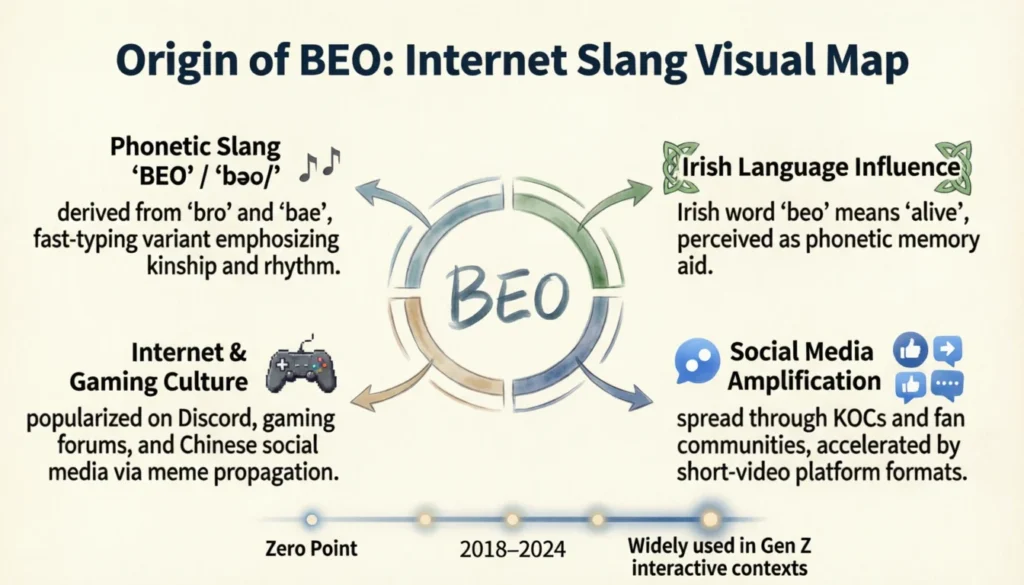
The exact origin of beo meaning text is a bit blurred, which is common with modern slang. Instead of coming from one dictionary definition, it seems to have grown from a mix of influences.
Possible roots and influences
- Phonetic slang
Beo may have developed as a phonetic or playful variation of bro or bae, especially in fast typing or casual speech patterns. - Regional language influence
In Irish, the word beo means alive. While this is not the same meaning used in texting slang, it may have helped normalize the word visually and phonetically online. - Internet culture and gaming chats
Short, easy to type words spread quickly in gaming, Discord, and comment sections. Beo fits that pattern perfectly. - Social media repetition
Once a term is used by a few popular accounts or communities, it spreads rapidly through imitation.
Rather than having one fixed origin, beo is best understood as an internet born expression shaped by usage rather than rules.
How BEO is commonly used in real conversations
Beo is almost always used as a form of address, not as a verb or descriptive word.
It usually appears:
- At the beginning of a sentence
- In the middle of casual dialogue
- As a standalone reaction
Typical sentence placement
- “Beo, did you see that clip?”
- “I told you already, beo.”
- “Relax, beo 😄”
The tone is usually friendly, teasing, or laid back.
Tone and emotional meaning of beo
Understanding the tone behind beo is key. The same word can feel different depending on how it is used.
Friendly or playful tone
This is the most common use.
Examples:
- “Beo, you are overthinking it.”
- “Come on beo 😂”
This version feels warm and casual, often between friends.
Neutral tone
Sometimes beo is just a filler word with no strong emotion.
Examples:
- “Beo, I already sent the file.”
- “That is what I meant, beo.”
Here it simply keeps the conversation informal.
Slightly dismissive or teasing tone
In rare cases, beo can sound mildly dismissive depending on context and punctuation.
Examples:
- “Okay beo, whatever you say.”
- “Sure, beo…”
This is not outright rude, but the tone can feel sarcastic.
Example Table: BEO in different contexts
| Context | Example message | Implied tone |
|---|---|---|
| Friendly chat | “Beo, that was hilarious 😂” | Warm and playful |
| Gaming | “Focus up beo, we got this” | Encouraging |
| Casual debate | “Nah beo, I disagree” | Relaxed disagreement |
| Mild sarcasm | “Alright beo, if you say so” | Teasing or dismissive |
| Standalone reply | “Beo 😭” | Emotional reaction |
When should you use BEO?
Beo works best in informal settings. Think casual, relaxed, and social.
Good situations to use BEO
- Texting friends
- Group chats
- Social media comments
- Gaming or Discord chats
- Casual online conversations
Situations to avoid BEO
- Professional emails
- Workplace messages with clients
- Academic writing
- Conversations with people who prefer formal language
If you would not say bro in the situation, beo probably does not fit either.
Is BEO respectful or rude?
On its own, beo meaning slang is not rude. It is neutral to friendly.
However, respect depends on:
- Your relationship with the person
- The tone of the message
- Cultural or personal preferences
Some people may not like casual slang, especially in serious discussions. When in doubt, skip it.
Comparisons: BEO vs similar slang terms
Understanding beo becomes easier when you compare it to familiar words.
BRO vs BEO
- Bro is more widely recognized
- Beo feels slightly more playful or niche
- Both signal friendliness
DUDE vs BEO
- Dude is more neutral and universal
- Beo feels more internet based
- Dude works in more age groups
FAM vs BEO
- Fam implies closeness or loyalty
- Beo does not always suggest deep connection
- Fam can feel more emotional
BAE vs BEO
- Bae is romantic or affectionate
- Beo is platonic
- Mixing them can feel awkward
Alternate meanings of BEO
While the slang meaning is most common in texting, beo can have other meanings depending on context.
Language based meaning
- In Irish, beo means alive or living
This is usually unrelated to texting slang.
Acronym usage
- BEO can stand for different acronyms in business or technical fields
Examples include internal company terms or abbreviations
These meanings are typically clear from context and capitalization.
Polite or professional alternatives to BEO
If you like the friendly tone but need something more appropriate, try these options.
Casual but safer alternatives
- Hey
- Hi there
- Friend
- Mate
Semi professional alternatives
- Thanks
- I understand
- Sounds good
- Appreciate it
Choosing the right word helps you sound natural without crossing boundaries.
How to respond when someone calls you BEO
You do not need a special response. Just match the tone.
Examples:
- “Haha yeah beo 😄”
- “I know, beo”
- “What is up?”
If you are uncomfortable, you can simply ignore the term and reply normally.
Why slang like beo keeps evolving
Language online moves fast because people want:
- Shorter expressions
- More personality in text
- Group identity through shared slang
Words like beo thrive because they feel casual, human, and expressive without needing explanation inside certain communities.
FAQs
What does beo mean in slang?
In slang, beo is a casual term used to address someone in a friendly or informal way, similar to bro or dude.
Is beo a positive word?
Yes, in most cases beo has a positive or neutral tone and is not meant to offend.
Is beo used for boys or girls?
Beo is generally gender neutral. Anyone can be called beo depending on the social context.
Is beo common on social media?
It is becoming more common, especially in casual comments, memes, and group chats.
Does beo mean best friend?
Not exactly. It can be used between friends, but it does not specifically mean best friend.
Is beo rude in texting?
Beo is not rude by default. It can feel dismissive only if used sarcastically or in the wrong context.
Can I use beo at work?
It is better to avoid beo in professional or workplace communication unless the environment is very casual.
Is beo the same as bro?
They are similar in meaning, but beo is more niche and internet driven, while bro is more widely accepted.
Conclusion:
Beo is a modern slang term commonly used in informal conversations to create a relaxed and friendly tone. It works much like words such as bro or dude, helping speakers sound casual and approachable rather than formal. Because its meaning depends heavily on tone and context, it’s best used with friends or people you’re comfortable with, not in professional or formal communication.
When you’re unsure whether it fits the situation, it’s safer to skip using it altogether. Understanding small slang terms like beo can make online conversations feel smoother, more natural, and easier to connect with others.
Read More Related Articles:
- IMY Meaning in Texts: Step-by-Step Guide With Examples (2026)
- PMU Mean in Texts: The Answer Might Surprise You (2026)

Rachel Monroe is a digital content writer at Meanzy.com who focuses on explaining modern words, phrases, and online expressions. Her writing style is simple, practical, and reader-focused, helping users quickly understand the meaning and usage of today’s evolving language.