
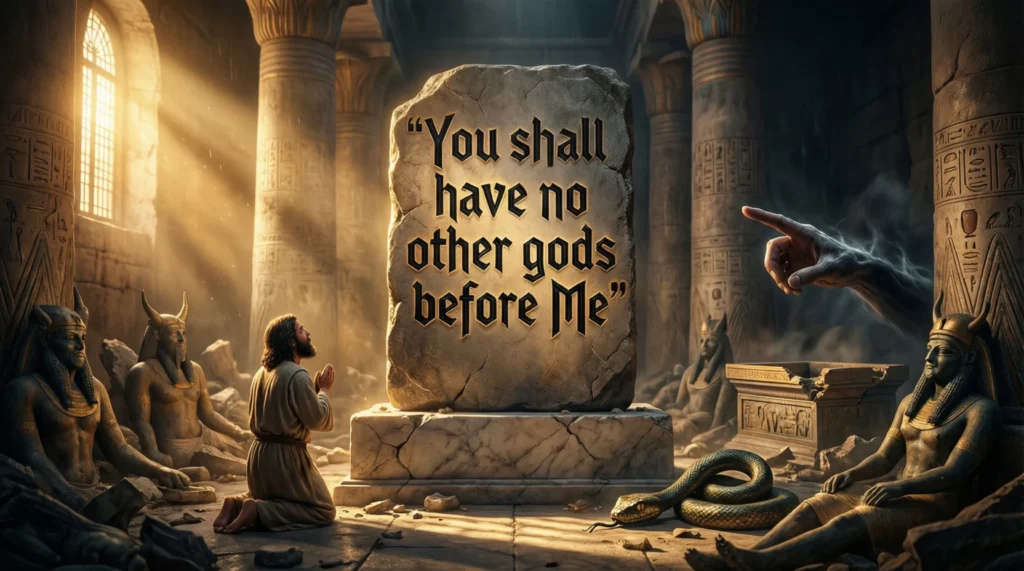
In the Bible, idolatry means the worship of anyone or anything other than the one true God, or giving ultimate devotion, trust, or loyalty to created things instead of the Creator.
It includes the worship of physical idols, false gods, images, or even abstract things like wealth, power, or self when they take God’s rightful place.
Idolatry is one of the most repeated and strongly warned-against themes in the Bible. From Genesis to Revelation, Scripture consistently calls believers to worship God alone and reject anything that replaces Him. But what does idolatry actually mean in the Bible, and why is it treated as such a serious spiritual issue?
In this in-depth guide, we will explore the biblical meaning of idolatry, its origin, how it is used in Scripture, real-world examples, comparisons with related concepts, and practical lessons for modern life. Whether you are a Bible student, a curious reader, or someone seeking spiritual clarity, this article is designed to be clear, engaging, and easy to understand.
Understanding Idolatry in Simple Terms
At its core, idolatry is about misplaced worship.
In biblical teaching, worship is not limited to bowing down or praying. It includes love, trust, obedience, dependence, and devotion. When any person, object, idea, or desire becomes more important than God, the Bible considers that idolatry.
Idolatry is not only about ancient statues or golden calves. Scripture makes it clear that idolatry can be external or internal, visible or hidden in the heart.
Origin of the Word “Idolatry”
The word idolatry comes from the Greek word eidololatria, which is made up of two parts:
Together, the term literally means the worship or service of images or false gods.
In the Old Testament, Hebrew words such as avodah zarah are used, which translate to foreign worship or strange service. This emphasizes that idolatry involves devotion to something outside of God’s covenant.
Why Idolatry Is a Major Issue in the Bible
Idolatry is not treated as a minor mistake in Scripture. It is consistently described as a serious sin because it directly breaks the relationship between God and His people.
The First Commandment
One of the clearest statements against idolatry appears in the Ten Commandments.
“You shall have no other gods before Me.” (Exodus 20:3)
This command sets the foundation for biblical faith. God demands exclusive worship, not because He is insecure, but because He alone is the source of life, truth, and salvation.
Idolatry in the Old Testament
The Old Testament frequently addresses idolatry, especially in the history of Israel.
Common Forms of Idolatry in the Old Testament
- Worship of physical idols made of wood, stone, or metal
- Serving pagan gods like Baal, Molech, Asherah, and Dagon
- Creating images to represent God Himself
- Trusting in alliances, kings, or armies instead of God
Famous Biblical Examples
The Golden Calf
In Exodus 32, the Israelites create and worship a golden calf while Moses is on Mount Sinai. This event becomes a defining example of idolatry and its consequences.
King Solomon’s Compromise
Solomon allowed foreign idols to be worshiped due to his marriages, leading Israel away from God.
Prophets vs Idols
Prophets like Isaiah, Jeremiah, and Elijah repeatedly warned that idols are powerless and cannot save.
Idolatry in the New Testament
The New Testament expands the definition of idolatry beyond statues and temples.
Jesus and the apostles focus heavily on the heart.
New Testament Teachings on Idolatry
- Jesus warns against loving money more than God
- Paul calls greed a form of idolatry
- Believers are urged to flee idolatry in all forms
“Put to death whatever belongs to your earthly nature… greed, which is idolatry.” (Colossians 3:5)
This verse shows that idolatry can be internal and subtle, not just physical.
Modern-Day Idolatry According to the Bible
Many people assume idolatry is no longer relevant today. Biblically, the opposite is true.
Modern idolatry often appears respectable, normal, or even encouraged.
Common Modern Forms of Idolatry
- Money and material success
- Career and status
- Relationships or romantic partners
- Social media attention or approval
- Entertainment and pleasure
- Personal identity and self-worship
When any of these things receive the devotion, trust, or priority that belongs to God, they function as idols.
Tone-Based Examples of Idolatry in Context
Below are examples that show how idolatry may appear in different tones and situations.
Friendly or Reflective Tone
“I realized I was letting my career define my worth. It had quietly become an idol in my life.”
Neutral or Educational Tone
“In biblical teaching, idolatry includes placing ultimate trust in wealth or power rather than in God.”
Negative or Warning Tone
“Scripture warns that idolatry leads to spiritual blindness and separation from God.”
Example Table: Idolatry in the Bible vs Modern Life
| Biblical Example | Modern Equivalent | Why It Is Idolatry |
|---|---|---|
| Golden calf | Obsession with money | Trust placed in wealth |
| Baal worship | Fame or popularity | Desire for approval |
| Foreign gods | Career success | Identity rooted in work |
| Asherah poles | Romantic relationships | Emotional dependence |
| Statues | Self image or ego | Self replaces God |
Idolatry vs Related Biblical Concepts
Understanding idolatry becomes clearer when compared with similar terms.
Idolatry vs Worship
Worship directed toward God is obedience and devotion. Worship directed elsewhere becomes idolatry.
Covetousness vs Idolatry
Covetousness is intense desire for something. When that desire controls the heart, it becomes idolatry.
False Religion vs Idolatry
False religion often includes idolatry, but idolatry can exist even within outwardly religious practices.
Are There Alternate Meanings of Idolatry?
Outside of biblical or religious contexts, the word idolatry can sometimes be used metaphorically.
For example, someone might say, “Our culture’s idolatry of celebrities is unhealthy.”
In this sense, it means excessive admiration. However, the biblical meaning is deeper and spiritual, involving worship and allegiance.
Polite or Professional Alternatives to the Word “Idolatry”
In academic, pastoral, or professional writing, softer or explanatory phrases may be used.
- Misplaced devotion
- Excessive attachment
- Spiritual distraction
- False priorities
- Competing loyalties
These alternatives can help communicate the idea without sounding accusatory.
Why the Bible Condemns Idolatry So Strongly
Idolatry is condemned because it distorts truth and damages the human soul.
According to Scripture:
- Idols cannot save or speak
- Idolatry leads people away from wisdom
- It breaks covenant relationship with God
- It results in spiritual emptiness
The Bible consistently contrasts the living God with lifeless idols.
How to Recognize Idolatry in Personal Life
The Bible encourages self examination.
Here are some reflective questions often used by pastors and theologians:
- What do I trust most when life becomes difficult?
- What defines my identity and worth?
- What do I fear losing the most?
- What do I sacrifice my time and energy for?
The answers often reveal hidden idols.
Biblical Solutions to Idolatry
The Bible does not only warn against idolatry. It also offers hope and restoration.
Key Biblical Responses
- Repentance and turning back to God
- Renewing the mind through Scripture
- Reordering priorities
- Practicing gratitude and humility
- Focusing worship on God alone
Throughout the Bible, God repeatedly invites people back into right relationship.
FAQs
Is idolatry only about statues and images?
No. Biblically, idolatry includes anything that replaces God as the highest priority in a person’s life.
Why does God hate idolatry?
Because idolatry leads people away from truth, life, and a healthy relationship with Him.
Can Christians commit idolatry today?
Yes. The New Testament warns believers to flee idolatry, showing that it remains a relevant issue.
Is money considered an idol in the Bible?
Money itself is not evil, but loving money above God is described as idolatry.
Did Jesus talk about idolatry?
Yes. Jesus frequently warned against serving wealth, power, and self instead of God.
What is the punishment for idolatry in the Bible?
In the Old Testament, idolatry often led to severe consequences. In the New Testament, it is associated with spiritual separation from God.
Is loving family more than God considered idolatry?
According to Jesus, any relationship that takes precedence over God becomes spiritually unhealthy.
How can someone overcome idolatry?
Through repentance, realigning priorities, worship, and placing trust fully in God.
Conclusion
So, what does idolatry mean in the Bible?
It means allowing anything, whether visible or invisible, to take the place of God in our hearts, priorities, or trust. Scripture calls people away from false substitutes and toward a living relationship with God, who alone deserves worship.
Understanding idolatry is not about condemnation. It is about clarity, realignment, and spiritual freedom. The Bible’s message is clear but hopeful. Turn away from what cannot satisfy and return to the One who gives life.
Read More Related Articles:
- What Does Fruit Mean in the Bible? Biblical & Spiritual Meaning (2026)
- What Does the Number 444 Mean in the Bible? Explained (2026)

Megan Foster is a thoughtful and creative content creator at Meanzy.com with a strong curiosity for language and communication. Known for her clarity and attention to detail, she simplifies confusing slang, acronyms, and modern terms into easy, relatable meanings readers can trust.