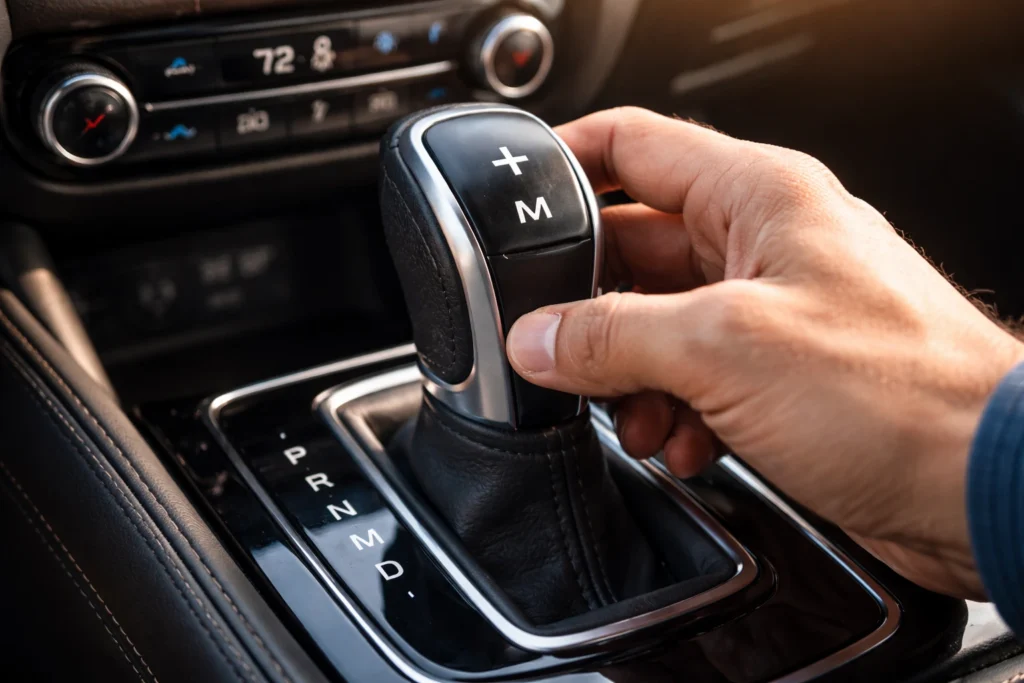
The + and – symbols on a car gear shift indicate manual gear control in vehicles with automatic transmissions, often called “manual mode” or “Tiptronic.” The + is used to upshift to a higher gear, while the – is used to downshift to a lower gear, giving drivers more control over acceleration, engine braking, and performance.
Modern cars often combine the convenience of an automatic transmission with the control of a manual, and the + and – are the keys to this hybrid driving experience. Let’s explore what they mean, how to use them, and why they matter.
Origin of the + and – in Car Gear Shifts
The + and – gear concept originated in the late 1980s and early 1990s when manufacturers wanted to provide the thrill of manual driving without requiring a clutch pedal. Early systems were branded as Tiptronic (Porsche) or Steptronic (BMW), allowing drivers to shift gears manually by nudging the gear lever toward + or -.
Why They Became Popular
- Control without clutch: Drivers could enjoy manual-style control without a clutch.
- Safer for traffic: Manual mode allows better engine braking in hilly areas.
- Performance-oriented driving: Sports cars and SUVs use it for precise gear control during overtaking or steep inclines.
This hybrid system gained popularity because it offered the best of both worlds: the comfort of automatic shifting with the flexibility of manual control.
How the + and – Gear Shift Works
Basic Concept
| Symbol | Function | When to Use |
|---|---|---|
| + | Upshift | When accelerating or reaching higher speeds |
| – | Downshift | When slowing down, engine braking, or needing more torque |
- Upshifting (+): Moves the transmission to a higher gear. This reduces engine RPM, improves fuel efficiency, and is ideal for cruising on highways.
- Downshifting (-): Moves the transmission to a lower gear. This increases engine RPM, giving more power and braking force, especially useful on hills or for overtaking.
How to Use It
- Shift the gear lever from D (Drive) to the manual mode (usually labeled M).
- Push the lever forward or toward + to upshift.
- Pull the lever back or toward – to downshift.
- Some cars allow paddle shifters behind the steering wheel to achieve the same effect.
⚠️ Tip: Avoid downshifting at very high speeds, as it can stress the engine or transmission.
Real-World Examples
- Friendly Example:
Imagine driving a car on a winding mountain road. Using –, you can slow down without constantly tapping the brakes. Then, when approaching a straight road, use + to cruise efficiently. - Neutral Example:
In city traffic, the + and – may not always be necessary, but some drivers enjoy the sense of control it provides over their automatic car. - Negative/Dismissive Example:
Some casual drivers find the manual mode unnecessary, as the automatic transmission does a perfectly good job by itself. They might never use + and -, treating it as a “novelty feature.”
Comparison with Other Gear Terms
| Gear Mode | Meaning | Control Level | Common Use |
|---|---|---|---|
| P (Park) | Locks wheels | None | Parking safely |
| R (Reverse) | Moves backward | None | Backing up |
| N (Neutral) | Disconnects engine | None | Tow or idle |
| D (Drive) | Automatic shifting | Low | Daily driving |
| M / + & – | Manual control in auto | High | Performance or hilly driving |
Note: The + and – are part of M mode on automatic cars. They are different from a clutch-based manual transmission, which requires pressing the pedal to shift gears.
When and Why You Should Use + and –
- Hilly or Mountain Roads: Downshift (-) for engine braking; upshift (+) to maintain speed.
- Overtaking: Downshift (-) to gain extra acceleration.
- Towing: Control torque and prevent overheating by using manual gear selection.
- Sporty Driving: Shift gears manually to maximize engine performance.
Pro Tips:
- Avoid holding a gear too long at high RPM to prevent engine wear.
- Smooth and timely shifts improve fuel efficiency.
- Learn your car’s rev range; each model responds differently to + and -.
Alternate Meanings
While the + and – on a gear shift generally mean upshift and downshift, they can occasionally appear in other contexts:
- Paddle shifters: Some cars have + and – buttons behind the steering wheel instead of the gear lever.
- Hybrid or electric vehicles: + and – might adjust regenerative braking instead of gears.
Polite professional alternatives for manuals include terms like “manual mode”, “sport shift”, or “sequential shift.”
Example Table of + and – Usage in Driving Scenarios
| Situation | Recommended Gear Action | Result |
|---|---|---|
| Uphill climb | Downshift (-) | More engine torque, prevents slowing down |
| Highway cruising | Upshift (+) | Lower RPM, fuel-efficient |
| Approaching curve | Downshift (-) | Engine braking, safer handling |
| Overtaking | Downshift (-) then upshift (+) | Quick acceleration, smooth transition |
| Descending steep hill | Downshift (-) | Reduces brake wear, safer control |
FAQs
1. What does + and – mean on an automatic car?
The + and – symbols let you manually shift gears in an automatic car’s manual mode. + is for upshifting, – is for downshifting.
2. Can I use + and – all the time?
Yes, but it’s not always necessary. Daily city driving is usually fine in regular Drive (D). Manual shifting is useful for hills, towing, or sporty driving.
3. Does using + and – save fuel?
Upshifting (+) at the right time can reduce engine RPM and improve fuel efficiency, while downshifting (-) may increase fuel consumption if used excessively.
4. Is it safe to downshift at high speeds?
No. Downshifting at very high speeds can over-rev the engine and cause damage. Always match the speed with the gear range.
5. Do all automatic cars have + and -?
No, this feature is more common in modern automatic cars, sports cars, and SUVs with manual or sport modes.
6. How is this different from a manual transmission?
Manual transmissions require a clutch pedal and full gear selection. + and – in automatic cars allow manual gear changes without a clutch.
7. Can I use it for engine braking?
Yes. Downshifting (-) helps slow the car naturally and reduces brake wear, especially on downhill roads.
8. Are paddle shifters the same as + and – on a gear lever?
Yes. Paddle shifters provide the same upshift (+) and downshift (-) functionality but are located on the steering wheel for easier access during sporty driving.
Conclusion
The + and – on a car gear shift are simple symbols with a big impact. They transform a regular automatic transmission into a semi-manual system, giving drivers flexibility, control, and performance benefits. Whether you’re cruising on highways, climbing mountains, or navigating city traffic, understanding how to properly use + and – can make your driving experience safer and more enjoyable.
Key Takeaways:
- = upshift, – = downshift
- Useful for hills, overtaking, engine braking, and sporty driving
- Manual mode in automatic cars combines comfort with control
- Avoid extreme downshifts at high speed to protect the engine
By practicing proper use, these simple symbols can help you drive more confidently, efficiently, and safely.
Read More Related Articles:
- What Does Remanded Mean in Court? Criminal and Civil Cases In 2026
- What Does Scaling Mean in Business? From Startup to Expansion In 2026
- What Does SDE Mean in Business? Full Beginner’s Guide In 2026

John Miller is a professional meanings writer at Meanzy.com, specializing in word definitions, internet slang, acronyms, and text abbreviations. He focuses on delivering clear, accurate explanations with practical examples, helping readers easily understand modern digital terms and their real-life usage.