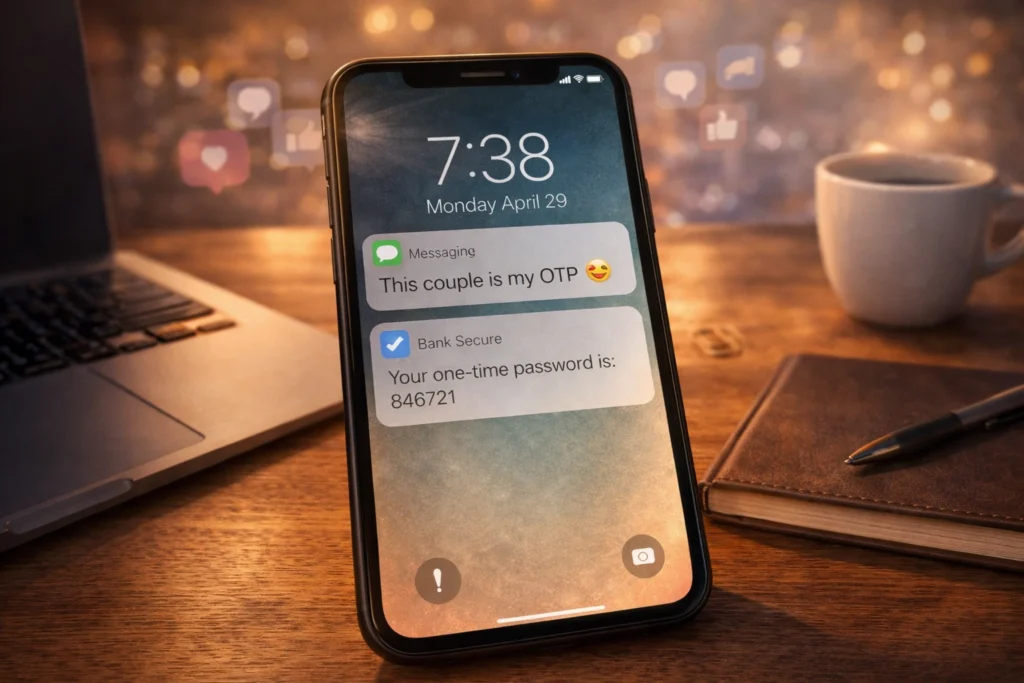
OTP in texting usually stands for “One True Pairing,” referring to a couple or characters that someone considers perfect together.
In other situations, especially in technology or banking, OTP stands for “One-Time Password,” which is a temporary code used for security verification.
If you spend time texting, scrolling through social media, or following online communities, you have probably come across the term OTP. You might have seen it in a casual chat, in a Twitter thread about your favorite TV show, or even in a message from your bank. But what does it actually mean? The answer depends entirely on the context.
Understanding OTP is not just about knowing the words behind the letters. It is about recognizing how it is used in everyday conversations, online fandoms, and modern digital life. In this article, we will explore the origins of OTP, how it is used in texting, examples with different tones, comparisons with similar abbreviations, alternate meanings, professional alternatives, and frequently asked questions.
The Origin of OTP
The acronym OTP has two main origins, and understanding both helps explain why the term is so widely used today.
OTP as One True Pairing
OTP first gained popularity in online fan communities. Fans of TV shows, movies, anime, and books would often discuss their favorite character pairings. When someone said a couple was their OTP, they were essentially saying this pair was the best match in their eyes.
The term started appearing on platforms like Tumblr, LiveJournal, and Twitter in the late 2000s. Fans would write posts or create content celebrating their OTPs, sometimes even imagining scenes or stories about them. This is also closely tied to the concept of shipping, which is supporting a romantic relationship between two characters.
OTP as One-Time Password
Around the same time, OTP began appearing in a completely different context. Banks, apps, and websites began using One-Time Passwords as a security measure. These temporary codes, often sent via SMS or email, help confirm a user’s identity during login or transactions. This usage has become extremely common in modern digital life, particularly with the rise of online banking, e-commerce, and two-factor authentication.
In short, the meaning of OTP depends entirely on the context of the conversation. One is about love and fandom, and the other is about security and verification.
How OTP is Used in Texts
OTP is a versatile acronym with two main uses. Let’s break them down.
OTP as One True Pairing
This is the usage most commonly found in casual texting, social media, and fandom discussions. People use OTP to express their support for a romantic pairing, either real or fictional.
Examples of OTP in Fandom Texts
| Text | Context | Tone |
|---|---|---|
| “Harry and Hermione are my OTP 😍” | Talking about a fictional couple | Enthusiastic and positive |
| “I ship them so hard. They are definitely my OTP!” | Casual texting about favorite characters | Friendly and excited |
| “That couple is overrated. Definitely not my OTP.” | Opinion on a fandom pairing | Negative or dismissive |
| “I cannot get over how cute they are. OTP for life!” | Expressing admiration | Emotional and happy |
In addition to fictional characters, some people use OTP to describe real-life couples they admire. For example, someone might say, “Beyoncé and Jay-Z are my OTP” to express that they believe the pair is perfect together.
Tips for Using OTP in Texts
- Include emojis to emphasize your emotions, such as hearts, smileys, or crying faces.
- Use it in conversations with friends who understand fandom or pop culture references.
- Remember that not everyone may be familiar with OTP, so context matters.
OTP as One-Time Password
In professional and technological contexts, OTP usually refers to a One-Time Password. These are temporary numeric or alphanumeric codes used to verify your identity. They are commonly seen when logging into apps, completing bank transactions, or resetting a password.
Examples of OTP in Security Contexts
| Message | Context | Tone |
|---|---|---|
| “Your OTP for login is 823451. Do not share it with anyone.” | Bank or app verification | Neutral and professional |
| “Enter the OTP sent to your email to confirm your account.” | App registration | Polite and instructional |
| “OTP expired. Please request a new code.” | Error notification | Neutral and alerting |
| “Use this OTP to complete your payment securely.” | E-commerce | Professional and clear |
Tips for Using OTP in Security Contexts
- Never share your OTP with anyone, even if they claim to be from a trusted source.
- OTPs are usually valid for only a few minutes, so enter them promptly.
- Avoid saving OTPs in easily accessible places to maintain security.
Why OTP is So Popular
OTP has become popular for several reasons. But in fandoms, it allows fans to express their passion for a couple quickly and clearly. In tech, OTP has become an essential part of digital security.
- Social media and online communities have made shipping and fandom culture mainstream, increasing the use of OTP as One True Pairing.
- Two-factor authentication and secure digital transactions have made OTP as One-Time Password a common and necessary term.
- Its short, three-letter format makes OTP convenient for texting and messaging.
In other words, OTP is both expressive and practical, making it relevant in multiple areas of life.
Examples of OTP in Different Contexts
Here are more examples to illustrate OTP usage in real-world situations.
Fandom or Relationship Context
- “I cannot believe they finally kissed. Officially my OTP 😭❤️”
- “No one can convince me that they are not OTP. I have shipped them since day one.”
- “This couple makes me so emotional. OTP forever!”
- “They broke up in the show, but in my heart, they will always be my OTP.”
Security or Verification Context
- “Your OTP is 564738. It will expire in five minutes.”
- “Enter the OTP sent to your phone to complete your transaction.”
- “OTP invalid. Please request a new code to continue.”
- “For your safety, do not share the OTP with anyone, even if they claim to be customer support.”
Comparing OTP With Similar Abbreviations
OTP can sometimes be confused with other text abbreviations. Here is a table to help clarify:
| Abbreviation | Meaning | How It Differs From OTP |
|---|---|---|
| IRL | In Real Life | Refers to actual life, not romantic pairings or security codes |
| SMH | Shaking My Head | Expresses disbelief or frustration, unrelated to OTP |
| 2FA | Two-Factor Authentication | Security term that may involve OTP but is broader in scope |
| Ship | To support a romantic relationship | Less intense than OTP, does not imply “one true” couple |
This comparison shows that context is key to understanding what OTP means in each conversation.
Alternate Meanings of OTP
While the two main meanings dominate, OTP can occasionally appear in other contexts:
- On The Phone – Informal texting, indicating a phone call.
- Over The Phone – Used in professional communication.
- Open to Play – Sometimes seen in gaming or online communities.
Although these meanings exist, they are less common and usually clear from context.
Polite or Professional Alternatives
In professional or formal settings, it is better to avoid slang. Here are some alternatives:
| Casual OTP Use | Professional Alternative |
|---|---|
| OTP (One-Time Password) | Temporary verification code |
| OTP (One True Pairing) | Favorite couple or preferred pairing |
| OTP (On the Phone) | Available via phone or over the phone |
Using these alternatives ensures your message is clear and professional.
FAQs
1. What does OTP mean in a text to a friend?
In casual texting, OTP usually means One True Pairing. It refers to a couple, fictional or real, that someone supports or adores.
2. Can OTP mean a password?
Yes. In security and app contexts, OTP stands for One-Time Password, a temporary code used for verification.
3. How do I know which meaning is being used?
Context is key. If it’s about characters, couples, or fandoms, it is likely One True Pairing. If it comes from a bank, app, or website, it is a One-Time Password.
4. Is OTP only used online?
No. OTP as One True Pairing is popular online, but One-Time Passwords are used in real life for banking, apps, and digital security.
5. Can OTP be used for real-life couples?
Yes, people often use it to describe couples they admire or consider perfect.
6. Are emojis commonly used with OTP?
Yes. Heart emojis, smileys, and crying faces are common in texts describing One True Pairings.
7. How secure is an OTP for verification?
OTPs are generally secure. They are temporary, unique, and time-sensitive, but they should never be shared.
8. Can OTP expire?
Yes. Most OTPs for security purposes expire within minutes to prevent misuse.
Conclusion
OTP is a fascinating example of how language evolves in the digital age. It can mean the ideal romantic couple in fandoms, a crucial security code in technology, or occasionally even other things depending on context. By understanding OTP, you can navigate social media, texting, and professional communication more confidently.
Key takeaways include:
- OTP can mean One True Pairing or One-Time Password.
- Context determines the correct meaning.
- Emojis often accompany OTP in fandom contexts.
- Never share OTPs when used for security.
- Professional alternatives exist to avoid confusion.
Using OTP correctly shows that you are fluent in modern digital communication and can participate in online culture confidently while staying safe online.
Read More Related Articles:
- What Does Holdings Mean in a Business Name? Complete Guide In 2026
- What Does D/T Mean in Medical Terms: Patient-Friendly Guide In 2026
- What Does Non Reactive Mean in Test Results: Should You Be Concerned?

John Miller is a professional meanings writer at Meanzy.com, specializing in word definitions, internet slang, acronyms, and text abbreviations. He focuses on delivering clear, accurate explanations with practical examples, helping readers easily understand modern digital terms and their real-life usage.