
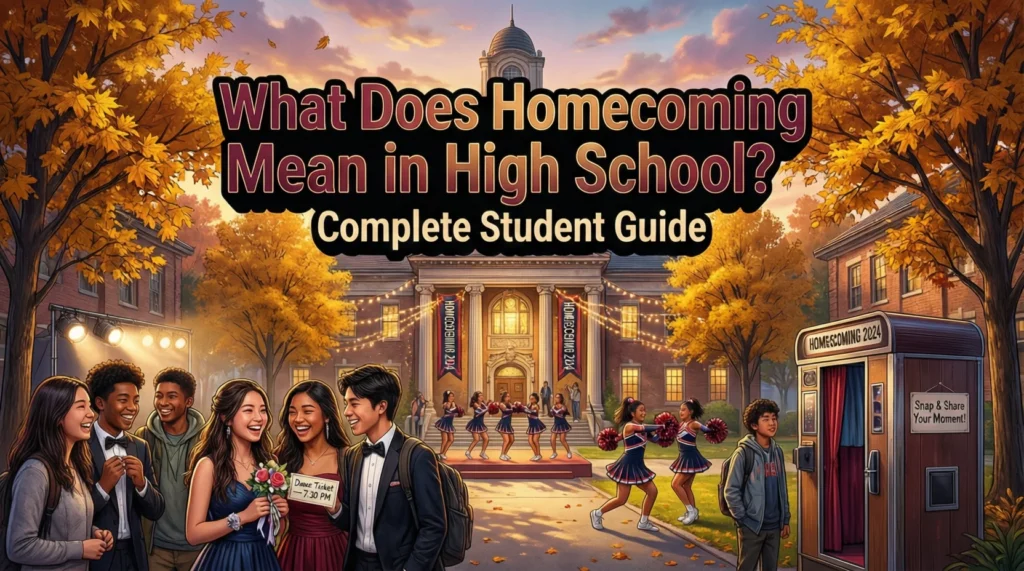
If you’ve ever heard students excitedly talking about homecoming week, outfits, football games, or who’s going with whom, you’re not alone. Homecoming is one of the most talked-about traditions in high school life and for good reason. It’s not just a dance. It’s a week-long celebration of school pride, friendship, and memories that many students remember long after graduation.
Definition:
Homecoming in high school is a traditional school event—usually held in the fall—that celebrates school spirit, welcomes alumni “home,” and brings students together through activities like a football game, spirit week, pep rallies, a parade, and a formal or semi-formal dance.
For freshmen, homecoming can feel confusing. For one class older, it often feels emotional. And for parents or international students, the meaning behind “homecoming” may not be immediately clear.
So what does homecoming mean in high school, really?
This guide explains everything from its origins and purpose to how students participate today, with real-life examples, tone explanations, comparisons, FAQs, and practical tips.
What Is Homecoming in High School?
In simple terms, homecoming is an annual high school tradition that:
- Celebrates school spirit
- Welcomes former students (alumni) back to campus
- Unites current students through fun events
- Usually centers around a football game and a dance
It’s called homecoming because alumni are invited to “come home” to their old school, reconnect, and celebrate with the current student body.
The Origin of Homecoming
Historical Background 📜
Homecoming originated in the United States in the early 1900s, primarily at colleges and universities. Over time, the tradition spread to high schools.
Key points about its origin:
- First popularized by American football culture
- Designed to encourage alumni to return to campus
- Later expanded to include dances, royalty courts, and spirit competitions
Why Football Is Central to Homecoming
Football games often anchor homecoming because:
- They attract large crowds
- Alumni enjoy watching their old teams play
- Games naturally foster school pride
Even today, many schools schedule a major home football game during homecoming week.
When Does Homecoming Happen?
Homecoming typically takes place:
- Once a year
- During the fall season (September–October)
- Around a home football game
The exact timing varies by school, district, and region.
What Happens During Homecoming Week?
Homecoming is rarely just one day—it’s a full week of themed events.
Common Homecoming Activities
Here’s what most high schools include:
- Spirit Week (theme-based dress-up days)
- Pep Rally
- Homecoming Football Game
- Parade
- Homecoming Court & King/Queen
- Homecoming Dance
Spirit Week: Dressing Up With Purpose 👕
Spirit week builds excitement and participation.
Popular Spirit Week Themes:
- Pajama Day
- Twin Day
- Decades Day
- School Colors Day
- Meme or Character Day
These themes encourage creativity and unity, not competition.
Pep Rallies: Loud, Proud, and Energetic 📣
A pep rally is a school assembly meant to:
- Energize students
- Support sports teams
- Showcase cheerleaders, bands, and mascots
It’s one of the loudest—and most memorable—parts of homecoming.
The Homecoming Football Game 🏈
The football game is often the main event.
- Held on Friday night
- Alumni attend
- Marching band performs
- Homecoming court is introduced
Even students who don’t usually attend sports events often go to the homecoming game.
Homecoming Court: What Does It Mean?
Many schools select a homecoming court, which may include:
- Homecoming King
- Homecoming Queen
- Prince and Princess (in some schools)
- Or gender-neutral titles (modern schools)
Important Note:
Being on the homecoming court is symbolic, not a popularity contest in its original intent. It recognizes involvement, leadership, and school spirit.
The Homecoming Dance 💃🕺
The dance is what most students associate with homecoming.
Key Features of the Dance:
- Semi-formal or formal attire
- Held at school or a rented venue
- Music, decorations, and themes
- Friends or dates attend together
Unlike prom, homecoming is open to all grades, not just students.
What Does Homecoming Mean to Students?
Emotional and Social Meaning
For students, homecoming can represent:
- Belonging
- Friendship
- School pride
- Milestones
- Nostalgia
For students, it may feel bittersweet. But for freshmen, it’s often a first taste of high school traditions.
Real-Life Examples of “Homecoming” in Context
Friendly Tone 😊
“Homecoming week is my favorite part of the school year!”
Neutral Tone 😐
“Our school’s homecoming is scheduled for October.”
Slightly Dismissive Tone 🙄
“I’m not really into homecoming—it’s just not my thing.”
Excited Social Media Style ✨
“HOMEcoming vibes 💙🏈✨ Can’t wait for the dance!”
Table: Homecoming Events Explained
| Event | What It Means | Who Participates |
|---|---|---|
| Spirit Week | Dress-up themes to show school pride | All students |
| Pep Rally | School assembly for motivation | Students, athletes |
| Football Game | Main sports event of homecoming | Students, alumni |
| Homecoming Court | Symbolic student representatives | Selected students |
| Dance | Social celebration | All grade levels |
Is Homecoming Mandatory?
No.
Homecoming is completely optional.
Students may choose to:
- Attend all events
- Attend only the game
- Attend only the dance
- Skip it entirely
Participation does not affect grades or academic standing.
Homecoming vs Prom: What’s the Difference?
| Feature | Homecoming | Prom |
|---|---|---|
| Time of Year | Fall | Spring |
| Grades Invited | All grades | Usually juniors |
| Formality | Semi-formal | Formal |
| Focus | School spirit | Romantic milestone |
| Alumni Involved | Yes | No |
Alternate Meanings of “Homecoming”
While most commonly used in schools, homecoming can also mean:
- A sports event welcoming a team back
- A cultural or religious return
- A personal return after time away
Example:
“The soldier’s homecoming was emotional.”
Polite or Professional Alternatives
In formal writing or announcements, alternatives may include:
- “Annual school spirit celebration”
- “Fall alumni and student event”
- “Traditional school celebration week”
Why Homecoming Is Still Popular Today
Despite changes in education and culture, homecoming remains popular because it:
- Builds community
- Encourages inclusion
- Creates shared memories
- Connects past and present students
Many schools have modernized homecoming to be more inclusive, gender-neutral, and student-focused.
Tips for Enjoying Homecoming (Without Pressure)
- Go with friends if dating feels stressful
- Wear something comfortable
- Attend events you genuinely enjoy
- Remember: participation is your choice
- Focus on fun, not perfection
Conclusion
At its core, homecoming in high school is about connection—to your school, your peers, and shared experiences. Whether you attend every event or skip the dance entirely, homecoming remains a meaningful tradition that celebrates belonging and school pride.
There’s no “right” way to experience homecoming. What matters most is enjoying it your way and understanding that it’s meant to be fun, inclusive, and memorable.
FAQs
1. What does homecoming mean in high school?
Homecoming is a yearly high school tradition that celebrates school spirit, student involvement, and alumni returning to campus. It usually includes events like a football game, spirit week activities, and a school dance.
2. Is homecoming only about dating?
No. Homecoming is not just about dating. Many students attend with friends, groups, or even alone to enjoy the events, games, and school atmosphere.
3. Do freshmen go to homecoming?
Yes. Homecoming is typically open to all grade levels, including freshmen, sophomores, juniors.
4. Is homecoming the same in every school?
No. Homecoming traditions vary by school, region, and culture. Some schools have parades and pep rallies, while others focus mainly on the game and dance.
5. Why is it called homecoming?
It’s called homecoming because former students (alumni) are invited to “come home” to their school to reconnect, attend events, and celebrate school pride.
6. Is homecoming formal?
Homecoming is usually semi-formal, meaning dress codes are more relaxed than prom. Students often wear cocktail dresses, dress shirts, or neat casual-formal outfits.
7. Can you skip homecoming?
Yes. Participation in homecoming is completely optional, and skipping it has no academic or disciplinary consequences.
8. Is homecoming an American tradition?
Yes. Homecoming originated in the United States and is most common in American high schools and colleges, though similar celebrations may exist elsewhere.

Rachel Monroe is a digital content writer at Meanzy.com who focuses on explaining modern words, phrases, and online expressions. Her writing style is simple, practical, and reader-focused, helping users quickly understand the meaning and usage of today’s evolving language.


Pingback: HP Meaning in Games: Everything You Need to Know to Play Better (2026)