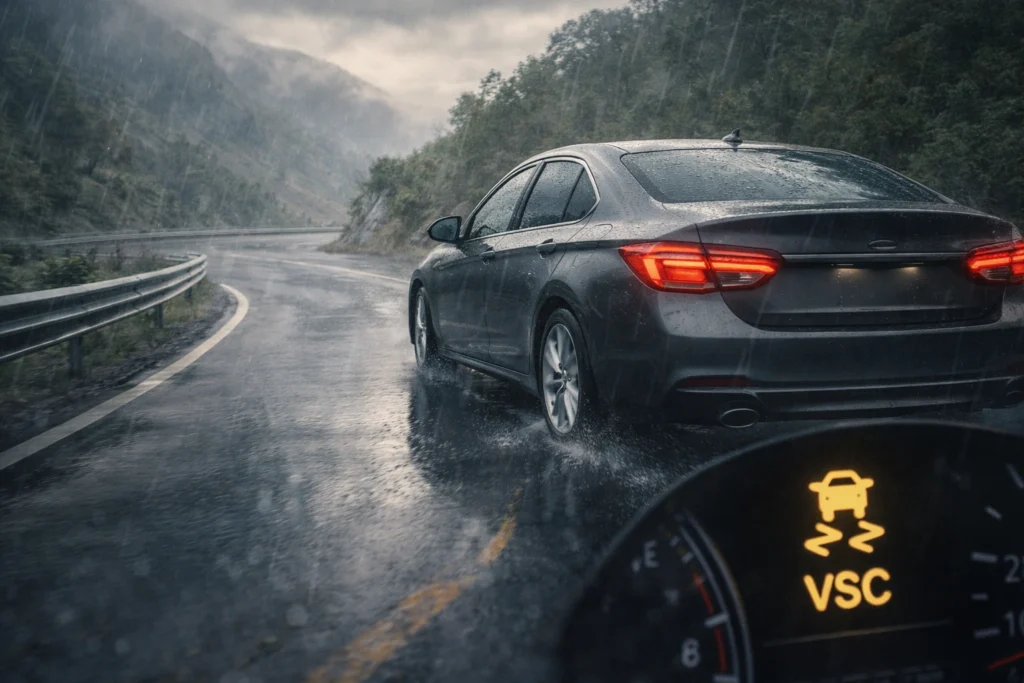
VSC in a car stands for Vehicle Stability Control, a safety system designed to help drivers maintain control during slippery or emergency driving situations by automatically managing engine power and braking individual wheels when necessary.
If you’ve ever glanced at your dashboard and noticed a small warning light labeled “VSC,” you might have wondered what it actually means. This acronym is more than just a cryptic set of letters—it represents a critical feature in modern vehicles that can prevent accidents and improve overall driving safety. In this article, we’ll break down everything you need to know about VSC, from its origin to its real-world applications, examples, comparisons, and FAQs.
Origin of VSC and Its Popularity
Vehicle Stability Control, commonly abbreviated as VSC, emerged in the automotive world in the late 1990s as part of a broader push toward electronic safety systems.
- Origin: Toyota introduced VSC in 1995 on select models, though other manufacturers like Mercedes-Benz and BMW developed similar systems under names like Electronic Stability Control (ESC).
- Purpose: Designed to reduce the risk of skidding, fishtailing, or rollover accidents, especially on wet or icy roads.
- Popularity: Today, VSC is standard in most modern cars, particularly in SUVs and sedans, because safety regulations in many countries now require some form of stability control.
VSC became particularly popular because it’s proactive. Instead of reacting after an accident occurs, it intervenes to prevent loss of control. This makes it a favorite among safety-conscious drivers and families.
How VSC Works in a Car
Understanding how VSC works can help you appreciate why it’s so valuable.
- Sensors Monitor Vehicle Behavior:
- Wheel speed sensors
- Steering angle sensors
- Yaw rate sensors
- Lateral acceleration sensors
- Automatic Adjustments:
When the system detects that the car is veering off the intended path:- Brakes are applied selectively to specific wheels
- Engine power may be reduced to slow the vehicle
- Driver control is supplemented to help keep the car on course
- Driver Awareness:
- A VSC warning light may illuminate if the system is actively intervening.
- Persistent VSC light could indicate a malfunction that requires professional inspection.
Example Table: How VSC Corrects Different Situations
| Scenario | Issue Detected | VSC Response |
|---|---|---|
| Oversteering on a wet curve | Rear wheels lose traction | Applies brakes to outer front wheel, reduces engine power |
| Understeering in a turn | Front wheels slide outward | Applies brakes to inner rear wheel, adjusts engine output |
| Sudden evasive maneuver | Rapid steering change | Modulates braking and engine torque to maintain path |
Examples of VSC in Real-World Driving
VSC is often most noticeable in situations where road conditions challenge driver control. Here are some examples:
- Friendly Example: Driving on a light rainy day, your sedan begins to skid slightly in a turn. VSC kicks in, brakes one wheel, and you continue safely without panicking.
- Neutral Example: On a dry highway, VSC rarely activates, making it almost invisible in normal driving conditions.
- Negative/Dismissive Example: Some drivers dislike VSC in performance cars because it can intervene during aggressive cornering, slightly limiting the fun of “drifting.” 🚗💨
Comparison with Related Terms
VSC is often confused with other automotive safety systems. Understanding the differences can help you navigate your car’s dashboard effectively.
| Term | Meaning | Key Difference from VSC |
|---|---|---|
| ABS | Anti-lock Braking System | Prevents wheels from locking during braking but doesn’t control steering |
| TCS | Traction Control System | Prevents wheel spin but doesn’t manage full vehicle stability |
| ESC | Electronic Stability Control | Essentially the same as VSC; different manufacturers use different names |
| EBD | Electronic Brake-force Distribution | Distributes braking power but doesn’t intervene in steering stability |
Alternate Meanings of VSC
While Vehicle Stability Control is the most common in automotive contexts, VSC can occasionally stand for other terms in unrelated fields:
- Visual Source Code – In software development, refers to a code editing interface
- Voluntary Service Corps – In community service contexts
In a car, however, VSC almost always refers to Vehicle Stability Control, so you don’t need to worry about confusion when you see it on your dashboard.
Polite and Professional Alternatives to VSC
If you want to discuss VSC in professional or customer-facing contexts, consider using:
- Vehicle Stability Assistance System
- Electronic Stability System
- Stability Control System
These alternatives emphasize the driver-assistance aspect and may sound more approachable in safety manuals or brochures.
VSC: Usage Tips
To get the most out of VSC, here are some practical tips:
- Always keep your tires in good condition. Worn tires can limit the effectiveness of VSC.
- Do not disable VSC unless you are performing controlled maneuvers in specialized conditions, like off-road driving.
- Pay attention to dashboard lights. A persistent VSC light may indicate sensor issues.
- Understand your car manual. Some cars allow limited VSC disengagement for performance purposes.
VSC in Everyday Driving Examples Table
| Situation | VSC Status | Driver Action |
|---|---|---|
| Snowy parking lot | Active | Gentle steering; system helps avoid sliding into other cars |
| Rainy highway | Active | Maintain calm; VSC adjusts braking automatically |
| Dry city street | Inactive | Normal driving; VSC is monitoring silently |
| Mountain road curves | Active | Slow down slightly; system enhances control through tight bends |
FAQs
1. What does the VSC light on my dashboard mean?
It indicates that the Vehicle Stability Control system is active or has detected a problem. If it stays on, have your car checked by a professional.
2. Can I drive with the VSC light on?
You can drive, but the system may not assist in emergency maneuvers. It’s safer to get it inspected.
3. Is VSC the same as ABS?
No. ABS prevents wheel lock during braking, while VSC helps maintain overall vehicle stability.
4. Can VSC improve my car’s handling in snow?
Yes. VSC can reduce skidding by applying brakes selectively and adjusting engine power.
5. Do all cars have VSC?
Most modern vehicles, especially from 2012 onwards, come standard with VSC or equivalent stability systems.
6. Can I turn off VSC?
Some cars allow temporary deactivation for off-road or performance driving, but it’s generally recommended to keep it on for safety.
7. Why does VSC activate even on dry roads?
It may detect sudden steering corrections or wheel slip that requires stability assistance.
8. Is VSC effective for SUVs?
Absolutely. SUVs, due to their higher center of gravity, benefit significantly from VSC in preventing rollovers and maintaining traction.
Conclusion
Vehicle Stability Control (VSC) is a critical safety feature designed to keep your car stable in tricky driving conditions. By automatically adjusting braking and engine power, it helps prevent skids, fishtails, and rollovers. Modern vehicles rely on VSC not only for driver safety but also to meet stringent safety regulations worldwide.
Key Takeaways:
- VSC enhances vehicle stability and driver control.
- It works silently until needed, intervening during skids or sharp maneuvers.
- While it can be temporarily disabled in some vehicles, keeping it active ensures maximum safety.
- Understanding VSC and related systems like ABS and TCS improves your driving confidence.
Next time your VSC light flickers on, you’ll know your car is actively helping you stay safe. Think of it as a silent co-pilot watching over your wheels.
Read More Related Articles:
- What Does Homecoming Mean in High School? Complete Student Guide (2026)
- What Does Disposed Mean in Court Case? Real-Life Examples In 2026
- What Does Fruit Mean in the Bible? Biblical & Spiritual Meaning (2026)

Megan Foster is a thoughtful and creative content creator at Meanzy.com with a strong curiosity for language and communication. Known for her clarity and attention to detail, she simplifies confusing slang, acronyms, and modern terms into easy, relatable meanings readers can trust.