Staccato in music refers to a style of playing notes sharply and detached, with each note separated from the next, creating a crisp and punctuated effect.
Whether you’re a budding musician, a student of music theory, or just someone curious about musical terms, understanding staccato is essential. This term appears in sheet music across genres—from classical piano pieces to jazz improvisations—and significantly affects the mood and energy of a composition. In this guide, we’ll explore what staccato means, its origins, practical usage, examples, comparisons with related terms, and professional tips to master it.
Origin of the Term Staccato
The word staccato comes from the Italian verb staccare, meaning “to detach” or “to separate.” It first emerged in musical notation in the 17th century, during the Baroque period, when composers started indicating not only pitch and rhythm but also articulation—the way notes are played.
Over time, staccato became a universal term in classical music and later crossed into other genres such as jazz, pop, and contemporary instrumental music. Musicians quickly recognized its value in creating contrast, energy, and texture within a piece.
Understanding Staccato in Music
In practical terms, staccato means you play notes shorter than their written value, leaving a slight silence between them. This is the opposite of legato, where notes flow smoothly into one another.
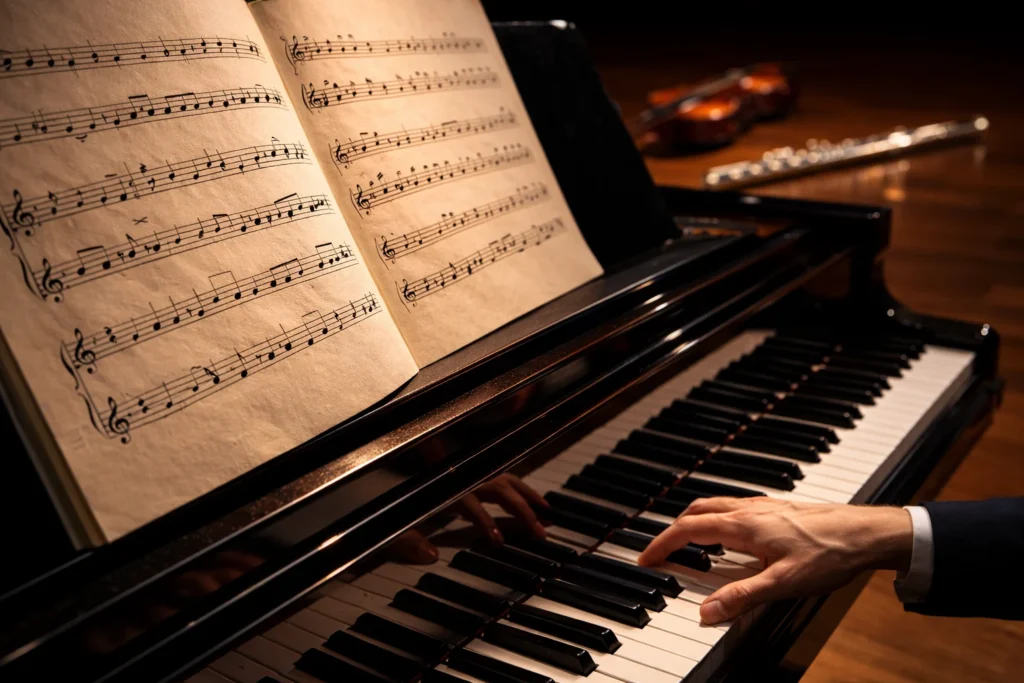
- Notation: Staccato is often indicated by a small dot placed directly above or below the note head.
- Effect: Creates a sense of crispness, lightness, and rhythmic clarity.
- Genres: Found in classical, jazz, pop, and even rock music to create punchy or playful passages.
Quick visual example in notation:
| Symbol | Meaning |
|---|---|
| • above/below note | Staccato – play the note short and detached |
| — slur | Legato – play notes smoothly connected |
| > accent | Play note louder or with emphasis |
How Staccato is Used in Music
1. Expressive Tool
Staccato adds expression to music, often conveying excitement, playfulness, or tension. For example:
- A fast staccato passage on the piano can mimic the sound of raindrops. 🌧️
- In orchestral music, staccato strings can inject energy into a march.
2. Contrast
Staccato provides a clear contrast with legato or sustained notes, making music dynamic and interesting. Composers like Mozart and Beethoven often combined staccato and legato passages to emphasize mood changes.
3. Technical Exercises
Musicians practice staccato for finger control, precision, and agility. Piano and violin students often do scales and etudes using staccato to improve dexterity and rhythmic accuracy.
Examples of Staccato in Musical Context
Here’s a table showing how staccato can appear in different instruments:
| Instrument | Example | Description |
|---|---|---|
| Piano | Short, crisp notes in Mozart’s Sonata in C Major | Each note is detached to create playful rhythm |
| Violin | Repeated staccato bow strokes in Beethoven’s Symphony No.5 | Produces energetic, rhythmic articulation |
| Guitar | Staccato chords in pop songs | Adds punch and clarity to rhythm parts |
| Flute | Fast staccato runs in jazz improvisation | Creates light, airy sound with precise separation |
Real-life interpretation tips:
- Lightly lift your finger or bow after each note.
- Keep the note duration short but audible.
- Maintain consistent tempo for rhythmic precision.
Comparison with Related Terms
It’s helpful to understand staccato in relation to other musical articulations:
| Term | Meaning | Difference from Staccato |
|---|---|---|
| Legato | Smooth, connected notes | Opposite of staccato; no detachment |
| Marcato | Emphasized, slightly separated notes | Louder and more forceful than staccato |
| Portato | Slightly detached notes with smooth flow | Staccato is sharper; portato is gentler |
| Tenuto | Hold the note full length | Staccato shortens notes, tenuto sustains them |
Alternate Meanings
While staccato is most commonly used in music, in everyday language it can describe anything that is abrupt or disconnected:
- Example: “She gave a staccato response to the questions,” meaning her answers were short and clipped.
- Polite alternatives in professional writing could be brief, concise, or punctuated.
Professional Tips for Performing Staccato
- Focus on Separation: Make sure each note is clearly detached but not too short that it disappears.
- Adjust Dynamics: You can combine staccato with dynamics (soft or loud) to add expressiveness.
- Practice Slowly: Start slow to ensure clarity and gradually increase tempo.
- Use Finger or Bow Technique: On piano, lift fingers lightly; on strings, use controlled bow strokes.
- Listen to Examples: Pay attention to how professional musicians execute staccato—Nuances make all the difference. 🎵
Common Mistakes with Staccato
- Playing notes too short or harsh, making the music sound choppy.
- Confusing staccato with accent—staccato is about length, accent is about volume.
- Ignoring the context—some passages require a gentler staccato to suit the musical mood.
FAQs
1. What does staccato mean in simple terms?
Staccato means playing notes short and detached, with a small space between each one.
2. How do you play staccato on the piano?
Lift your fingers quickly after pressing each key, keeping notes precise but audible.
3. What is the difference between staccato and legato?
Staccato is detached and short; legato is smooth and connected.
4. Can staccato be used in singing?
Yes, singers can articulate syllables quickly and separated to create a staccato effect.
5. Is staccato always fast?
Not necessarily. Staccato can be slow or fast; it’s about note separation, not speed.
6. How is staccato indicated in sheet music?
A small dot above or below the note indicates staccato.
7. Can staccato notes be accented?
Yes, staccato can be combined with accents to create stronger, punchy notes.
8. Why do musicians practice staccato?
It improves control, precision, articulation, and musical expression.
Conclusion
Staccato is more than just a dot on a sheet of music—it’s a powerful tool to convey emotion, energy, and style. Understanding staccato allows musicians to bring compositions to life, from the playful notes of Mozart to the rhythmic complexity of jazz. Whether you are a performer, composer, or listener, recognizing and appreciating staccato enriches your musical experience.
Practical takeaway: Start incorporating short, detached notes in your practice, pay attention to dynamics and tempo, and listen carefully to examples by professionals. With time, staccato will become a natural and expressive part of your musical vocabulary. 🎹🎻🎶
Read More Related Articles:
- Solvent Mean in Science: Powerful Substance Behind Every Solution In 2026
- Sarah Means in Hebrew: Legacy and Cultural Influence In 2026
- Hiro Meaning in Japanese: The Story Behind the Name In 2026

Rachel Monroe is a digital content writer at Meanzy.com who focuses on explaining modern words, phrases, and online expressions. Her writing style is simple, practical, and reader-focused, helping users quickly understand the meaning and usage of today’s evolving language.