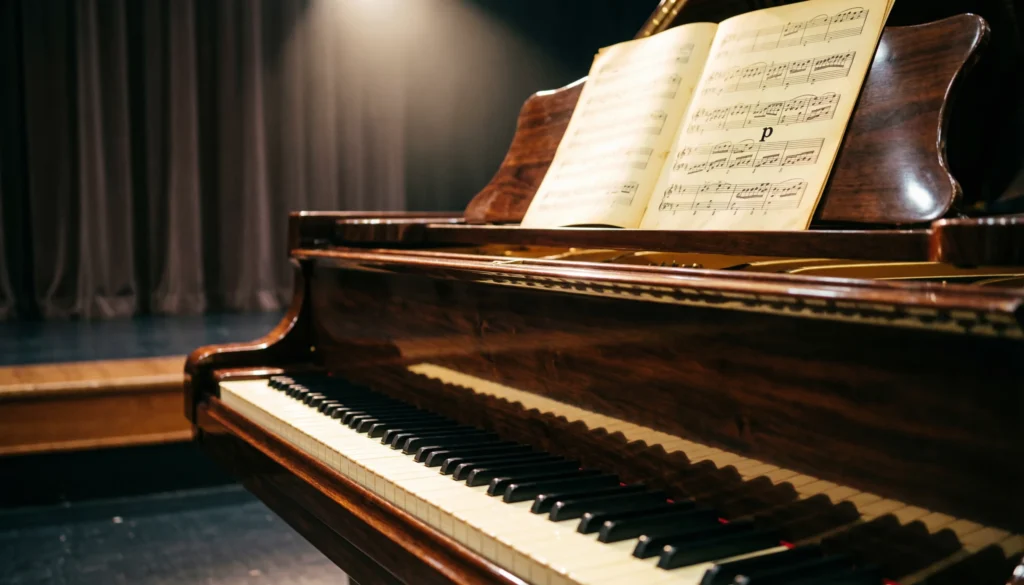
Piano in music means to play softly. It is a dynamic marking that instructs musicians to perform a section of music quietly and gently.
The word comes from Italian and is often abbreviated as “p” in sheet music.
Music is more than just notes on a page. It is emotion, storytelling, and expression. But have you ever looked at sheet music and noticed the word piano written underneath a passage? If you are learning music or simply curious, you might be wondering what does piano mean in music and why it is so important.
Now let’s explore the full meaning, history, usage, comparisons, and practical examples so you can fully understand how piano works in real musical situations.
What Does Piano Mean in Music?
In music terminology, piano refers to a soft dynamic level. Dynamics are markings that tell performers how loud or soft to play a piece of music.
When a composer writes piano or the letter p in sheet music, they are instructing the musician to lower the volume and create a softer sound.
It does not mean to whisper the notes, but rather to play gently, with control and sensitivity.
For example:
- A calm lullaby may start piano to create a peaceful mood.
- A dramatic orchestral piece might use piano before building to a louder section.
- A sad ballad often includes piano passages to express vulnerability.
Piano is one of the most common dynamic markings in Western classical music and is widely used in modern genres as well.
Origin of the Word Piano
The word piano comes from the Italian language, where it literally means soft or quiet.
Italian became the standard language of musical notation during the 1600s and 1700s because many influential composers and musicians were from Italy.
Famous composers such as:
- Antonio Vivaldi
- Claudio Monteverdi
- Giuseppe Verdi
helped establish Italian as the language of music.
Even composers from other countries used Italian terms. For example:
- Johann Sebastian Bach
- Ludwig van Beethoven
also used Italian dynamic markings in their compositions.
Because of this tradition, we still use Italian terms like piano, forte, crescendo, and allegro today.
Is Piano the Same as the Instrument?
This is one of the most common misunderstandings.
The word piano can refer to:
- A dynamic marking meaning soft
- A musical instrument
The instrument’s full original name is pianoforte, which means soft loud in Italian. It was designed to play both softly and loudly, unlike earlier keyboard instruments.
The modern piano instrument evolved from the harpsichord, which had limited dynamic control.
So while both use the word piano, their meanings are connected but not identical.
How Piano Is Written in Sheet Music
In written music, piano appears in two main ways:
- As the word piano
- As the abbreviation p
It is usually placed below the staff in instrumental music or between staves in piano music.
Example Dynamic Markings Table
| Marking | Italian Term | Meaning | Volume Level |
|---|---|---|---|
| pp | pianissimo | very soft | extremely quiet |
| p | piano | soft | quiet |
| mp | mezzo piano | moderately soft | slightly quiet |
| mf | mezzo forte | moderately loud | medium |
| f | forte | loud | strong |
| ff | fortissimo | very loud | very strong |
This table shows how piano fits into the broader system of musical dynamics.
Real World Usage of Piano in Music
Understanding what piano means in music is not just about memorizing definitions. It is about feeling how it shapes a piece.
In Classical Music
In orchestral music, piano sections often create:
- Suspense
- Emotional depth
- Intimacy
- Tension before a dramatic climax
For example, in many works by Wolfgang Amadeus Mozart, soft passages contrast beautifully with loud sections to create emotional balance.
In Film Scores
Film composers frequently use piano dynamics to build mood. A soft piano string section might underscore a romantic or reflective scene.
In Pop and Contemporary Music
Modern ballads often begin piano and gradually increase in volume to build emotion.
Think about soft acoustic intros that later expand into powerful choruses.
Emotional Tone of Piano
Piano does not just mean quiet. It carries emotional meaning too.
Here is how piano can sound in different contexts:
| Context | Tone | Emotional Effect |
|---|---|---|
| Lullaby | Gentle and warm | Comforting |
| Sad ballad | Soft and vulnerable | Emotional |
| Suspense scene | Quiet and tense | Mysterious |
| Prayer or hymn | Calm and reflective | Spiritual |
The key idea is that piano supports subtle expression. It allows performers to communicate sensitivity and nuance.
How Musicians Perform Piano Correctly
Playing piano is not simply about lowering the volume.
Here are some practical tips musicians follow:
- Maintain control of tone quality
- Avoid rushing the tempo
- Support breath properly if singing
- Use softer finger pressure for instrumentalists
- Focus on emotional intent
A weak or unsupported sound is not the same as piano. The sound should still be clear and controlled.
Comparison With Related Terms
To better understand what piano means in music, let’s compare it with related dynamic terms.
Piano vs Forte
| Term | Meaning | Sound Level | Emotional Feel |
|---|---|---|---|
| Piano | Soft | Quiet | Gentle, intimate |
| Forte | Loud | Strong | Bold, powerful |
Piano vs Pianissimo
- Piano means soft
- Pianissimo means very soft
Pianissimo creates an even more delicate atmosphere.
Piano vs Mezzo Piano
Mezzo piano means moderately soft. It is slightly louder than piano but still gentle.
Understanding these subtle differences helps performers interpret music accurately.
Alternate Meanings of Piano
Outside of music dynamics and the instrument, piano can also mean:
- Flat or level in Italian language usage
- A floor in a building in Italian, such as piano terra meaning ground floor
However, in English musical contexts, piano almost always refers to either the instrument or the dynamic marking.
Examples of Piano in Sentences
Here are examples of how piano may be used in musical conversation.
Friendly tone
Let’s start this verse piano so it feels more intimate.
Neutral tone
The composer marked this section piano to create contrast.
Professional tone
Please observe the piano dynamic indicated at measure twelve.
Negative or corrective tone
You are playing too loudly. It should be piano here.
These examples show how piano functions practically in rehearsals and performances.
Why Piano Is So Important in Music
Without dynamics like piano, music would sound flat and mechanical.
Dynamics allow music to:
- Breathe
- Tell a story
- Build contrast
- Express emotion
- Guide the listener’s attention
Imagine a movie soundtrack played entirely at one volume. It would lose emotional depth. Piano provides subtlety and variation.
How to Teach Beginners About Piano
If you are teaching music, here are helpful methods:
- Demonstrate soft versus loud physically
- Use hand gestures to show lowering volume
- Ask students to imagine whispering with their instrument
- Practice dynamic contrast exercises
Encouraging expressive playing from the start builds musical sensitivity.
FAQs
What does piano mean in music?
Piano means to play softly. It is a dynamic marking that tells musicians to reduce volume and perform gently.
Is piano the same as pianissimo?
No. Piano means soft, while pianissimo means very soft and is quieter than piano.
Why is piano written as p in sheet music?
Because it is an abbreviation of the Italian word piano, which keeps notation clear and simple.
Does piano mean slow?
No. Piano refers to volume, not speed. Tempo markings like adagio or allegro indicate speed.
Who started using the word piano in music?
Italian composers popularized it during the Baroque period, and it became standard in Western music notation.
Is piano only used in classical music?
No. Piano dynamics are used in pop, jazz, film scores, worship music, and many other genres.
Can singers sing piano?
Yes. Singers can perform piano by lowering their vocal intensity while maintaining breath support and clarity.
What happens if musicians ignore piano markings?
Ignoring dynamic markings reduces emotional impact and may distort the composer’s intended expression.
Conclusion
So, what does piano mean in music?
It means playing softly, gently, and with expressive control. Rooted in Italian musical tradition, piano is one of the most important dynamic markings in sheet music. It shapes emotion, builds tension, and creates contrast within a composition.
Whether you are a beginner learning music theory, a singer refining technique, or a listener curious about musical terms, understanding piano helps you appreciate the depth and artistry behind every performance.
The next time you see a small letter p in sheet music, remember it is not just about volume. It is about emotion, storytelling, and musical sensitivity.
Mastering piano dynamics is one of the first steps toward truly expressive musicianship.
Read More Related Articles:
- Hedge Mean in Betting: Risk-Control Strategy Pros Swear By In 2026
- Undefined Mean in Math: Master This Tricky Math Idea In 2026
- WDP Meaning in Texting: Slang Breakdown with Examples (2026)

John Miller is a professional meanings writer at Meanzy.com, specializing in word definitions, internet slang, acronyms, and text abbreviations. He focuses on delivering clear, accurate explanations with practical examples, helping readers easily understand modern digital terms and their real-life usage.