
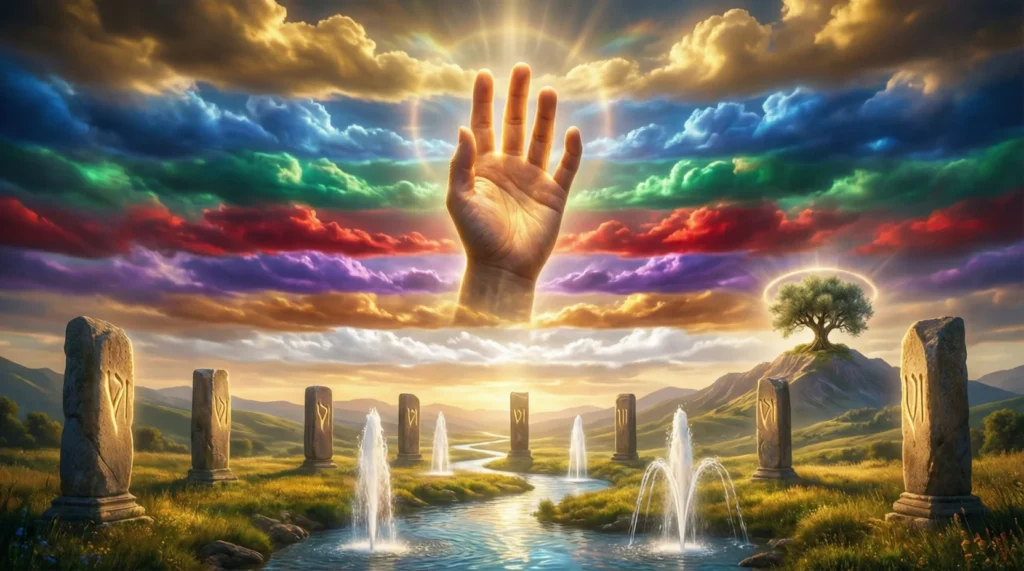
In the Bible, the number seven represents divine perfection, completeness, and God’s finished work. It is one of the most spiritually significant numbers in Scripture, symbolizing holiness, fulfillment, and God’s ideal order throughout biblical history.
From the creation story to prophecy, from worship practices to moral teachings, the number seven appears repeatedly in meaningful ways. Its consistent use across both the Old and New Testaments has made it a cornerstone of biblical symbolism and Christian theology.
This article explores what seven means in the Bible, where the symbolism comes from, how it is used in Scripture, and why it still matters today.
Why the Number Seven Matters in the Bible
The Bible is rich with symbolism, and numbers play a powerful role in communicating spiritual truths. Among them, seven stands out more than almost any other number.
Biblical writers used seven to express ideas that words alone could not fully capture, such as completion, divine order, covenant, and spiritual rest. When something appears seven times in Scripture, it often signals that it is finished, perfected, or blessed by God.
Origin of the Number Seven in the Bible
Seven in the Creation Story
The biblical significance of seven begins in Genesis 1 and 2, the opening chapters of the Bible.
God created the world in six days and rested on the seventh day, blessing it and declaring it holy.
This moment established seven as a symbol of:
- Completion
- Divine rest
- Sacred time
- God’s perfect design
The seventh day later became the Sabbath, a day of rest and worship, reinforcing the spiritual importance of seven in Jewish and Christian traditions.
Seven and Ancient Hebrew Culture
In Hebrew culture, numbers carried symbolic meaning. The Hebrew word for seven, sheva, is closely connected to the word for oath or covenant. This connection suggests that seven represents a sacred promise or divine agreement.
Because of this, biblical authors often used seven to emphasize that something was ordained or completed by God.
Core Symbolic Meanings of Seven in the Bible
The number seven carries several layered meanings in Scripture. These meanings often overlap and reinforce one another.
1. Completeness and Perfection
Seven represents something that is whole, lacking nothing.
Examples include:
- Creation completed in seven days
- Seven feasts of Israel
- Seven churches addressed in Revelation
In each case, seven signals fullness rather than randomness.
2. Holiness and Sacredness
God set apart the seventh day as holy. As a result, seven became associated with holiness and divine presence.
You often see seven used in:
- Worship rituals
- Temple design
- Priestly practices
3. Divine Order and God’s Plan
Seven shows that events unfold according to God’s perfect timing and order, not human coincidence.
When judgments, blessings, or promises occur in sets of seven, it suggests God is actively at work.
4. Rest and Renewal
The seventh day of rest points to spiritual restoration and renewal, both physical and spiritual.
This idea continues in the New Testament, where believers are invited into God’s rest through faith.
Key Biblical Examples of the Number Seven
Seven in the Old Testament
Here are some notable Old Testament appearances of seven:
- Seven days of creation
- Seven clean animals taken into Noah’s ark
- Seven years of plenty and seven years of famine in Joseph’s dream
- Seven trumpets used to bring down the walls of Jericho
- Seven lamps on the golden lampstand in the tabernacle
Each example highlights divine instruction, completion, or intervention.
Seven in the New Testament
The New Testament continues this symbolism, especially in the Book of Revelation.
Notable examples include:
- Seven churches
- Seven seals
- Seven trumpets
- Seven bowls of God’s wrath
- Seven spirits before God’s throne
These repeated uses emphasize divine judgment, fulfillment of prophecy, and God’s ultimate authority.
Example Table: Biblical Uses of Seven and Their Meanings
| Biblical ReferenceUse of SevenSymbolic Meaning | ||
|---|---|---|
| Genesis 2:2–3 | Seventh day | Divine rest and holiness |
| Joshua 6 | Seven trumpets | God’s power and victory |
| Leviticus 23 | Seven feasts | Complete worship cycle |
| Revelation 1–16 | Seven series | Fulfillment of God’s plan |
| Matthew 18:22 | Forgive seventy times seven | Perfect and unlimited forgiveness |
Seven as a Teaching Tool in the Bible
Biblical writers used seven not only symbolically but also educationally. Repetition of seven helped readers and listeners remember key spiritual truths.
For example:
- Forgiving “seventy times seven” teaches limitless grace
- Seven deadly sins highlight moral completeness in wrongdoing
- Seven virtues emphasize spiritual maturity
Although not all of these lists are explicitly biblical, they are rooted in biblical themes.
Tone and Emotional Meaning of Seven in Scripture
Unlike slang or modern abbreviations, seven in the Bible does not carry casual tone shifts like friendly or negative. However, its context affects emotional impact.
Positive Tone Examples
- Blessing after completion
- God’s rest and peace
- Fulfilled promises
Serious or Warning Tone Examples
- Seven judgments in Revelation
- Sevenfold punishment
- Seven plagues or signs
In both cases, seven signals seriousness and divine authority.
Comparison: Seven vs Other Biblical Numbers
Understanding seven becomes easier when compared with other symbolic biblical numbers.
Three vs Seven
- Three represents divine witness or confirmation
- Seven represents complete fulfillment
Seven vs Twelve
- Twelve symbolizes God’s people or governance
- Seven symbolizes God’s perfection and work
Seven vs Forty
- Forty represents testing or preparation
- Seven represents completion after testing
Each number has its own role, but seven often marks the conclusion of God’s action.
Alternate Meanings of Seven Outside the Bible
While seven is deeply biblical, it also holds meaning in other contexts.
- In general culture, seven is seen as a lucky number
- In literature, seven often symbolizes mystery or perfection
- In psychology, seven is linked to memory capacity
These meanings, while interesting, differ from biblical symbolism, which is rooted in divine completeness rather than chance.
Polite or Professional Use of Biblical Seven Today
In religious or professional writing, seven is often used symbolically to convey thoroughness or moral completeness.
Examples include:
- Seven principles of leadership
- Seven steps to spiritual growth
- Seven core values
When used thoughtfully, it communicates depth and intentional structure.
FAQs
1. Why is seven considered a holy number in the Bible?
Because God rested on the seventh day and declared it holy, setting a divine pattern of completion and rest.
2. How many times does the number seven appear in the Bible?
It appears hundreds of times across both Testaments, making it one of the most repeated symbolic numbers.
3. What does seven mean spiritually?
Spiritually, seven represents divine perfection, wholeness, and God’s finished work.
4. Why does Revelation use seven so often?
Revelation uses seven to show that God’s judgments and plans are complete and perfectly executed.
5. Is seven always positive in the Bible?
Not always. It can represent judgment or warning, but even then it reflects God’s perfect justice.
6. What does forgiving seventy times seven mean?
It means forgiving without limit, reflecting God’s perfect mercy.
7. Does seven have meaning in Christianity today?
Yes. It continues to symbolize spiritual maturity, rest, and completeness in Christian teaching.
8. Is seven more important than other biblical numbers?
It is one of the most important, but its meaning works alongside other symbolic numbers rather than replacing them.
Conclusion:
The number seven in the Bible is far more than a simple count. It is a powerful symbol of God’s perfection, completion, and divine order.
From creation to prophecy, from worship to moral teaching, seven reminds readers that God’s work is intentional, complete, and trustworthy.
- Seven represents divine perfection and completeness
- It originates from the creation story
- It appears throughout both Testaments
- It signals fulfillment, holiness, and God’s authority
Understanding the biblical meaning of seven helps readers interpret Scripture more deeply and appreciate the intentional design behind God’s Word.
Read More Related Articles:
- Matthew Meaning in the Bible: Rooted in Faith & Divine Gift (2026)
- What Does EMP Stand For in Text? Usage Explained (2026)

Megan Foster is a thoughtful and creative content creator at Meanzy.com with a strong curiosity for language and communication. Known for her clarity and attention to detail, she simplifies confusing slang, acronyms, and modern terms into easy, relatable meanings readers can trust.