
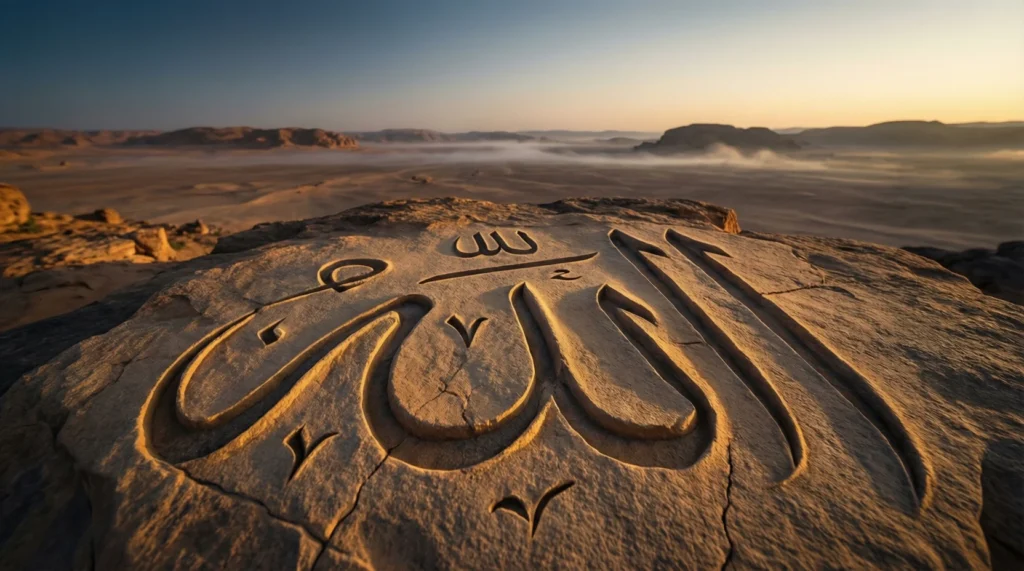
Allah is the Arabic word for “God,” referring to the one, singular, all powerful Creator of the universe.
The term is used by Arabic speakers of different faiths, including Muslims, Christians, and Jews, to mean the same supreme God.
Few words in the world carry as much spiritual, cultural, and emotional weight as Allah. You hear it in prayers, daily conversations, news headlines, and sacred texts. Yet many people still ask a simple and sincere question: What does Allah mean in Arabic?
Some assume it is a different God. Others think it belongs only to Islam. Both ideas miss the deeper truth.
Understanding the meaning of Allah opens a door into Arabic language, Middle Eastern culture, and the shared roots of the Abrahamic faiths. This article breaks it all down in a clear, respectful, and human way so you walk away informed, not confused.
What Does Allah Mean in Arabic?
In Arabic, Allah literally means “The God.”
It refers to the one true, unique, and incomparable Creator who has no partners, no equals, and no gender.
Linguistically, the word is formed from:
• Al meaning “the”
• Ilah meaning “god” or “deity”
Together, Al Ilah becomes Allah, meaning the only God worthy of worship.
Unlike English, where “god” can be plural or lowercase, Allah is always singular and absolute. It cannot be pluralized or modified.
The Linguistic Origin of the Word Allah
The word Allah did not begin with Islam. It existed in the Arabic language long before the Prophet Muhammad.
Ancient Semitic Roots
Allah comes from ancient Semitic languages, sharing roots with:
• Hebrew: Elohim or El
• Aramaic: Alaha
All of these words refer to the same supreme divine being.
Pre Islamic Arabia
Before Islam, Arab Christians and Jews already used the word Allah in prayers and scriptures. Even pre Islamic Arabs believed in a supreme God called Allah, though they associated other deities with Him.
Islam later clarified the concept of Allah as one, indivisible, and without partners.
Is Allah the Same as God?
Yes. Allah and God refer to the same divine being, just in different languages.
Here is a simple comparison:
Table 1: Allah vs God
| Aspect | Allah | God |
|---|---|---|
| Language | Arabic | English |
| Meaning | The one true God | Supreme divine being |
| Plural form | None | Gods |
| Gender | Genderless | Often masculine in grammar |
| Used by | Muslims, Christians, Jews (Arabic speakers) | Christians, Jews, others |
Arabic speaking Christians say Allah when they pray. Arabic Bibles use Allah for God. This alone shows the word is not exclusive to Islam.
Religious Significance of Allah in Islam
In Islam, Allah is central to belief, worship, and daily life.
Core Beliefs About Allah
Muslims believe Allah is:
• Eternal and uncreated
• All knowing and all powerful
• Most Merciful and Most Just
• Free from human limitations
The Islamic declaration of faith begins with:
La ilaha illa Allah
“There is no god but Allah”
This statement emphasizes pure monotheism.
The 99 Names of Allah and What They Mean
Islam describes Allah through 99 beautiful names, each highlighting a divine attribute.
Table 2: Examples of the Names of Allah
| Arabic NameEnglish Meaning | |
|---|---|
| Ar Rahman | The Most Merciful |
| Ar Rahim | The Most Compassionate |
| Al Malik | The King |
| Al Alim | The All Knowing |
| Al Ghaffar | The Most Forgiving |
These names are used in prayers and daily speech to connect with different aspects of God’s nature.
How Allah Is Used in Everyday Arabic Language
Allah is not only a religious term. It appears naturally in daily Arabic expressions.
Common Arabic Phrases Using Allah
Table 3: Everyday Expressions with Allah
| Phrase | Meaning | Tone |
|---|---|---|
| Inshallah | If God wills | Hopeful |
| Alhamdulillah | Praise be to God | Grateful |
| Mashallah | What God has willed | Admiring |
| Allahu Akbar | God is the Greatest | Reverent |
| Astaghfirullah | I seek God’s forgiveness | Regretful |
These phrases are used casually and sincerely, often without heavy religious intent.
Emotional Tone and Context of Using Allah
The word Allah can carry different emotional tones depending on context.
Friendly or Positive Tone
Used to express gratitude, joy, or amazement.
Example: Alhamdulillah, everything worked out.
Neutral Tone
Used in factual or cultural discussions.
Example: Allah is the Arabic word for God.
Serious or Emotional Tone
Used in moments of fear, prayer, or shock.
Example: Oh Allah, help us.
The word is rarely used dismissively. In Arabic culture, it is treated with respect.
Alternate Meanings or Misconceptions
Allah does not have alternate literal meanings. However, misconceptions exist.
Common Myths
• Allah is a different God than the Christian or Jewish God
• Allah is a Muslim invention
• Only Muslims say Allah
All of these are false. Allah is simply the Arabic word for God, used across religions.
Comparison with Related Terms
Understanding similar words helps clarify meaning.
Allah vs Ilah
• Ilah means a god or deity in general
• Allah means the one true God
Allah vs Rabb
• Rabb means Lord or Sustainer
• Allah is the proper name, Rabb is a title
Allah vs Yahweh
• Yahweh is the Hebrew personal name for God
• Allah is the Arabic proper name for God
Different languages, same divine concept.
Polite and Professional Alternatives in English
When speaking English, alternatives include:
• God
• The Almighty
• The Creator
• The Divine
In interfaith or academic discussions, saying “God (Allah in Arabic)” is both accurate and respectful.
Allah in the Quran
The word Allah appears over 2,700 times in the Quran. It is used consistently to emphasize God’s unity and mercy.
The Quran begins with:
In the name of Allah, the Most Merciful, the Most Compassionate
This sets the tone of divine kindness and care.
Cultural Importance Beyond Religion
Allah is deeply woven into Arabic culture.
• Used in greetings and farewells
• Spoken in moments of happiness or fear
• Present in poetry and proverbs
• Shared by Muslims and Christians alike
For many Arabic speakers, saying Allah is as natural as breathing.
FAQs
Is Allah only worshipped by Muslims?
No. Arabic speaking Christians and Jews also use the word Allah to refer to God.
Does Allah have a gender?
No. Allah is beyond gender. Arabic grammar may use masculine pronouns, but this does not imply gender.
Why do Muslims say Allah instead of God?
Because Allah is the Arabic word for God, and Islam originated in an Arabic speaking region.
Is Allah mentioned in the Bible?
Yes. Arabic translations of the Bible use the word Allah for God.
Can non Muslims say Allah?
Yes. The word is not restricted and is used by many cultures and faiths.
Is Allah a personal name or a title?
Allah is considered a proper name for God, not just a title.
Why is Allah never plural?
Because it represents absolute oneness and uniqueness.
What is the difference between Allah and Islam?
Allah is God. Islam is the religion centered on worshipping Allah alone.
Conclusion:
Allah means the one true God in Arabic. It is not a separate deity, not limited to Islam, and not a modern invention.
• Allah is linguistically and theologically equivalent to God
• The word predates Islam
• It is used by multiple faiths
• It represents pure monotheism
• It is deeply embedded in Arabic language and culture
Understanding this helps promote respect, clarity, and meaningful dialogue across cultures.
Read More Related Articles:
- What Does M Mean in a Car? Manual Mode Explained (2026)
- Daima Meaning Explained: Cultural Context In 2026
- Bonsai Meaning Decoded: Japanese History and Symbolism In 2026

Megan Foster is a thoughtful and creative content creator at Meanzy.com with a strong curiosity for language and communication. Known for her clarity and attention to detail, she simplifies confusing slang, acronyms, and modern terms into easy, relatable meanings readers can trust.