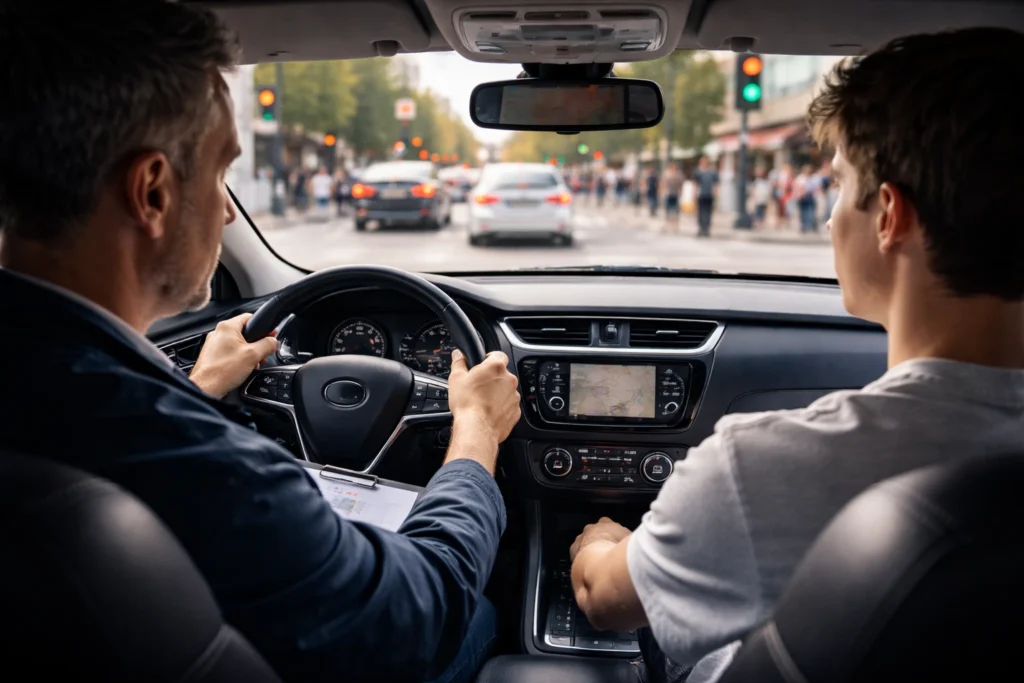
IPDE in driving stands for Identify, Predict, Decide, and Execute. It is a defensive driving strategy that helps drivers recognize hazards, anticipate potential risks, make safe decisions, and take proper action to avoid accidents.
If you have ever taken a driver’s education class or opened a defensive driving handbook, you have probably seen the term IPDE. At first glance, it looks like just another driving acronym. But in reality, IPDE is one of the most important safety systems every driver should understand and practice daily.
Whether you are a new driver preparing for your road test or an experienced driver wanting to sharpen your awareness, understanding what IPDE means in driving can dramatically improve your reaction time, confidence, and overall safety on the road.
Now let’s break it down in detail.
What Does IPDE Mean in Driving
IPDE is a structured method used in defensive driving. It teaches drivers how to think ahead instead of simply reacting at the last second. Each letter represents a specific mental step:
| Letter | Meaning | What It Involves |
|---|---|---|
| I | Identify | Spot potential hazards around you |
| P | Predict | Anticipate what could happen next |
| D | Decide | Choose the safest course of action |
| E | Execute | Carry out your decision smoothly |
This process happens quickly, often in seconds, and experienced drivers use it almost automatically.
The Origin of IPDE
The IPDE method became widely popular through defensive driving education programs in the United States and other countries. It is often taught in:
- High school driver education courses
- Defensive driving programs
- Traffic safety workshops
- Professional driver training programs
Organizations focused on traffic safety, such as the National Safety Council, have promoted defensive driving systems like IPDE to reduce collisions and improve road awareness.
The idea behind IPDE is simple. Most accidents are not caused by bad luck. They are caused by poor anticipation. By training drivers to think ahead, traffic safety experts found that crash rates decrease significantly.
Why IPDE Is So Important in Driving
Driving is not just about controlling a vehicle. It is about constantly processing information. Roads are unpredictable. Pedestrians step out suddenly. Cars brake without warning. Traffic lights change unexpectedly.
IPDE trains your brain to:
- Stay alert
- Look far ahead, not just at the car in front
- Prepare for the unexpected
- Avoid panic reactions
Instead of reacting emotionally, you respond logically and calmly.
For example:
Without IPDE:
You see a child running toward the road and slam the brakes at the last second.
With IPDE:
You identify children playing near the street, predict that one might run into the road, decide to reduce speed, and execute by slowing down early.
See the difference? That is proactive driving.
Breaking Down the IPDE Process Step by Step
Identify
This is the first and most important step.
To identify means to scan your environment and recognize potential hazards. These can include:
- Other vehicles
- Pedestrians
- Cyclists
- Road construction
- Weather conditions
- Traffic signs and signals
Good drivers look 12 to 15 seconds ahead on city streets and even farther on highways.
Example in context
Friendly tone: I noticed that car drifting slightly in its lane so I stayed alert.
Neutral tone: The vehicle ahead showed signs of instability.
Negative or dismissive tone: That driver clearly had no idea what they were doing.
Predict
After identifying a potential hazard, the next step is predicting what might happen.
Ask yourself:
- Could that car change lanes suddenly
- Will that pedestrian cross the street
- Might that traffic light turn red
Prediction is about imagining possible outcomes before they happen.
Example
You see a ball roll into the street. You predict that a child might follow. That prediction gives you extra reaction time.
Decide
Once you have predicted possible outcomes, you must decide what action to take.
Options might include:
- Slowing down
- Changing lanes
- Honking gently
- Increasing following distance
- Preparing to stop
The decision must be quick but controlled.
Execute
Finally, you execute your decision.
Execution means smoothly applying the action you chose. This could involve:
- Pressing the brake pedal
- Steering away from danger
- Accelerating to avoid conflict
- Signaling and changing lanes
The key word here is smooth. Sudden or aggressive movements can create new hazards.
Real World Examples of IPDE in Action
Here is a practical example table that shows how IPDE works in everyday driving situations.
| Situation | Identify | Predict | Decide | Execute |
|---|---|---|---|---|
| Heavy rain | Poor visibility | Cars may stop suddenly | Increase following distance | Slow down and turn on headlights |
| School zone | Children near road | A child may run into street | Reduce speed | Press brake and cover pedal |
| Highway merging | Car entering ramp | Driver may merge quickly | Create space | Change lane or slow down |
| Night driving | Limited visibility | Animal crossing possible | Prepare to brake | Drive at reduced speed |
As you can see, IPDE works in nearly every driving scenario.
IPDE vs Other Driving Systems
You may have heard of other defensive driving models. Let us compare IPDE with a few related systems.
| System | Meaning | Focus | Difference |
|---|---|---|---|
| IPDE | Identify Predict Decide Execute | Hazard prevention | Most widely taught for beginners |
| SIPDE | Scan Identify Predict Decide Execute | Adds scanning step | Emphasizes active scanning |
| Smith System | Five keys to safe driving | Space and visibility | Focuses on space management |
| SEE | Search Evaluate Execute | Similar to IPDE | Slightly simplified structure |
SIPDE is especially popular in motorcycle training. The extra Scan step reminds drivers to constantly move their eyes and check mirrors.
Overall, IPDE remains one of the clearest and easiest systems for new drivers to remember.
Tone and Communication Usage
IPDE itself is not slang, so it does not carry emotional tones like internet abbreviations. However, how you discuss driving behavior can vary in tone.
Friendly tone
You should try using IPDE. It really helps you feel more confident behind the wheel.
Professional tone
The IPDE method enhances situational awareness and reduces accident risk.
Negative tone
If you actually used IPDE, you would not have caused that near miss.
In professional settings such as driving schools or traffic safety seminars, the tone is usually calm and instructional.
Alternate Meanings of IPDE
In driving, IPDE almost always refers to Identify Predict Decide Execute.
However, in rare technical or academic contexts, IPDE may stand for other phrases. These are uncommon and unrelated to driving. If someone asks what does IPDE mean in driving, they are almost certainly referring to the defensive driving process.
Practical Tips for Using IPDE Every Day
Here are some actionable ways to apply IPDE immediately:
- Keep your eyes moving every few seconds
- Check mirrors regularly
- Avoid distractions like texting
- Leave at least a three second following distance
- Mentally ask yourself what could go wrong
A helpful mental habit is to quietly think through the steps while driving:
I see that truck swerving
It might change lanes
I will slow down
Braking gently now
With practice, this thinking becomes automatic.
Common Mistakes Drivers Make Without IPDE
Many accidents happen because drivers skip one of the steps.
| Skipped Step | Result |
|---|---|
| Failing to identify | Driver misses hazard completely |
| Failing to predict | Driver is surprised by obvious event |
| Failing to decide | Hesitation causes confusion |
| Poor execution | Oversteering or hard braking creates danger |
Defensive driving is not about being perfect. It is about being prepared.
How IPDE Helps New Drivers
New drivers often struggle with:
- Overconfidence
- Slow reaction times
- Tunnel vision
- Panic responses
IPDE gives them a mental roadmap. Instead of feeling overwhelmed, they follow a step by step process.
Driving instructors frequently repeat IPDE during lessons because repetition builds habit. Over time, it becomes second nature.
How IPDE Reduces Accidents
Research in traffic safety consistently shows that anticipation reduces crash rates. By identifying and predicting early, drivers gain extra seconds.
Even one extra second can prevent:
- Rear end collisions
- Side impact crashes
- Pedestrian accidents
- Lane change collisions
Safer driving benefits everyone on the road.
FAQs
What does IPDE stand for in driving
IPDE stands for Identify Predict Decide Execute. It is a defensive driving strategy that helps drivers recognize hazards and respond safely.
Is IPDE the same as defensive driving
IPDE is a method used within defensive driving. Defensive driving is the broader concept of driving safely and anticipating risks.
How do I practice IPDE while driving
Start by consciously scanning the road. Identify hazards, predict outcomes, decide on a safe action, and execute smoothly. Practice during every trip, even short ones.
Is IPDE used in driving tests
Yes, many driving instructors teach IPDE principles. While examiners may not say the acronym directly, they expect you to demonstrate these skills.
What is the difference between IPDE and SIPDE
SIPDE adds a Scan step at the beginning. It emphasizes actively moving your eyes and checking surroundings before identifying hazards.
Does IPDE really prevent accidents
Yes, because it increases awareness and reaction time. Drivers who think ahead are less likely to be surprised by sudden events.
Can experienced drivers benefit from IPDE
Absolutely. Even experienced drivers can improve hazard recognition and decision making using IPDE.
Is IPDE only for beginners
No. While commonly taught to beginners, professional drivers also use similar systems to maintain safety standards.
Conclusion
So what does IPDE mean in driving
It means Identify Predict Decide Execute. But more than just an acronym, it represents a mindset.
IPDE transforms driving from reactive to proactive. Instead of waiting for danger, you anticipate it. Without panicking, you plan. Instead of guessing, you decide calmly and execute smoothly.
- Always scan and identify hazards early
- Predict what others might do
- Decide on the safest option
- Execute your action smoothly and confidently
- Practice every time you drive
When IPDE becomes a habit, safer driving becomes natural.
Driving is a responsibility. Using IPDE is one of the simplest and most powerful ways to protect yourself and others on the road.
Read More Related Articles:
- What Does the Ti Mean in GPU: More Than Just a Letter In 2026
- Dollar Sign Mean in Excel: Secret to Error-Free Formulas In 2026
- Yellow Exclamation Mark Mean in Car: Small Light, Big Message In 2026

John Miller is a professional meanings writer at Meanzy.com, specializing in word definitions, internet slang, acronyms, and text abbreviations. He focuses on delivering clear, accurate explanations with practical examples, helping readers easily understand modern digital terms and their real-life usage.