
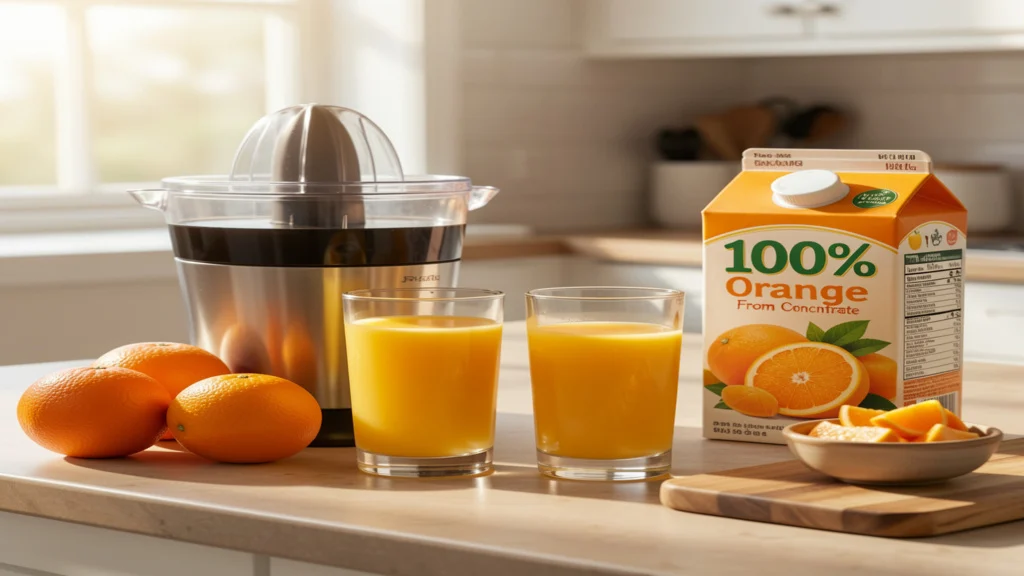
“From concentrate” means that the water has been removed from fruit juice to create a concentrated form, and later water is added back to restore the juice before it is packaged and sold.
When you pick up a bottle of orange juice at the grocery store, you might notice a label that says “from concentrate.” For many people, this phrase raises questions. Does it mean the juice is less healthy? Is it artificial? Is it different from fresh juice?
These questions are common because the term appears on many juice cartons and bottles, yet most people are not exactly sure what it means. The truth is that juice made from concentrate is very common around the world, and understanding how it works can help you make smarter choices when buying beverages.
In this guide, we will explain exactly what from concentrate means in juice, how juice concentrate is made, why companies use it, how it compares to not-from-concentrate juice, and whether it is healthy. You will also find examples, comparison tables, and answers to frequently asked questions to help you fully understand the topic.
What Does From Concentrate Mean in Juice?
The process usually works like this:
- Fresh fruit is squeezed to extract juice.
- The water in the juice is removed through evaporation.
- The remaining concentrated juice is stored or transported.
- Water is added back later to recreate the drinkable juice.
Even though the juice starts as real fruit juice, it is processed so it can be stored and transported more efficiently.
For example, many orange juices sold in supermarkets are made from concentrate. The juice may be squeezed in one country, concentrated to remove water, transported elsewhere, and then reconstituted with water before packaging.
The Origin of Juice Concentrate
Juice concentrate became popular in the mid twentieth century when food companies were searching for ways to preserve fruit juice for longer periods of time.
Fresh juice spoils quickly because it contains natural sugars and nutrients that allow bacteria to grow. In the past, this made it difficult to ship juice across long distances.
Scientists developed the concentrate process to solve this problem. By removing most of the water, the juice became smaller in volume, easier to store, and less likely to spoil quickly.
The technique became widely used after frozen orange juice concentrate was introduced in the 1940s. It allowed households to keep juice in the freezer and simply mix it with water when needed.
Since then, the method has evolved. Today, most concentrated juice is not sold frozen but is reconstituted by manufacturers before being bottled or packaged.
Why Juice Companies Use Concentrate
There are several practical reasons why juice manufacturers produce juice from concentrate.
First, it reduces transportation costs. Removing water makes the juice much lighter and smaller in volume, which means companies can ship more product using less space.
Second, concentrate helps preserve the juice. Without most of the water, bacteria and microorganisms grow more slowly, which extends shelf life.
Third, concentrate allows companies to produce juice all year round. Fruits like oranges, apples, and grapes are harvested during specific seasons. Concentrated juice can be stored for months and used when fresh fruit is not available.
Finally, it helps maintain consistent flavor. Juice producers can blend concentrate from different batches to create a uniform taste in every bottle.
How Juice Concentrate Is Made
The production process is more scientific than many people realize, but it follows a clear sequence.
First, fresh fruit is harvested and cleaned thoroughly. After cleaning, the fruit is crushed or squeezed to extract its natural juice.
Next, the juice goes through a process called evaporation. During this stage, the juice is gently heated so that water evaporates and separates from the liquid. This reduces the volume of the juice and creates a thicker, concentrated form.
The concentrate may then be frozen or stored in sealed containers to preserve its quality. When it is time to produce the final product, the manufacturer adds water back to the concentrate to restore it to its original strength.
Some companies also add natural flavors or aroma compounds that were removed during processing. These are usually derived from the same fruit.
Example Table: Steps in the Juice Concentrate Process
| Step | What Happens | Purpose |
|---|---|---|
| Fruit harvesting | Fresh fruit is picked and washed | Ensures clean ingredients |
| Juice extraction | Fruit is squeezed or pressed | Produces natural juice |
| Water removal | Juice is heated to remove water | Creates concentrate |
| Storage | Concentrate is stored or frozen | Extends shelf life |
| Reconstitution | Water is added again | Restores drinkable juice |
This process allows juice companies to maintain supply even when fresh fruit is not in season.
From Concentrate vs Not From Concentrate Juice
Many juice cartons also say “not from concentrate.” Understanding the difference helps consumers choose the type of juice they prefer.
Juice that is not from concentrate is typically squeezed from fruit and then pasteurized before packaging. It does not go through the evaporation and rehydration process.
Juice from concentrate goes through the concentration stage where water is removed and later added back.
Comparison Table: From Concentrate vs Not From Concentrate
| Feature | From Concentrate Juice | Not From Concentrate Juice |
|---|---|---|
| Processing | Water removed then added back | Minimal processing |
| Shelf life | Usually longer | Often shorter |
| Transportation | Easier and cheaper | More expensive |
| Flavor | Sometimes slightly altered | Closer to fresh juice |
| Price | Usually cheaper | Usually more expensive |
Both types start as real fruit juice, but the level of processing is different.
Is Juice From Concentrate Healthy?
Many people worry that juice from concentrate is unhealthy or artificial. In reality, the answer is more balanced.
Juice from concentrate still comes from real fruit and usually contains vitamins and minerals found in the original juice. However, some nutrients may decrease slightly during processing.
For example, vitamin C can be sensitive to heat and storage conditions, so small amounts may be lost during concentration.
Another factor to consider is added ingredients. Some juice products from concentrate contain added sugars, sweeteners, or preservatives. These additions can affect the overall health value.
Therefore, when choosing juice, it is helpful to read the nutrition label and ingredient list.
Example Table: Nutritional Considerations
| Factor | From Concentrate Juice | Fresh Juice |
|---|---|---|
| Vitamins | Usually present but may be slightly reduced | Typically highest |
| Sugar content | Depends on brand and added sugars | Naturally occurring sugars |
| Fiber | Usually very low | Low but sometimes slightly higher |
| Processing level | Moderate | Minimal |
In general, both types can be part of a balanced diet when consumed in moderation.
Real Life Examples of Juice Labels
Understanding label wording can help you recognize what you are buying.
Example one:
“100 percent orange juice from concentrate.”
This means the juice started as real orange juice but was concentrated and later rehydrated.
Example two:
“Not from concentrate.”
This means the juice was squeezed and processed without removing water.
Example three:
“Juice drink from concentrate.”
This often indicates a beverage with added sugar, flavorings, or water, and may contain less real juice.
Reading labels carefully ensures you know exactly what is inside your drink.
Why Some People Prefer Not From Concentrate Juice
Although juice from concentrate is widely used, some consumers prefer not from concentrate products.
One reason is taste. Some people believe juice that has not been concentrated tastes closer to freshly squeezed fruit.
Another reason is the perception of naturalness. Because not from concentrate juice goes through fewer processing steps, many consumers see it as more natural.
However, it is important to remember that both types are commonly pasteurized for safety and shelf stability.
Common Misconceptions About Juice Concentrate
Several myths surround juice concentrate.
One common misconception is that juice from concentrate is fake juice. In reality, it still begins as real fruit juice.
Another misconception is that all concentrate juice contains artificial ingredients. Many brands contain only fruit juice and water.
Some people also believe concentrate juice is always unhealthy. While it can contain added sugars in some products, many options are simply reconstituted fruit juice.
Understanding these details helps separate facts from marketing myths.
Practical Tips for Choosing Juice
If you are shopping for juice, there are several simple things to look for.
First, check the ingredient list. Ideally, the label should list fruit juice as the main ingredient.
Second, look for “100 percent juice.” This indicates that the drink is made entirely from fruit juice without added sugar.
Third, check the nutrition label to understand sugar and calorie content.
Finally, consider your preferences. Some people prefer the taste of not from concentrate juice, while others enjoy the convenience and price of juice made from concentrate.
FAQs
What does from concentrate mean on a juice label?
It means the juice had water removed to form a concentrate and later had water added back before packaging.
Is juice from concentrate real juice?
Yes, it usually starts as real fruit juice. The only difference is that the water was removed and then added back later.
Is from concentrate juice unhealthy?
Not necessarily. It still contains many nutrients, but some vitamins may decrease slightly during processing. The healthiness also depends on whether sugar or additives are included.
Why do companies make juice from concentrate?
It makes transportation easier, extends shelf life, and allows juice to be produced throughout the year.
Does from concentrate juice taste different?
Sometimes the flavor may be slightly different because of processing, but many people cannot tell the difference.
What is better, from concentrate or not from concentrate?
Neither is automatically better. Not from concentrate juice is less processed, but both types can contain similar nutrients.
Does from concentrate juice contain added sugar?
Some products do, while others do not. Checking the label is the best way to know.
Can juice concentrate be used in cooking?
Yes, juice concentrate is often used in baking, sauces, smoothies, and desserts because of its strong fruit flavor.
Conclusion
The phrase “from concentrate” on a juice label simply means that water was removed from the juice to create a concentrated form and later added back before packaging. This process helps manufacturers store, transport, and distribute juice more efficiently.
Although some people assume that juice from concentrate is artificial or unhealthy, it still begins as real fruit juice and often contains many of the same nutrients. The main differences involve processing methods, taste preferences, and shelf life.
Understanding what from concentrate means allows you to make more informed choices when buying juice. By checking labels, reading ingredients, and considering your taste preferences, you can select the juice that best fits your lifestyle.
Whether you prefer juice from concentrate or not from concentrate, the most important thing is enjoying it as part of a balanced diet.
Read More Related Articles:
- What Does Roofied Mean in Slang: Real-World Usage In 2026
- + and – Mean in a Car Gear Shift: Hidden Feature Explained In 2026
- What Does DWBI Mean in Text: Full Explanation In 2026

John Miller is a professional meanings writer at Meanzy.com, specializing in word definitions, internet slang, acronyms, and text abbreviations. He focuses on delivering clear, accurate explanations with practical examples, helping readers easily understand modern digital terms and their real-life usage.