
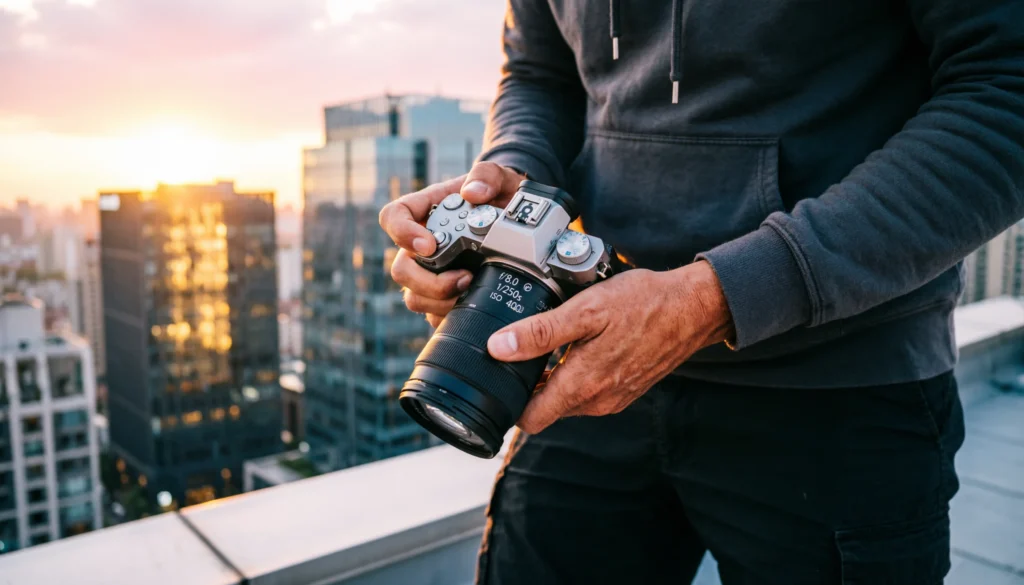
Exposure in photography refers to the amount of light that reaches your camera sensor when taking a photo.
It determines how bright or dark an image appears and is controlled by three main settings: aperture, shutter speed, and ISO.
Ever taken a photo that looked too dark or completely washed out? You had the perfect moment. The perfect angle. But the lighting ruined it. That is where exposure comes in.
Before you master composition, lenses, or editing, you need to understand exposure. It is the foundation of photography. Get it right, and your images look balanced, natural, and professional. Get it wrong, and even the best camera cannot save the shot.
Simple. Practical. Essential. Now let us break it down in detail.
Understanding Exposure in Photography
Exposure is all about light. Photography literally means drawing with light. Without light, there is no image.
When you press the shutter button, light enters your camera through the lens and hits the sensor. The amount of light allowed in determines whether your image looks:
- Properly exposed
- Overexposed
- Underexposed
A properly exposed image has balanced brightness. Details are visible in both shadows and highlights.
An overexposed image looks too bright. Highlights may appear white and washed out.
An underexposed image looks too dark. Shadow details may be lost.
Think of exposure as filling a glass with water. Too little water leaves the glass half empty. Too much water makes it overflow. The goal is to fill it just right.
The Exposure Triangle Explained
Exposure is controlled by three key elements often called the exposure triangle:
- Aperture
- Shutter speed
- ISO
These three settings work together. Changing one affects the others.
1. Aperture
Aperture refers to the opening inside your lens that lets light in. It is measured in f numbers such as f2.8, f5.6, or f11.
- Lower f number means a wider opening and more light
- Higher f number means a smaller opening and less light
Aperture also affects depth of field. A wide aperture creates blurry backgrounds. A narrow aperture keeps more of the scene in focus.
2. Shutter Speed
Shutter speed controls how long the camera sensor is exposed to light.
- Fast shutter speed lets in less light and freezes motion
- Slow shutter speed lets in more light and can create motion blur
For example, 1 by 1000 second freezes a runner mid step. One full second can blur moving water beautifully.
3. ISO
ISO controls your camera sensor sensitivity to light.
- Low ISO such as 100 produces clean images with less noise
- High ISO such as 3200 makes images brighter but may introduce grain
In low light situations, increasing ISO helps brighten the image.
Exposure Settings Overview Table
Here is a simple breakdown to help you understand how each setting affects your photo:
| Setting | Controls | More Light Means | Less Light Means | Additional Effect |
|---|---|---|---|---|
| Aperture | Size of lens opening | Lower f number | Higher f number | Affects depth of field |
| Shutter Speed | Duration of exposure | Slower speed | Faster speed | Affects motion blur |
| ISO | Sensor sensitivity | Higher ISO | Lower ISO | Affects image noise |
This balance is what makes photography both technical and creative.
What Is Proper Exposure?
A properly exposed photo has balanced tones. Highlights are not blown out. Shadows are not crushed.
Most cameras include an exposure meter. It shows whether your current settings will produce a balanced image.
- If the meter is centered, your camera believes the image is correctly exposed.
- If it leans toward the plus side, it may be overexposed.
- If it leans toward the minus side, it may be underexposed.
Professional photographers often adjust exposure intentionally for artistic reasons. A darker image can create drama. A brighter image can feel light and airy.
Origin and Evolution of the Term Exposure
The term exposure comes from early film photography. Photographers literally exposed film to light inside a camera.
In the 1800s, exposure times could last several minutes. Subjects had to sit perfectly still.
As technology evolved, cameras became faster and more precise. With the introduction of digital photography in the late 20th century, exposure became easier to control and preview instantly.
Today, exposure remains a central concept whether you are using a DSLR, mirrorless camera, or even a smartphone.
Real World Usage of Exposure in Photography
Exposure is used in many practical scenarios:
Portrait Photography
A photographer may slightly overexpose to create soft, glowing skin tones. This often gives a friendly and flattering look 😊
Landscape Photography
Balanced exposure ensures details are visible in both the bright sky and darker foreground.
Night Photography
Long exposures allow more light in to capture city lights or stars.
Sports Photography
Fast shutter speeds prevent motion blur while maintaining proper brightness.
In conversation, photographers might say:
Friendly tone
The exposure looks perfect. The lighting feels natural.
Neutral tone
The exposure needs adjustment. Increase the shutter speed.
Negative tone
This photo is badly overexposed. The highlights are completely blown out.
Exposure is not just technical. It affects mood and storytelling.
Examples of Exposure in Context
Here are practical examples:
| Scenario | Settings Used | Result |
|---|---|---|
| Sunny beach portrait | ISO 100, f8, 1 by 500 sec | Balanced and bright |
| Indoor birthday party | ISO 1600, f2.8, 1 by 125 sec | Bright but slightly grainy |
| Night city lights | ISO 200, f11, 10 seconds | Sharp lights with motion trails |
| Fast moving car | ISO 400, f4, 1 by 1000 sec | Frozen motion |
Each setting combination changes the exposure and overall look.
Exposure vs Brightness vs Lighting
Many beginners confuse exposure with brightness or lighting.
Here is the difference:
| Term | Meaning | Controlled By |
|---|---|---|
| Exposure | Amount of light reaching the sensor | Aperture, shutter speed, ISO |
| Brightness | How light or dark the image appears | Exposure and editing |
| Lighting | Light source in the environment | Natural or artificial light |
Lighting exists outside the camera. Exposure controls how that lighting is captured.
Exposure Compensation Explained
Most cameras have exposure compensation. It is marked with a plus and minus symbol.
If your image looks too dark, you can dial plus one.
If it looks too bright, dial minus one.
This feature is useful in automatic modes when the camera misjudges lighting conditions.
For example, in snow scenes, cameras often underexpose because snow reflects so much light. Adding plus exposure compensation corrects this.
Alternate Meanings of Exposure
Outside photography, exposure can mean:
- Being exposed to something such as sunlight or chemicals
- Public revelation of secrets
- Financial risk in business
However, in photography, exposure strictly refers to light hitting the sensor.
Professional Alternatives or Related Terms
While exposure is the standard term, you may also hear:
- Proper exposure
- Correct exposure
- Balanced exposure
- Light balance
- Exposure value also called EV
Exposure value measures combinations of aperture and shutter speed that result in the same brightness.
Practical Tips to Improve Exposure
Here are beginner friendly tips:
- Start with ISO 100 in daylight
- Use aperture priority mode to control depth of field
- Check your histogram instead of just looking at the screen
- Avoid extremely high ISO unless necessary
- Practice in different lighting conditions
The histogram is especially helpful. It shows the distribution of light tones from dark to bright.
Common Exposure Mistakes
- Relying only on auto mode
- Ignoring highlights
- Forgetting to adjust ISO in low light
- Using slow shutter speed without a tripod
- Overcorrecting and losing natural tones
Photography is a balance between technical accuracy and artistic choice.
FAQs
What does exposure mean in simple words?
Exposure means how much light enters the camera when taking a photo. It determines whether the picture looks bright, dark, or balanced.
What are the three components of exposure?
The three components are aperture, shutter speed, and ISO. Together they control how light reaches the camera sensor.
What happens if a photo is overexposed?
An overexposed photo looks too bright. Important details in highlights may appear white and washed out.
What causes underexposure?
Underexposure happens when not enough light reaches the sensor. The image appears too dark and may lose shadow details.
Is exposure the same as brightness?
Not exactly. Exposure refers to the light captured by the camera. Brightness describes how light the image appears, which can also be adjusted in editing.
How can I fix bad exposure?
You can adjust aperture, shutter speed, or ISO. In editing software, you can also tweak exposure settings, but extreme corrections may reduce image quality.
What is good exposure in photography?
Good exposure means highlights and shadows both retain detail. The image looks natural and balanced.
Do smartphones control exposure automatically?
Yes, most smartphones automatically adjust exposure. However, many allow manual control through pro mode settings.
Conclusion
So what does exposure mean in photography?
It means controlling light, balancing aperture, shutter speed, and ISO. It means deciding how bright or dramatic your photo will look.
Exposure is both technical and creative. Mastering it allows you to shoot confidently in any lighting condition.
- Exposure controls brightness through light
- Aperture affects depth of field
- Shutter speed affects motion
- ISO affects sensitivity and noise
- Balance is everything
Practice adjusting one setting at a time. Experiment in different environments. Review your results. Over time, understanding exposure will become second nature.
When you truly understand exposure, you stop guessing and start creating.
Read More Related Articles:
- Hybrid Mean in School: Flexible Future of Learning In 2026
- OTR Meaning in Texting: How Context Changes Its Tone (2026)
- XD Means in Theaters: Why Movie Lovers Choose This Format In 2026

Rachel Monroe is a digital content writer at Meanzy.com who focuses on explaining modern words, phrases, and online expressions. Her writing style is simple, practical, and reader-focused, helping users quickly understand the meaning and usage of today’s evolving language.