
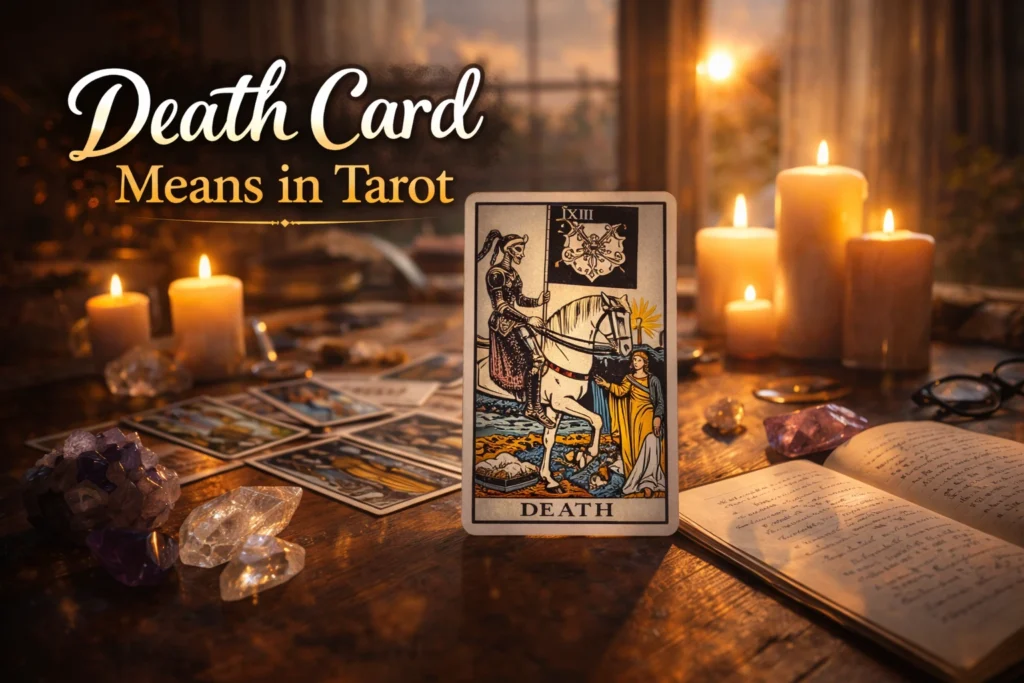
The Death card in tarot does not predict physical death. Instead, it represents transformation, endings, and new beginnings.
It signifies the conclusion of one chapter and the chance to embrace growth, change, and personal evolution.
If you’ve ever drawn the Death card during a reading, it’s natural to feel a jolt of anxiety. The name and imagery can be intimidating. But rather than a symbol of doom, this card is a powerful reminder that life moves in cycles. Endings make way for beginnings, challenges create opportunities, and letting go is often the first step toward renewal. Whether you’re exploring love, career, personal growth, or spirituality, the Death card carries a meaningful message about transformation and embracing life’s inevitable changes.
Origin of the Death Card in Tarot
The tarot deck originated in 15th century Europe, initially as a playing card deck before evolving into a tool for divination. The Death card is part of the Major Arcana, a set of cards representing major life events and spiritual lessons.
- Early depictions: Early tarot decks often portrayed a skeletal figure with a scythe, cutting through life indiscriminately. This imagery symbolized the inevitability of endings and the natural flow of change.
- Symbolism: Common symbols on the Death card include skeletons, scythes, rising suns, rivers, and butterflies—all highlighting cycles of transformation, rebirth, and renewal.
- Popularity: Despite its ominous appearance, the Death card has grown in popularity because it carries deep spiritual meaning. Modern readers recognize it as a card signaling opportunity, not fear.
Real-World Usage of the Death Card
In practical tarot readings, the Death card shows up in various areas of life:
- Personal growth: Encourages releasing outdated habits, toxic relationships, or limiting beliefs.
- Career and finance: Signals the end of a job, project, or financial phase, opening doors for new opportunities.
- Relationships: May indicate a relationship ending, a major transition in a partnership, or the start of a healthier dynamic.
- Health and lifestyle: Suggests transformative changes, such as new routines, healing practices, or letting go of harmful habits.
Although the name might trigger worry, the Death card is ultimately a message of empowerment, growth, and renewal.
Examples of the Death Card in Different Contexts
Here’s how the Death card may appear in various readings:
| Context | Interpretation | Tone |
|---|---|---|
| Love | Ending a relationship or transitioning to a new phase | Friendly/constructive |
| Career | Shifting careers, projects, or roles | Neutral/professional |
| Personal Development | Letting go of old habits, beliefs, or patterns | Positive/encouraging |
| Health | Lifestyle changes or recovery journeys | Supportive/advisory |
| Spirituality | Spiritual awakening or transformation | Insightful/inspirational |
Example Scenario:
If someone draws the Death card while asking about their career, it could signal leaving a stagnant job. While this change may feel unsettling at first, the card suggests that this ending will create space for growth and new opportunities.
Comparison with Related Tarot Cards
The Death card shares themes with other tarot cards but also has distinct nuances:
| Card | Similarity | Difference |
|---|---|---|
| The Tower | Change, upheaval, and disruption | Tower is sudden and chaotic; Death is natural and inevitable |
| The Hanged Man | Transformation through perspective | Hanged Man focuses on pause and reflection; Death emphasizes endings leading to new beginnings |
| Judgement | Rebirth, renewal, evaluation | Judgement emphasizes spiritual awakening; Death emphasizes practical life transitions |
| Temperance | Adaptation and balance | Temperance seeks harmony during transitions; Death encourages full acceptance of change |
Understanding these distinctions helps readers interpret the Death card more accurately in different spreads.
Alternate Meanings of the Death Card
While transformation is the main theme, the Death card can carry other subtle meanings:
- Positive transformation: Growth, letting go of negativity, embracing new possibilities.
- Neutral: Completion of life cycles, natural closure, transition.
- Challenging/negative: Loss, abrupt endings, difficulty accepting change.
The surrounding cards and context of the reading heavily influence the interpretation.
Polite or Professional Alternatives to “Death Card”
For sensitive audiences, use these alternatives without losing meaning:
- Transformation card
- Ending and new beginnings card
- Rebirth card
- Change card
These options communicate the card’s message without triggering fear.
Tips for Interpreting the Death Card
- Look at context first: Consider the question and surrounding cards.
- Emphasize transformation: Focus on growth opportunities rather than fear.
- Encourage action: Highlight areas where letting go can create progress.
- Balance with positive cards: Pair with cards like The Sun or Ace of Cups to highlight renewal.
- Avoid literal panic: Reinforce symbolic rather than physical interpretations.
Practical Examples Table
| Situation | Card Interpretation | Advice |
|---|---|---|
| Ending a friendship | Necessary closure | Allow space for new supportive connections |
| Career stagnation | Signals career shift | Explore opportunities and update skills |
| Personal habit | Letting go of harmful habits | Develop healthier routines |
| Moving homes | Represents transition | Embrace new environment with an open mindset |
FAQs
1. Does the Death card mean someone will die?
No. The Death card represents change, transformation, and endings—not literal death.
2. Is the Death card always negative?
No. It often signifies positive transformation, personal growth, and new beginnings.
3. Can the Death card appear in love readings?
Yes. It may indicate the end of a relationship or a transformation in an existing relationship.
4. How do I handle fear when drawing the Death card?
Focus on growth, cycles, and renewal instead of the dramatic imagery.
5. What does the reversed Death card mean?
Reversed, it can suggest resistance to change, stagnation, or delaying necessary endings.
6. Can the Death card indicate career changes?
Yes. It often points to job transitions, career endings, or the start of new projects.
7. How does the Death card relate to spirituality?
It can indicate spiritual awakening, rebirth, or significant shifts in personal consciousness.
8. Are there tarot cards similar to the Death card?
Yes. The Tower, Judgement, and The Hanged Man share themes of transformation but with different emphases.
Conclusion:
The Death card is a symbol of transformation, not doom. It encourages letting go of what no longer serves you, embracing endings, and welcoming new beginnings. Understanding the card in context allows for more accurate interpretations and empowers you to navigate life’s changes with clarity.
- Endings are part of life’s natural cycle.
- Focus on growth, opportunity, and personal development.
- Use surrounding cards to refine your interpretation.
- Consider positive phrasing for sensitive readings.
Read More Related Articles:
- Hallowed Mean in the Bible: Biblical Significance (2026)
- What Does Pump Mean in the Gym? The Feeling Lifters Chase In 2026
- True Meaning of Carne Asada in English: It’s More Than Food For 2026

Megan Foster is a thoughtful and creative content creator at Meanzy.com with a strong curiosity for language and communication. Known for her clarity and attention to detail, she simplifies confusing slang, acronyms, and modern terms into easy, relatable meanings readers can trust.