
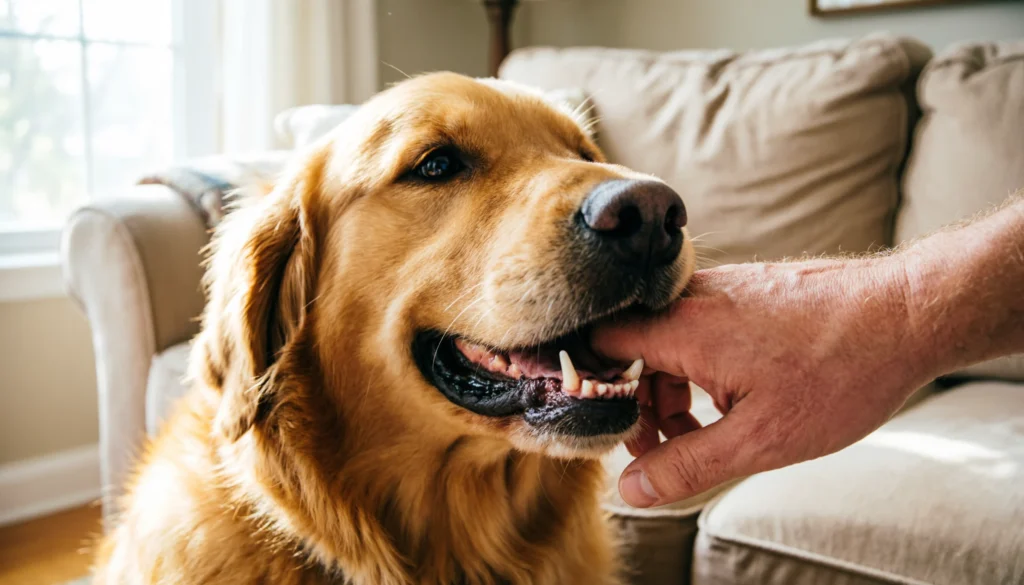
Cobbing in dogs is a gentle nibbling behavior where a dog uses its front teeth to lightly chew or “nibble” on a person, another dog, or an object as a sign of affection, grooming, playfulness, or comfort. It is sometimes called the “cute nibble” and usually does not hurt.
If your dog gently nibbles on your arm, blankets, or even another dog using their tiny front teeth, you might wonder, What is my dog doing? Is it biting? Grooming? Playing?
You are likely seeing a behavior called cobbing.
Now let’s explore what cobbing really means, why dogs do it, whether it is normal, and when you should pay attention.
Understanding Cobbing in Dogs
Cobbing is often described as a dog using its small front incisors to gently pull, nibble, or chatter on skin, clothing, fur, or objects. It looks a bit like a person nibbling corn off a cob, which is actually where the name comes from.
This behavior is commonly seen in puppies but can continue into adulthood. Many dog owners interpret cobbing as a sign of affection because it often happens during relaxed moments.
You might notice your dog cobbing when:
- You are petting them
- They are lying beside you
- They are grooming another dog
- They are feeling excited but calm
- They are self soothing
In most cases, cobbing is completely normal.
Origin of the Term Cobbing
The word “cobbing” is not a formal veterinary term. It is a slang or casual term used by dog owners and trainers. The name likely comes from the image of chewing corn off the cob.
The behavior itself relates to natural canine grooming instincts. Dogs descended from wolves, including the modern domestic dog Canis lupus familiaris, inherited social grooming behaviors used to strengthen bonds within the pack.
In wild and feral dog groups, grooming helps:
- Remove dirt and parasites
- Build trust
- Establish social bonds
- Reinforce pack relationships
Cobbing appears to be a softer version of that grooming instinct.
Why Do Dogs Cob? Common Reasons
Cobbing can have several meanings depending on the context. Let’s break down the most common reasons.
1. Affection and Bonding ❤️
Many dogs cob the people they love. It is similar to grooming between dogs. When your dog gently nibbles your hand, they may be expressing comfort and attachment.
Signs it is affectionate cobbing:
- Relaxed body language
- Soft eyes
- Wagging tail
- Calm breathing
2. Social Grooming
Dogs groom each other in areas that are hard to reach. If your dog cobbles another dog’s ears, neck, or collar area, it is often grooming behavior.
This is especially common between bonded dogs.
3. Playfulness 🎾
Some dogs cob during play. It can happen alongside play bows, bouncing movements, and excited energy.
Play cobbing usually:
- Alternates with licking
- Includes loose body posture
- Stops when play pauses
4. Attention Seeking
If your dog notices that cobbing makes you laugh or react, they may repeat the behavior to get attention.
5. Self Soothing or Mild Anxiety
In some cases, dogs cob blankets, toys, or even themselves to calm down. This may happen:
- Before sleeping
- During mild stress
- When adjusting to new environments
6. Teething in Puppies
Puppies often nibble because their gums itch. Cobbing may simply feel good.
Is Cobbing Normal in Dogs?
Yes, cobbing is generally normal and harmless.
However, context matters.
Here is a simple comparison table.
Table 1: Normal vs Concerning Cobbing
| Behavior | Normal Cobbing | Concerning Behavior |
|---|---|---|
| Pressure | Gentle, soft nibbling | Hard biting or pinching |
| Body Language | Relaxed, wagging tail | Stiff posture, growling |
| Frequency | Occasional | Obsessive or constant |
| Skin Impact | No marks | Redness, bruising |
| Emotional State | Calm or playful | Anxious or agitated |
If cobbing causes pain or becomes compulsive, it may need training or a vet check.
Cobbing vs Biting vs Mouthing
Dog owners often confuse cobbing with other mouth behaviors.
Table 2: Differences Between Cobbing, Mouthing, and Biting
| Behavior | What It Looks Like | Intention | Should You Worry |
|---|---|---|---|
| Cobbing | Tiny front teeth nibbling | Affection or grooming | Rarely |
| Mouthing | Whole mouth around hand | Play or exploration | Usually no |
| Biting | Firm clamp with pressure | Fear, aggression, or pain | Yes |
Cobbing is typically delicate and repetitive. Biting is forceful and serious.
Cobbing in Different Situations
Let’s look at real life examples.
Friendly Context 😊
You are watching TV. Your dog lies beside you and gently nibbles your sleeve. Their body is loose and relaxed.
Meaning: Likely affection or comfort.
Neutral Context
Your dog nibbles another dog’s neck during playtime.
Meaning: Social grooming or play behavior.
Negative or Dismissive Context ⚠️
Your dog repeatedly nibbles themselves until their skin becomes irritated.
Meaning: Could indicate anxiety, allergies, or skin issues.
Cobbing Behavior by Age
Table 3: Cobbing Across Life Stages
| Life Stage | Common Reason for Cobbing |
|---|---|
| Puppy | Teething and exploration |
| Adolescent | Play and social bonding |
| Adult | Affection and grooming |
| Senior | Comfort seeking or habit |
Should You Stop Your Dog from Cobbing?
It depends.
You may allow it if:
- It is gentle
- It does not hurt
- It does not embarrass guests
- It is not obsessive
You may want to redirect if:
- It becomes too rough
- It happens excessively
- It targets strangers
- It causes skin irritation
Training tips:
- Gently withdraw attention if it becomes too much
- Redirect to a toy
- Reward calm behavior
- Stay consistent
Avoid yelling or punishing. Cobbing is rarely aggressive.
Is Cobbing a Sign of Dominance?
No. Cobbing is not linked to dominance theory. Modern canine behavior science has moved away from outdated dominance myths popularized in older training models.
Affectionate nibbling is about bonding, not control.
Can Cobbing Be a Medical Issue?
Sometimes.
If cobbing is:
- Focused on one body area
- Paired with hair loss
- Linked with itching
- Sudden in onset
It may relate to:
- Allergies
- Fleas
- Skin infections
- Stress related behaviors
When in doubt, consult your veterinarian.
Alternate Meanings of Cobbing
Outside of dog behavior, cobbing can have different meanings:
- In horses, a cob is a type of sturdy horse breed
- In geology, cobbing refers to breaking ore into smaller pieces
- In informal slang, it may mean chewing vigorously
However, in pet related discussions, cobbing almost always refers to dog nibbling behavior.
How Popular Is the Term Cobbing?
Cobbing has become more popular on social media platforms and pet forums. Dog owners share videos of their pets gently nibbling with captions like:
“My dog corn cobs me when he loves me.”
While not a clinical term used by organizations like the American Kennel Club, it is widely recognized in dog owner communities.
Tone and Social Meaning
Unlike some slang terms, cobbing is usually positive.
Tone examples:
Affectionate tone
“He is cobbing me again. He must really love me.”
Playful tone
“Stop cobbing my sweater, you silly pup.”
Concerned tone
“She keeps cobbing her paws. I think something is wrong.”
The tone depends on context.
FAQs
What does cobbing mean in dogs?
Cobbing means a dog is gently nibbling using its front teeth as a sign of affection, grooming, or comfort.
Is cobbing the same as biting?
No. Cobbing is soft and gentle. Biting involves pressure and can cause injury.
Why does my dog cob me but not others?
Dogs often cob people they feel bonded to. It is usually a sign of trust and affection.
Should I let my dog cob me?
If it is gentle and not excessive, it is usually fine. If it becomes annoying or rough, redirect the behavior calmly.
Why does my dog cob blankets or toys?
This can be self soothing behavior, especially before sleep or during mild stress.
Do puppies cob more than adult dogs?
Yes. Puppies cob frequently due to teething and exploration.
Is cobbing a sign of anxiety?
Sometimes. If it becomes repetitive or obsessive, anxiety could be involved.
Can cobbing hurt?
It should not hurt. If it does, it may be more than cobbing and should be corrected.
Practical Tips for Dog Owners
- Observe body language first
- Look at frequency and intensity
- Redirect gently if needed
- Avoid punishment
- Consult a vet if skin issues appear
Most of the time, cobbing is simply your dog’s sweet way of saying, “I feel safe with you.”
Conclusion
So, what does cobbing mean in dogs?
In simple terms, cobbing is a gentle nibbling behavior that usually signals affection, social bonding, grooming, or comfort. It is normal, common, and often adorable.
While it is generally harmless, pay attention to context. Gentle cobbing with relaxed body language is positive. Persistent or rough nibbling may need training or medical evaluation.
Understanding cobbing helps you better interpret your dog’s communication style. Dogs may not speak our language, but through small behaviors like cobbing, they tell us a lot about how they feel.
When your dog softly nibbles your sleeve tonight, you will know exactly what it means.
Read More Related Articles:
- Lethargic Mean in Dogs: Signs Every Owner Should Know In 2026
- Hidden Meaning of Karaoke: A Japanese Word That Took Over the World In 2026
- Rebound Meaning in Basketball: Offensive vs Defensive Explained In 2026

John Miller is a professional meanings writer at Meanzy.com, specializing in word definitions, internet slang, acronyms, and text abbreviations. He focuses on delivering clear, accurate explanations with practical examples, helping readers easily understand modern digital terms and their real-life usage.