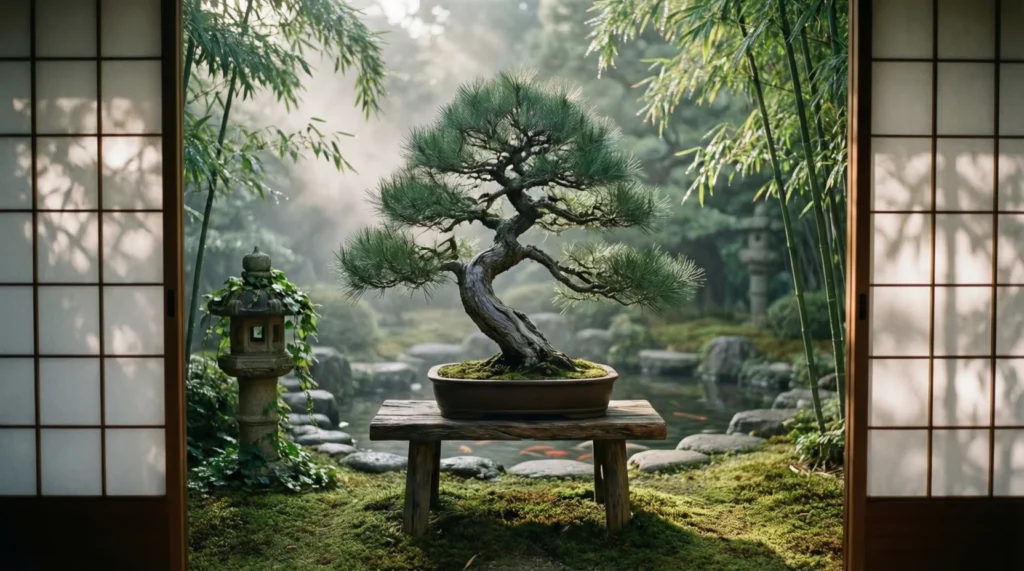
Bonsai (盆栽) is a Japanese word that literally means “planted in a shallow container.”
It refers to the art of growing and shaping miniature trees in pots using careful cultivation techniques, not genetic dwarfing.
Bonsai is one of those words that feels calm the moment you hear it. You picture a tiny, perfectly shaped tree, quiet patience, and a sense of balance. But what does bonsai actually mean in Japanese, and is it just about small trees?
Before we go deep into history, culture, and real usage, let’s start with a clear, featured-snippet-ready definition.
That simple translation already reveals something important. Bonsai is not about making trees small. It is about shaping nature with intention, patience, and respect.
In this guide, you will learn the literal meaning, cultural depth, origins, real-world usage, examples in context, and how bonsai compares with related terms. By the end, you will understand why bonsai is considered both an art form and a philosophy.
The Literal Meaning of Bonsai in Japanese
The Japanese word bonsai is written using two kanji characters.
Breakdown of the Word Bonsai
| Japanese Character | Reading | Meaning |
|---|---|---|
| 盆 | bon | Tray, shallow bowl, container |
| 栽 | sai | Planting, cultivation |
When combined, bonsai literally means “tray planting” or “planting in a shallow container.”
This definition matters because it explains a common misunderstanding. Bonsai does not mean “mini tree” or “tiny plant.” It describes a method of cultivation rather than a size.
A bonsai can be decades or even centuries old. Some famous bonsai trees are older than many countries.
What Bonsai Really Means Beyond the Literal Translation
In everyday Japanese usage, bonsai carries deeper cultural and emotional meaning.
Bonsai represents:
• Patience
• Balance
• Respect for nature
• Long-term thinking
• Quiet discipline
Unlike many hobbies, bonsai is not rushed. You do not “finish” a bonsai. You care for it, shape it, and then pass it on.
In Japan, bonsai is often associated with:
• Traditional aesthetics
• Zen philosophy
• Seasonal awareness
• Mindful living
This deeper meaning is why bonsai is often discussed alongside Japanese ideas like wabi-sabi (beauty in imperfection) and ma (the space between things).
The Origin of Bonsai: Where Did It Come From?
Although bonsai is strongly associated with Japan, its roots go back further.
Chinese Origins
The earliest form of bonsai began in China over 1,000 years ago. It was known as penjing, which means “tray scenery.”
Penjing focused on:
• Miniature landscapes
• Rocks, water, and trees together
• Artistic storytelling
Japanese monks encountered penjing through cultural exchange and brought the concept to Japan.
Japanese Evolution
Japan refined the practice and gave it a distinct identity.
Japanese bonsai became:
• More minimal
• Focused on a single tree
• Highly disciplined in form
• Guided by strict aesthetic rules
Over time, bonsai became deeply tied to Japanese culture, especially during the Edo period (1603 to 1868).
How Bonsai Is Used in Modern Japanese Language
In modern Japanese, bonsai is used both literally and metaphorically.
Literal Usage
Most commonly, bonsai refers to the actual art or object.
Examples:
• Bonsai o sodateru (to grow bonsai)
• Bonsai no tenrankai (bonsai exhibition)
• Bonsai ga suki desu (I like bonsai)
Metaphorical or Descriptive Usage
Sometimes, bonsai is used to describe something that is carefully refined, controlled, or miniaturized.
For example, someone might describe a very simplified system or model as a “bonsai version” of something larger.
This usage is usually neutral or slightly playful, not negative.
Bonsai in Real Life: Cultural and Global Popularity
Bonsai is no longer limited to Japan. Today, it is practiced worldwide.
Why Bonsai Became Globally Popular
Several reasons explain bonsai’s global appeal.
• Visual beauty
• Meditative process
• Connection to nature
• Fits small living spaces
• Long-term personal project
After World War II, bonsai gained international exposure through exhibitions, books, and Japanese cultural exchange.
Today, you can find bonsai clubs in Europe, North America, South Asia, and beyond.
Common Misconceptions About Bonsai
Many people misunderstand what bonsai actually means.
What Bonsai Is Not
| Myth | Reality |
|---|---|
| Bonsai trees are genetically small | Bonsai trees are normal trees |
| Bonsai is a type of tree | Bonsai is a growing technique |
| Bonsai is cruel to plants | Healthy bonsai live long lives |
| Bonsai is easy | Bonsai requires patience and skill |
Understanding the real meaning of bonsai helps correct these myths and deepens appreciation for the art.
Examples of Bonsai in Context
Here are examples showing how “bonsai” is used in different tones.
Friendly Tone
“I started learning bonsai during the pandemic. It really taught me patience.”
🌱 Friendly, relaxed, and personal.
Neutral or Informative Tone
“Bonsai is a traditional Japanese art form involving the cultivation of miniature trees in containers.”
This tone is common in educational writing and museums.
Slightly Playful or Metaphorical Tone
“They created a bonsai version of the project, smaller but still impressive.”
This usage is informal and creative, not insulting.
Types of Bonsai Styles and Their Meaning
Different bonsai styles express different ideas.
| Style Name | Japanese Term | Meaning or Feeling |
|---|---|---|
| Formal Upright | Chokkan | Strength and balance |
| Informal Upright | Moyogi | Natural movement |
| Slanting | Shakan | Resilience |
| Cascade | Kengai | Survival in harsh conditions |
| Forest | Yose-ue | Community and harmony |
Each style reflects how trees grow in nature, shaped by wind, gravity, and time.
Bonsai Compared With Related Terms
Bonsai is often confused with similar concepts. Let’s clear that up.
Bonsai vs Penjing
| Aspect | Bonsai | Penjing |
|---|---|---|
| Origin | Japan | China |
| Focus | Single tree | Landscape scenes |
| Style | Minimal and controlled | Artistic and expressive |
| Philosophy | Discipline and balance | Storytelling |
Bonsai vs Houseplants
Houseplants are grown for decoration and health benefits. Bonsai is an art form requiring shaping, pruning, and long-term vision.
Bonsai vs Dwarf Plants
Dwarf plants are genetically small. Bonsai trees are normal species trained through technique.
Alternate Meanings of Bonsai
Bonsai does not have many alternate meanings, but it can be used metaphorically.
In business or technology discussions, “bonsai version” may mean:
• A simplified model
• A smaller, refined system
• A controlled version of something large
This usage is informal and borrowed from the cultural image of bonsai rather than dictionary definition.
Polite or Professional Alternatives to the Word Bonsai
In professional or academic writing, you may want alternatives depending on context.
Possible alternatives include:
• Miniature tree cultivation
• Traditional Japanese horticulture
• Container-grown tree art
• Tree shaping techniques
However, when referring to the actual art, bonsai is always the most accurate term.
Bonsai and Japanese Philosophy
Bonsai reflects core Japanese values.
Key Philosophical Ideas Connected to Bonsai
• Wabi-sabi: Beauty in imperfection
• Zen: Mindfulness and presence
• Mono no aware: Awareness of impermanence
A bonsai changes slowly. It teaches acceptance of time and change, which is why many people describe bonsai as a quiet teacher.
FAQs:
1. What does bonsai literally mean in Japanese?
Bonsai literally means “planted in a shallow container” or “tray planting.”
2. Is bonsai a tree or an art form?
Bonsai is an art form and a cultivation technique, not a specific type of tree.
3. Are bonsai trees naturally small?
No. Bonsai trees are normal tree species that are shaped and maintained through careful pruning and training.
4. Is bonsai only Japanese?
The modern art of bonsai is Japanese, but its roots come from the Chinese practice of penjing.
5. Does bonsai have a spiritual meaning in Japan?
Yes. Bonsai is closely linked to Zen philosophy and symbolizes patience, balance, and harmony with nature.
6. Can the word bonsai be used metaphorically?
Yes. It can be used metaphorically to describe something refined, simplified, or carefully controlled.
7. Is bonsai difficult to learn?
Bonsai requires patience and consistency, but beginners can successfully learn it with proper guidance and practice.
8. Why is bonsai respected in Japanese culture?
Bonsai is respected because it represents discipline, long-term dedication, and deep respect for natural growth.
Conclusion:
Bonsai is far more than a decorative plant; it is a living art form rooted in philosophy and tradition. The word bonsai literally means “planted in a shallow container,” and it refers not to a specific tree species but to a careful method of cultivation and artistic expression. Bonsai reflects patience, balance, and deep respect for nature, encouraging long-term thinking rather than quick results. Although the practice originated in China, it was refined and elevated in Japan, where it gained its cultural and spiritual significance.
The term bonsai can also be used metaphorically to describe something that is refined, simplified, or deliberately controlled. If you are interested in bonsai, it’s best to start small—choose an easy species, learn basic pruning techniques, and focus on consistency instead of perfection. In the end, bonsai rewards those who are willing to grow alongside it over time.
Read More Related Articles:
- What GG Means in Texts: Ultimate Beginner-Friendly Guide (2026)
- Matthew Meaning in the Bible: Rooted in Faith & Divine Gift (2026)
- BYT Meaning in Text Messages: How to Use It Correctly (2026)

Rachel Monroe is a digital content writer at Meanzy.com who focuses on explaining modern words, phrases, and online expressions. Her writing style is simple, practical, and reader-focused, helping users quickly understand the meaning and usage of today’s evolving language.