
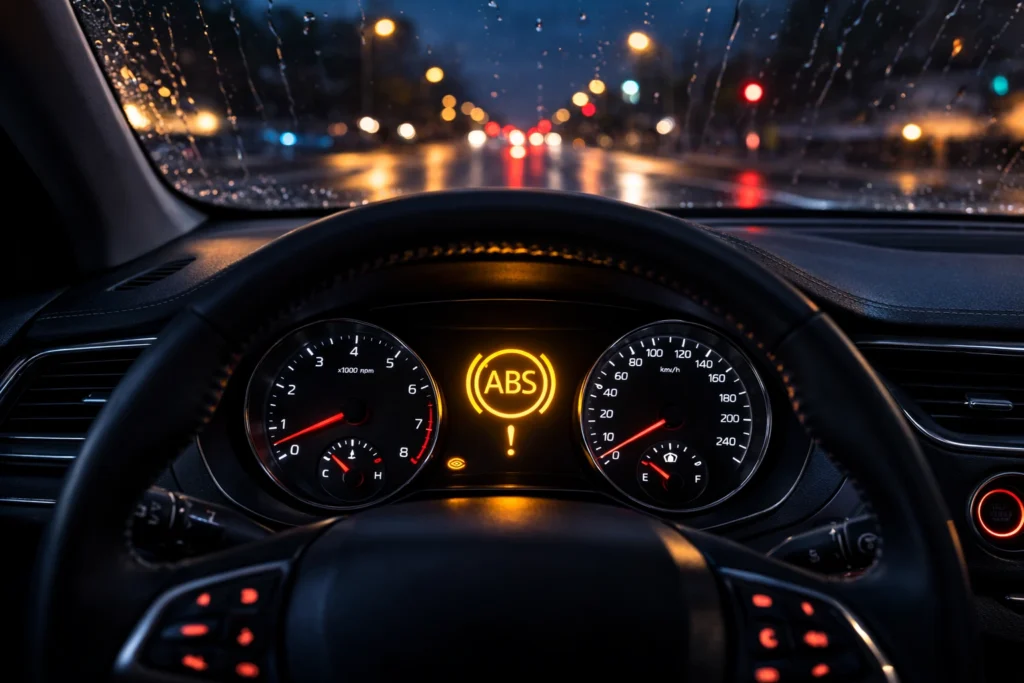
The ABS light in a car indicates a problem with the Anti-lock Braking System.
When this light turns on, it means the ABS is not functioning properly, although normal braking may still work.
The system should be checked as soon as possible to maintain safe braking performance.
If you are driving and suddenly see a yellow or orange “ABS” light glowing on your dashboard, it can instantly make you nervous. Is it dangerous? Can you still drive? Does it mean your brakes are failing?
You are not alone. One of the most common car-related searches online is: what does the ABS light mean in a car? And the answer is important for both safety and peace of mind.
Now let’s explore what that really means, why it happens, and what you should do next.
What Is ABS in a Car?
ABS stands for Anti-lock Braking System. It is a safety feature designed to prevent your wheels from locking up during hard braking.
When you slam on the brakes, especially on wet or slippery roads, your wheels can lock and cause the car to skid. ABS prevents that by rapidly pulsing the brakes, helping you:
- Maintain steering control
- Reduce skidding
- Improve stability
- Shorten stopping distance on certain surfaces
ABS became widely popular in the 1980s and 1990s and is now standard in most modern vehicles around the world. In many countries, it is legally required in new cars because of its proven safety benefits.
What Does the ABS Light Mean in a Car?
When the ABS light comes on, it means there is a fault in the Anti-lock Braking System.
Here is what that usually implies:
- The ABS system is disabled
- Regular braking still works in most cases
- The vehicle may not prevent wheel lock during emergency braking
- The issue needs diagnosis
Think of it like this. Your main brakes still work, but the advanced safety support system is temporarily offline.
Important Note
If the ABS light is on by itself, you can usually drive cautiously to a mechanic.
If the ABS light is on along with the brake warning light, stop driving and get immediate assistance. That could indicate a serious brake system issue.
How the ABS System Works
Understanding how ABS works helps explain why the light turns on.
The system includes:
- Wheel speed sensors
- ABS control module
- Hydraulic control unit
- Valves and pump
When you brake hard, sensors monitor each wheel’s speed. If one wheel slows down too quickly, the system pulses the brake pressure to that wheel.
Here is a simplified breakdown:
| Component | Function | What Happens If It Fails |
|---|---|---|
| Wheel Speed Sensor | Detects wheel rotation speed | ABS light may turn on |
| ABS Control Module | Processes sensor data | System may shut down |
| Hydraulic Pump | Restores brake pressure | Braking may feel unusual |
| Valves | Control brake pressure | Reduced ABS performance |
Even a small sensor issue can trigger the ABS warning light.
Common Reasons the ABS Light Comes On
There are several possible causes. Some are minor, while others need immediate attention.
1. Faulty Wheel Speed Sensor
This is the most common reason. Dirt, debris, or corrosion can interfere with sensor readings.
2. Damaged ABS Module
The control module can fail due to electrical issues or wear over time.
3. Low Brake Fluid
Low brake fluid can trigger multiple warning lights, including ABS.
4. Blown Fuse
Sometimes it is as simple as a blown fuse related to the ABS system.
5. Wiring Problems
Loose or damaged wiring can interrupt communication between sensors and the control module.
ABS Light vs Brake Light: What’s the Difference?
Many drivers confuse these two dashboard warnings.
| Warning Light | Meaning | Severity Level |
|---|---|---|
| ABS Light | Problem with Anti-lock Braking System | Moderate |
| Brake Warning Light | Issue with main brake system or parking brake | Serious |
| ABS + Brake Light Together | Possible major brake system failure | Critical |
If both lights are on at the same time, do not ignore it.
Is It Safe to Drive With the ABS Light On?
This is one of the most searched questions online.
The short answer is yes, but carefully.
If only the ABS light is on:
- Your normal brakes should still function
- Avoid hard braking
- Drive at reduced speed
- Get it checked soon
However, during rain, snow, or emergency stops, your car may skid more easily without ABS.
If the brake light is also on, do not drive. That could indicate brake failure.
Real-World Usage and Context
People often search for what does the ABS light mean in a car after experiencing one of these situations:
Friendly tone example
You start your car in the morning and notice the ABS light glowing. You think, “Hmm, that was not there yesterday.”
Neutral tone example
While driving normally, the ABS warning light appears and stays on without blinking.
Negative or stressful tone example
You press the brake suddenly on a wet road and feel the car slide slightly. You glance down and see the ABS light has been on.
The tone changes depending on urgency, but the meaning remains consistent. The Anti-lock Braking System needs attention.
What Should You Do When the ABS Light Turns On?
Here is a practical action plan.
Step 1: Restart the Car
Sometimes the light appears temporarily due to a minor glitch.
Step 2: Check Brake Fluid
Open the hood and inspect brake fluid levels.
Step 3: Scan for Error Codes
An OBD2 scanner can reveal the exact fault code.
Step 4: Visit a Mechanic
A professional can diagnose sensor issues or module problems accurately.
Cost of Fixing ABS Light Issues
The cost varies depending on the cause.
| Problem | Estimated Cost Range |
|---|---|
| Wheel Speed Sensor Replacement | Moderate cost |
| ABS Module Replacement | High cost |
| Brake Fluid Top Up | Low cost |
| Fuse Replacement | Very low cost |
| Wiring Repair | Moderate cost |
Early diagnosis usually saves money.
ABS Light Flashing vs Solid
Not all ABS lights behave the same way.
| Light Behavior | Meaning |
|---|---|
| Solid ABS Light | System malfunction detected |
| Flashing ABS Light | Active traction control or serious issue |
| ABS Light Turns On Then Off | Temporary self-check |
Most vehicles briefly turn on the ABS light when starting. This is normal. It should turn off after a few seconds.
Comparison With Related Dashboard Symbols
Many dashboard symbols look similar and can cause confusion.
| Symbol | Meaning |
|---|---|
| ABS | Anti-lock Braking System issue |
| Traction Control Light | Loss of traction detected |
| ESC Light | Electronic Stability Control issue |
| Brake Light | Parking brake engaged or brake system fault |
Traction control and ABS are connected. If ABS fails, traction control may also stop working.
Alternate Meanings of ABS
In general conversation, ABS can also mean:
- Abdominal muscles in fitness context
- Acrylonitrile Butadiene Styrene plastic in manufacturing
- American Bureau of Shipping in maritime industry
However, in automotive discussions, ABS almost always refers to Anti-lock Braking System.
Professional and Polite Alternatives in Communication
If explaining the issue to a customer or colleague, you might say:
- The vehicle is showing an Anti-lock Braking System warning.
- There appears to be a fault in the ABS module.
- The braking system requires diagnostic inspection.
These phrases sound more professional than simply saying, “The ABS light is on.”
Why ABS Became Popular
ABS gained popularity because it significantly reduced accidents caused by skidding. Studies showed improved vehicle control during emergency stops.
As automotive technology advanced, ABS became the foundation for:
- Traction Control Systems
- Electronic Stability Control
- Advanced driver assistance systems
Today, it is considered a standard safety feature rather than a luxury option.
FAQs
What does it mean when the ABS light comes on while driving?
It means the Anti-lock Braking System has detected a malfunction. Your standard brakes may still work, but the anti-lock function is disabled.
Can I drive my car with the ABS light on?
Yes, in most cases you can drive carefully. However, you should avoid aggressive braking and schedule a repair soon.
Why is my ABS light on but brakes work fine?
Because ABS is a separate system from regular braking. The warning only indicates the anti-lock function is not working.
How do I reset my ABS light?
Sometimes disconnecting the battery temporarily can reset it, but if the underlying issue remains, the light will return. Proper diagnostic scanning is recommended.
How much does it cost to fix the ABS light?
Costs vary depending on whether it is a simple sensor replacement or a full module repair. Minor fixes are affordable, while module replacements can be expensive.
What happens if I ignore the ABS light?
Ignoring it increases the risk of wheel lock during emergency braking, especially in slippery conditions.
Does low brake fluid cause the ABS light to come on?
Yes, low brake fluid can trigger both ABS and brake warning lights.
Why does the ABS light turn on and off randomly?
This may indicate a failing wheel speed sensor or loose wiring connection.
Conclusion
So, what does the ABS light mean in a car?
It means your Anti-lock Braking System is not functioning properly. While your standard brakes may still operate, the safety feature designed to prevent skidding is disabled.
Here are the most important points to remember:
- ABS prevents wheel lock during sudden braking
- A solid ABS light indicates system malfunction
- Driving is usually possible but caution is necessary
- If combined with brake warning light, stop driving
- Early diagnosis saves money and improves safety
Modern vehicles rely heavily on integrated safety systems. Ignoring dashboard warnings is never a good idea. A simple sensor issue today could prevent a serious accident tomorrow.
Read More Related Articles:
- What Does 1.5 Mean in Betting? Complete Guide In 2026
- What Does Escrow Mean in Real Estate: A Simple Homebuyer’s Guide In 2026
- What Does Blue Mean in the Bible? Spiritual Significance (2026)

Rachel Monroe is a digital content writer at Meanzy.com who focuses on explaining modern words, phrases, and online expressions. Her writing style is simple, practical, and reader-focused, helping users quickly understand the meaning and usage of today’s evolving language.